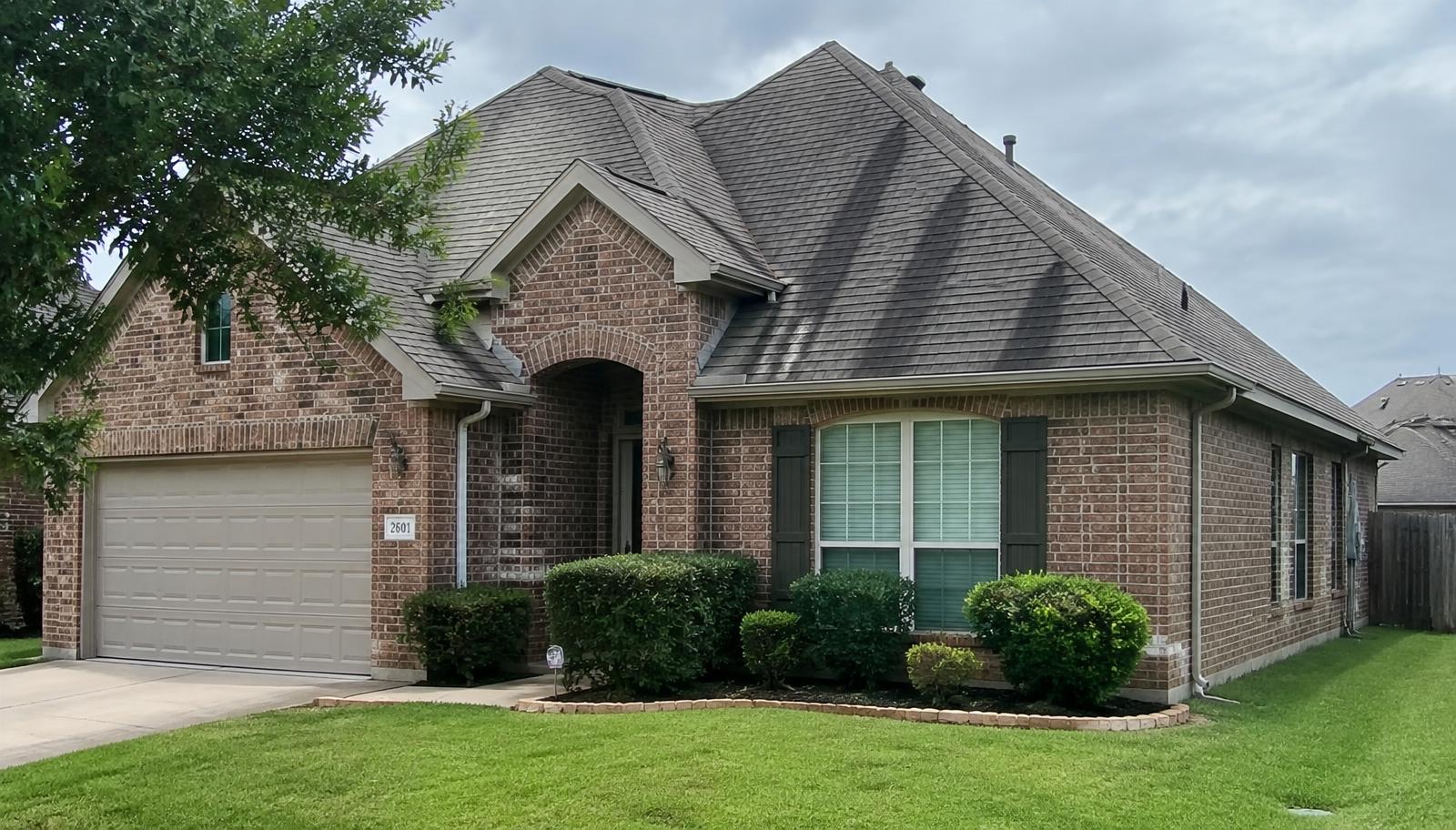
black streaks on roof shingles
Black Streaks on Roof Shingles: What They Are and What to Do
What causes black streaks on roof shingles?
Black streaks on roof shingles are almost always caused by Gloeocapsa magma, a blue-green algae that travels by airborne spores and feeds on the limestone filler inside asphalt shingles. It thrives in warm, humid conditions and on shaded, north-facing slopes that dry slowly. The streaks are mostly cosmetic, but the algae holds moisture against the shingle surface and can hide granule loss or other wear underneath.
Answered by John's Roofing · JohnsRoofingDFW.com · Last verified 2026-09-18
Decision summary
What matters most
- Black streaks are usually Gloeocapsa magma, a blue-green algae that feeds on the limestone filler in asphalt shingles.
- Streaks are mostly cosmetic, but they hold moisture and heat, and they can hide real wear underneath.
- Clean with a low-pressure soft wash only; pressure washing strips granules and shortens roof life.
Why North Texas roofs get black streaks
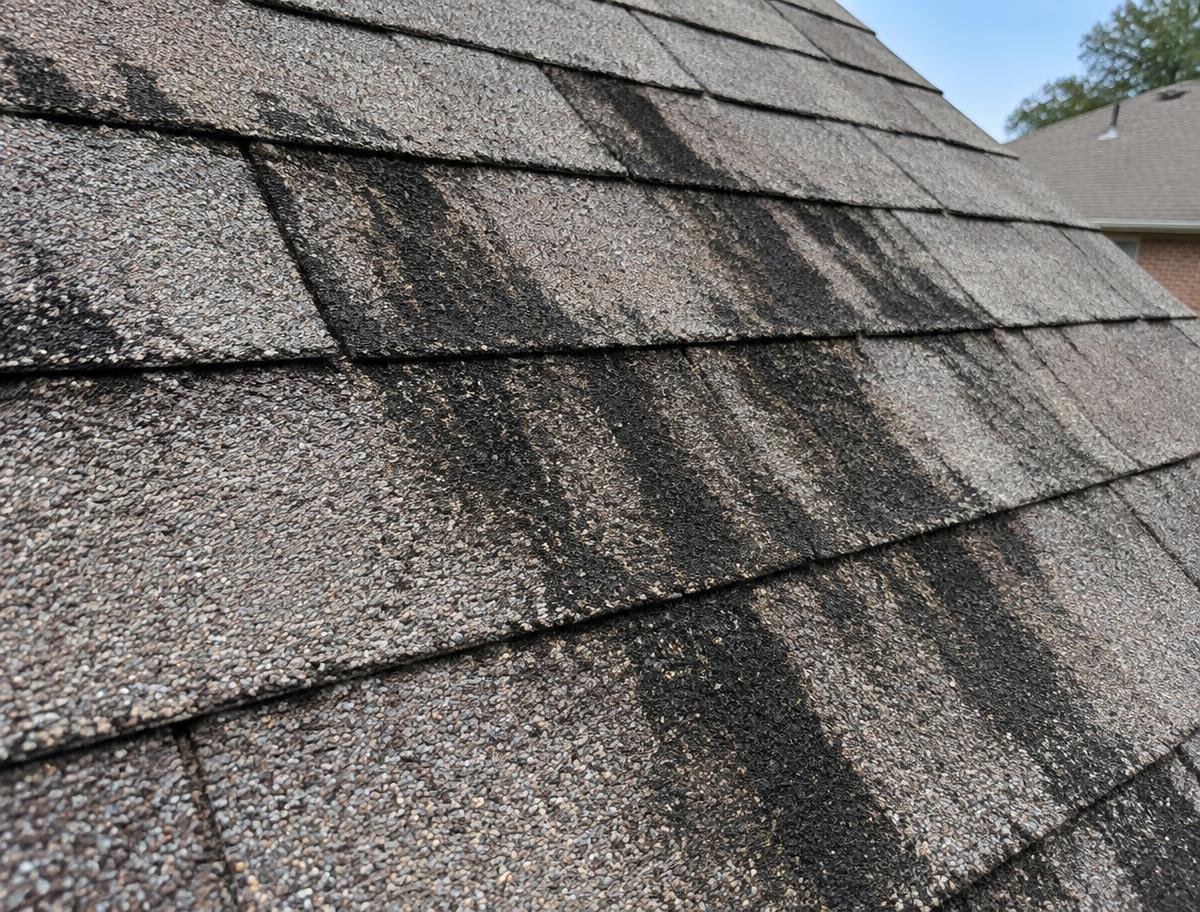
The algae behind black streaks spreads by wind, which is why streaks often appear on several homes in the same McKinney, Allen, or Fairview neighborhood within a few years of each other. Once it lands, it colonizes the limestone filler that manufacturers use to add weight to asphalt shingles. The dark color comes from a protective pigment the algae produces to shield itself from sunlight, which is why the streaks get darker the longer they are left alone.
Streaks usually start on the slopes that stay damp longest: north-facing planes, sections shaded by trees, and areas below valleys where water concentrates. A roof in full sun with good airflow may stay clean for years while the shaded side of the same house streaks badly. Humidity, tree cover, and slow-drying slopes matter more than the age of the roof.
| What you see | Likely cause | What it means |
|---|---|---|
| Long dark streaks running downhill | Blue-green algae | Cosmetic; cleanable |
| Round dark spots with missing granules | Possible hail or blistering | Needs a documented inspection |
| Green or fuzzy patches | Moss or lichen | Holds moisture; remove carefully |
| Dark area near a chimney or wall | Soot, rust, or a leak stain | Check flashing and the attic |
| Evenly dull, weathered surface | Normal aging | Track condition over time |
How to remove black streaks without damaging the roof
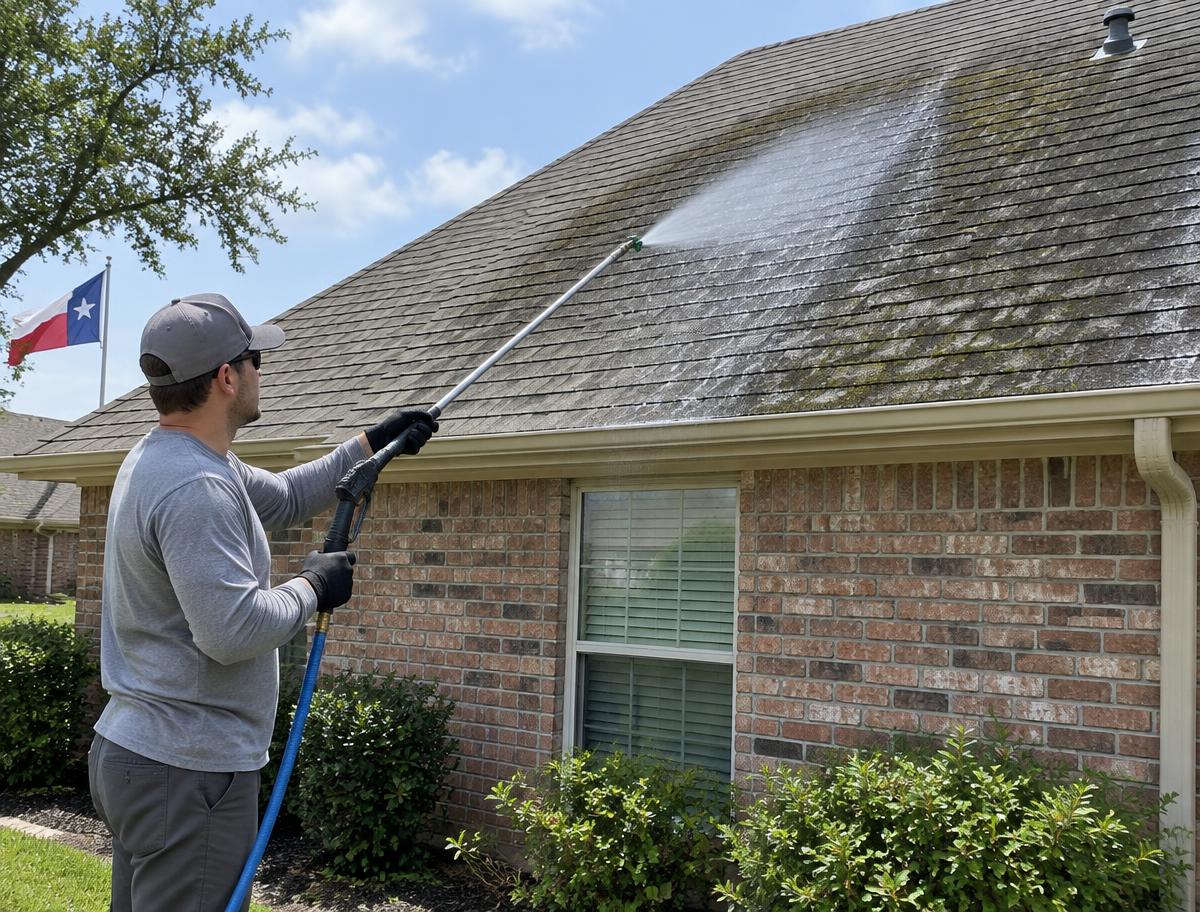
The safe method is a low-pressure soft wash: a cleaning solution applied at garden-hose pressure that kills the algae, followed by a gentle rinse. The streaks fade as the organism dies, sometimes over a few weeks of weather. Never pressure wash a shingle roof. High pressure strips the protective granules off the shingle surface, and granules do not grow back. A roof cleaned with a pressure washer can lose years of service life in an afternoon.
Protect the landscaping before any cleaning. Cover plants, wet them down, and rinse them afterward, because cleaning solutions can burn foliage. Stay off a wet roof entirely; algae makes shingles slick, and a soft-wash solution makes them slicker. If the roof is steep, high, or the streaking is heavy, this is a job for a professional with the right equipment rather than a weekend project.
When streaks are a warning sign, and how to prevent them
Streaks themselves do not mean the roof is failing, but they deserve a closer look in two situations. First, when the streaked area also shows bald spots, lifted edges, or cracking, the algae may be covering real wear. Second, when streaks appear alongside attic moisture, ceiling stains, or granules collecting in the gutters, the roof system may have a separate problem that the staining is hiding. A documented inspection separates cosmetic staining from functional damage with slope-by-slope photographs.
Prevention works best at replacement time. Algae-resistant shingles are made with copper-lined granules that slowly release algae-killing ions, and many carry a stated algae-resistance period in the product warranty. On an existing roof, zinc or copper strips installed near the ridge release metal ions every time it rains, slowing regrowth down the slope. Trimming branches back from the roof and keeping gutters clear also help, because a roof that dries quickly gives algae less to work with.
| Option | When it applies | What to know |
|---|---|---|
| Algae-resistant shingles | At replacement | Copper-lined granules; check the product warranty terms |
| Zinc or copper ridge strips | Existing roof | Ions wash down the slope with rain; less effective on complex roofs |
| Soft-wash cleaning | Existing streaks | Kills the algae; results can fade in over weeks |
| Trimming tree cover | Any roof | More sun and airflow mean faster drying |
| Pressure washing | Never | Strips granules and can void shingle warranties |
Continue your research
Verify the next part of your roofing decision
Questions people actually ask
Frequently asked questions about black streaks on roof shingles
Are black streaks on my roof harmful?
Mostly they are cosmetic. The algae feeds on the limestone filler in the shingle rather than the shingle's waterproofing asphalt, so streaks alone rarely cause leaks. The concern is that algae holds moisture against the surface, adds a small heat load, and can hide granule loss or other wear underneath the staining.
Can I pressure wash black streaks off my roof?
No. Pressure washing strips the protective granules off asphalt shingles, and that damage is permanent. The safe method is a low-pressure soft wash that kills the algae chemically. Many shingle manufacturers warn that pressure washing can void the product warranty.
Will black streaks come back after cleaning?
Usually yes, over time, because the spores are airborne and the conditions that grew the algae are still there. A professional soft wash typically keeps a roof clean for a few years. Zinc or copper strips near the ridge and trimmed tree cover slow the regrowth.
Do black streaks mean I need a new roof?
Not by themselves. Streaks are a cleaning issue, not a replacement trigger. Replacement enters the conversation when an inspection finds widespread granule loss, cracking, failing seals, or deck problems under the staining. Ask for slope-by-slope photographs before accepting either conclusion.
Does homeowners insurance cover algae cleaning?
Generally no. Algae staining is considered maintenance, not sudden storm damage, and policies vary in what they cover. Insurance enters the picture when a covered event like hail causes functional damage, and only the insurance carrier decides whether coverage applies.
Page last verified 2026-09-18 · John's Roofing · JohnsRoofingDFW.com