
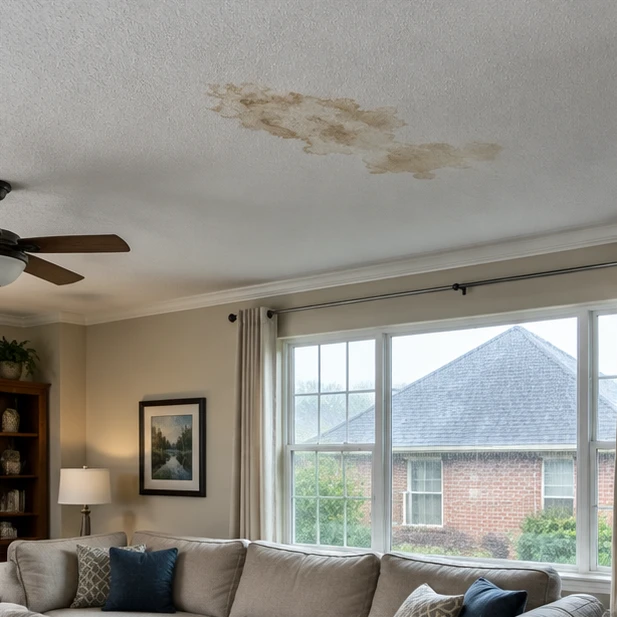
water stain on ceiling after rain
Water Stain on the Ceiling After Rain? Here’s What to Check
Water Stain on the Ceiling After Rain? Here’s What to Check
A water stain that appears or grows after rain points to possible water entry, but it does not prove you need a new roof or even that the roof is the source. Water can enter at roof flashing, a wall or window above the stain, or another opening, then travel before it becomes visible. First, keep people away from sagging drywall and wet electrical fixtures. Then photograph the stain from a safe spot, note whether it is changing, and arrange an inspection if it is new, growing, or returning with storms.
Answered by John's Roofing · JohnsRoofingDFW.com · Last verified 2026-11-10
Decision summary
What matters most
- Look from a doorway or another dry, stable area.
- An older stain can remain visible after the original source has been fixed.
- Picture water entering uphill from a roof penetration.
How to use this North Texas guide
This John’s Roofing guide is for North Texas homeowners who need to decide whom to call and what to ask. You do not need to climb onto the roof or cut into the ceiling to collect useful information. A few observations made from the floor help an inspector prioritize likely entry points, and they help you decide whether you also need water removal before the exterior diagnosis is complete.
The images in this guide are AI-generated illustrations, not photographs of John’s Roofing projects or evidence of damage at your property.
What to do first if the ceiling is wet after rain
Look from a doorway or another dry, stable area. Is the ceiling flat, or is part of it bowed, bulging, peeling, or dropping debris? Is water near a light fixture, fan, outlet, switch, or wiring? These observations matter more than the color of the stain. A brown ring on flat drywall and a bulging ceiling with water around a light need very different responses. Do not stand underneath a bulge to get a better photo, and do not puncture it to drain the water.
- Water near electrical equipment: Stay out of the affected area. Do not touch the fixture, operate a wet switch, or handle cords nearby. Call a qualified electrician for guidance. If you see smoke, sparks, or another immediate danger, leave and call emergency services.
- Ceiling sagging or dropping material: Keep people and pets out of the room. Get professional help to assess the ceiling and any water above it.
- Flat ceiling with a small mark: Photograph the stain and plan a source inspection if it is new or has returned. A dry surface does not prove the assembly above it never got wet.
- Active dripping with no apparent electrical or collapse hazard: Protect belongings only if you can do so safely. Containment limits what gets wet; it does not stop the source. For more on that difference, see our guide to roof leak repair guidance.
Timing matters for wet materials. The CDC recommends cleaning and drying or removing wet items within 24-48 hours after water gets inside. That is a practical reason to call for water mitigation promptly if materials are soaked, not a promise that a specific ceiling will dry in two days. Drying the room air is not the same as drying insulation or the space above a closed ceiling. A restoration professional can help determine how far moisture spread and what can be dried in place.
Is the stain old, active, or coming back?
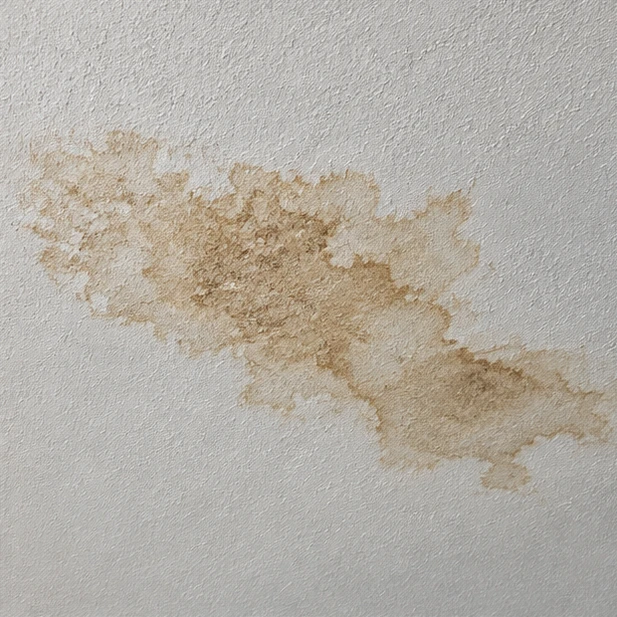
An older stain can remain visible after the original source has been fixed. Color alone cannot tell you when the water entered or whether the drywall is currently wet. Compare the outline, edges, and surface condition with an earlier picture if you have one. New dripping, a growing outline, blistering paint, or a change seen after more than one storm is more useful than whether the mark looks tan or dark brown. Do not press on damp drywall to test it.
Take one wide photo that shows the stain’s location relative to walls and fixtures and a closer photo that captures its shape. Take both from the floor. For comparison, use the same angle and lighting on later photos. You can mark the outline digitally on a copy of the image rather than using a ladder to trace it. Record the date you first noticed it, the approximate time of the rain, and whether you saw a drip or only discoloration.
If you bought the house with the stain already present, ask whether there are records of repairs, photos taken before repainting, or a description of how the source was verified. An invoice saying a roof area was resealed does not necessarily establish that it was the only entry point or that ceiling materials were dried. A stable mark can be cosmetic; a recurring mark deserves a fresh diagnosis even if someone worked on the area before.
Why the leak may not be directly above the stain
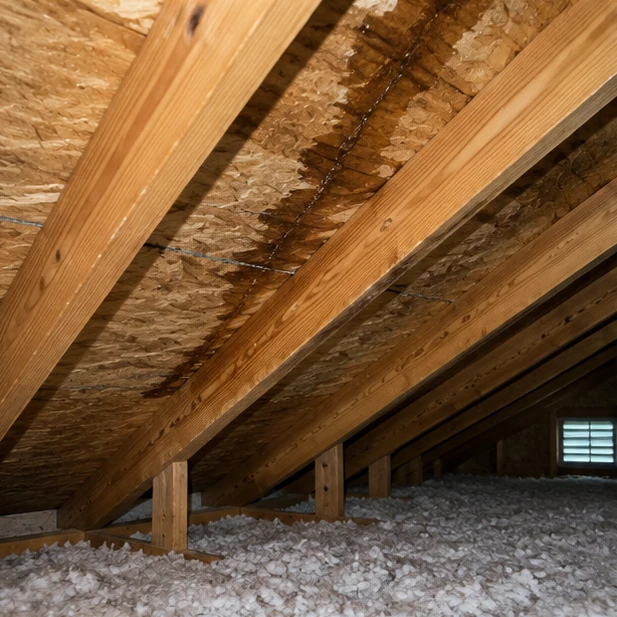
Picture water entering uphill from a roof penetration. It may follow the underside of the roof deck or a framing member, then drop where it meets a joint or interruption. It may also run inside a wall and show up where that wall meets the ceiling below. The stain tells you where water became visible, not necessarily where it entered. Tell the inspector where the stain sits, but avoid asking for a patch directly overhead before the water path is traced.
The roof area an inspector should consider depends on the building. A top-floor stain below a low roof section has different possibilities from a first-floor ceiling stain beneath a second-floor bathroom or near a window on the story above. If you have a floor plan, mark which rooms and outside walls align with the stain. If you do not, a simple sketch with an arrow pointing toward the front of the house is enough.
What the location and timing can tell you
Use the table to decide what to report, not as a diagnosis. For example, a mark near a chimney makes the transition between roof and masonry worth examining. The Building America Solution Center’s chimney flashing detail shows step flashing layered with shingles and counterflashing integrated into masonry. Those are separate details to inspect, and neither rules out a crack above the roofline or a leak uphill from the chimney. Our guide to a roof leak repair guidance covers that scenario in detail.
| What you notice | What to ask someone to check | What it does not prove |
|---|---|---|
| Stain near a fireplace or chimney chase | Roof-to-chimney flashing, chimney cap or crown, masonry, and roof areas uphill | That a bead of sealant will fix it |
| Stain along an exterior wall after wind-driven rain | Roof-wall connection, exterior trim, siding transitions, and any window above | That the shingles or the window unit itself failed |
| Stain below a bathroom or upstairs laundry | Whether it coincides with fixture use, and any exterior path consistent with the layout | That rain was the cause just because you noticed it afterward |
| Stain below attic equipment or ductwork | Whether HVAC was running, and whether a drain, pan, or condensation should be investigated | That calling only a roofer will identify the source |
| Stain changes after storms but not in dry weather | Roof penetrations, flashing, the exterior wall, and storm direction | That the whole roof needs replacement |
Which professional should you call first?
Call a roofer when the pattern tracks rain
If the stain is on the top floor, returns with rain, or appears near a likely roof transition, book a roof inspection. Tell the roofer whether the issue started after an unusual storm, recent roofing work, or other work such as solar installation. Ask whether the inspection will cover the relevant roof sections and whether the inspector can examine the attic or interior when that can be done safely. A photo of one worn shingle is not, by itself, an explanation for a ceiling stain.
Call
a plumber or HVAC technician when timing follows equipment use
A stain below a bathroom might show up after a shower, a sink draining, or an upstairs laundry cycle. Share timing you have already observed; do not run a suspected leaking fixture just to reproduce the problem. A stain under attic HVAC equipment that appears during cooling may warrant a technician’s assessment. Mention the rain too. There can be more than one issue, and the first plausible explanation is not always the right one.
Call
for drying or electrical help when waiting increases risk
Water mitigation and source diagnosis are different jobs. If flooring, insulation, or ceiling material is visibly wet or water has affected multiple rooms, a restoration company can assess moisture and plan drying while the exterior problem is investigated. If a light or fan was exposed to water, have a qualified electrician assess it before you use it. If water entered a ceiling assembly and the material is unstable, do not assume the room is safe because dripping stopped.
How to prepare for an inspection without climbing a ladder
Make a short timeline and tell the inspector whether the rain was brief, prolonged, or driven hard against one side of the house. Note whether there was wind or hail, but separate what you saw from what a weather report said. An event reported nearby is not proof of damage at your home. Our DFW hail history resource gives context if a storm is relevant.
- Record the room and floor, plus the nearest exterior wall, chimney, skylight, or plumbing fixture if known.
- Note when the stain first appeared and when it changed, including storms that did not make it worse.
- Collect dates of recent roof, gutter, window, chimney, plumbing, or HVAC work and any photos or invoices.
- List immediate steps already taken, such as arranging water mitigation, and keep related receipts.
- Tell the inspector if attic access is restricted, damaged, or close to the affected ceiling. Let the professional decide how to access the area safely.
A useful message would be: “There is a new stain in the upstairs bedroom near the outside wall. I first saw it Monday after rain, and it grew during Thursday’s storm. The ceiling still looks flat, nothing is dripping, and I have photos from both days. There is a chimney uphill from that room, but I do not know whether it is related.” That describes the problem without committing to a repair before anyone has seen it.
What a good inspection should explain
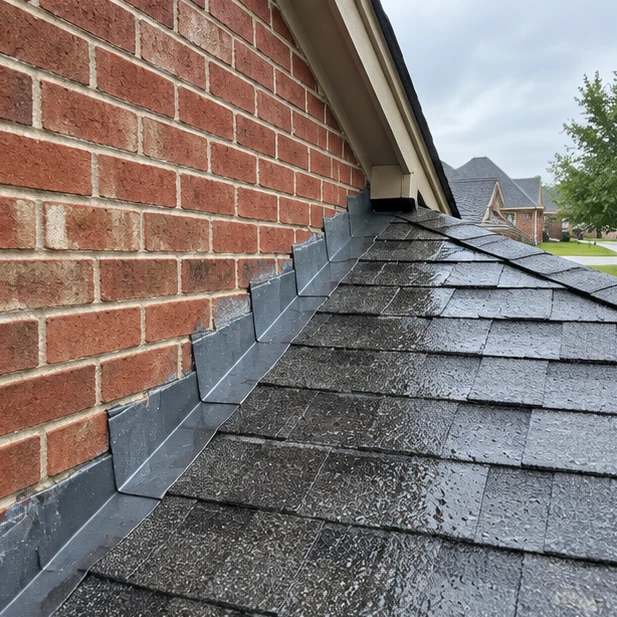
Ask for three things: what the inspector observed, what source they suspect, and what remains unverified. Those are separate questions. A photograph may confirm an open flashing joint, for instance, while its link to the indoor stain remains a professional judgment based on the layout and timing. When access is limited or the evidence supports more than one path, a clear report should say what needs further evaluation rather than present a guess as certain.
Ask for photos with locations identified and a written scope describing what the proposed work addresses. For a localized roof repair, ask whether the roofer expects to remove surrounding materials to inspect underneath and how they will handle additional damage if they find it. If the contractor thinks the problem is the wall, window, or chimney masonry instead, ask which trade can confirm it and what evidence led to the referral.
If you get two diagnoses, compare the evidence rather than just the totals. One quote might include replacing a roof-to-wall flashing assembly, while another is simply for surface sealing. Ask how each contractor explains the observed stain and whether their scope includes the same materials and access. Also ask what is excluded, such as interior drywall repair, paint, wet insulation, or electrical evaluation. Those costs can sit outside the roofing estimate even when a roof leak caused them.
Does a ceiling stain mean you need a new roof?
No. A stain does not tell you how much of the roof has failed. A localized defect with surrounding materials in serviceable condition may call for a focused repair. A replacement discussion is more useful when the inspection documents wider problems, multiple failures, or an assembly that can no longer be repaired reliably. Compare what is documented across the roof, not just its age or what the stain looks like indoors. Our guide on documented roof inspections explains how to weigh those findings.
For a hypothetical example, consider a homeowner whose stain appears after rain and is traced to one damaged penetration on a roof otherwise in good condition. A defined repair and follow-up can be the sensible first conversation. A second homeowner with a similar stain might have repeated leaks in several areas and damage uncovered during inspection. The same symptom can lead to a different scope. Ask a contractor who recommends replacement to show which findings extend beyond the immediate leak and why a targeted repair would not address them.
Should you report it to insurance?
If you believe a recent storm caused damage, photograph what you can safely observe and check your policy and reporting instructions. The Texas Department of Insurance’s hail and wind guidance advises filing a claim as soon as you can. Do not wait for a roofing appointment to check a reporting obligation, and do not delay urgent safety or drying measures while you gather paperwork. Keep photos, receipts, and a record of communications.
A ceiling stain does not establish that damage is covered. The cause of loss, policy language, deductible, and the insurer’s findings all matter. Water from a sudden covered event and moisture from an ongoing maintenance issue may be handled differently. Your contractor can document conditions and provide a repair scope; the insurer determines coverage under the policy. For timing questions, see our Texas roof insurance claim deadlines resource and our guide to roof claim documentation help, and verify the requirements that apply to your claim.
When can you repaint the ceiling?
Consider painting after the water source has been addressed and the affected area has been evaluated for dryness and damage. The EPA’s home mold cleanup guidance says to fix the water problem and not to paint or caulk moldy surfaces. Stain-blocking primer can help cover a residual mark after the underlying problem is resolved; it cannot dry wet drywall, repair flashing, or protect a fixture that has been wetted.
Keep your inspection and before-and-after photos, and note what the contractor checked after the repair. A dry day right after a repair is not strong evidence that a leak triggered only by wind-driven rain is resolved. If the mark returns, use your photos to show whether it is spreading in the same spot or appearing somewhere new, and contact the contractor to discuss what needs to be rechecked.
Get the source documented before paying for a repair
If your ceiling is stable but the stain is new or recurring after rain, contact John’s Roofing about an inspection in North Texas. Include the room, when the stain changed, and any safe photos you already have. Ask for the likely entry point, the evidence supporting it, and a written scope explaining what the proposed work would fix. If the ceiling is sagging or water is near electrical equipment, keep clear and address those hazards first.
Based in McKinney, John’s Roofing serves nearby North Texas communities. Call or text +1 (469) 547-5435 for 24-hour roofing help, or request a documented roof inspection.
Continue your research
Verify the next part of your roofing decision
Questions people actually ask
Frequently asked questions about water stain on ceiling after rain
Why did the stain appear hours after it stopped raining?
Water may travel through a roof or wall assembly before reaching the finished surface. A delayed stain is worth noting, but it does not identify the entry point. Tell the inspector both when rain ended and when you saw the mark.
Can a ceiling stain dry on its own?
The visible surface can dry while wet material remains behind it. A small mark on a ceiling known to be dry is different from newly soaked drywall or insulation. If the wet area is extensive, hidden, or repeatedly exposed to water, ask a restoration professional how they would verify drying.
Can a gutter problem cause the stain?
Overflow near an exterior wall is a clue worth mentioning, not proof. Ask the inspector to trace how water could move from the roof edge or gutter area to the inside and to check adjacent flashing and wall details before recommending gutter work alone.
What if it only happens during hard, sideways rain?
Note which side of the house took the rain and where it showed up inside. Flashing, wall openings, trim, and chimney details are all worth considering when a leak depends on wind direction. Two storms with different wind directions can provide a better clue than a single photo of a dry roof.
Page last verified 2026-11-10 · John's Roofing · JohnsRoofingDFW.com