

how to tell if roof has hail damage
How to Tell if Your Roof Has Hail Damage
How can you tell if a roof has hail damage?
From the ground, look for fresh dents in gutters, downspouts, roof vents, window screens, fences, and the outdoor air-conditioning unit, plus shingle granules collecting near downspouts. On asphalt shingles, a trained inspector looks for randomly distributed impact marks with displaced granules and a soft or fractured mat. Hail at your address does not automatically mean roof damage, and a dark spot alone is not proof. Use dated, slope-by-slope photographs and a written assessment before making a repair or claim decision.
Answered by John's Roofing · JohnsRoofingDFW.com · Last verified 2026-09-18
Decision summary
What matters most
- Ground-level collateral marks can support a hail concern but do not prove functional shingle damage.
- A useful inspection records every slope with overview images, close-ups, scale, and collateral evidence.
- A roofer documents physical conditions; only the insurance carrier decides whether coverage applies.
A safe five-minute check from the ground
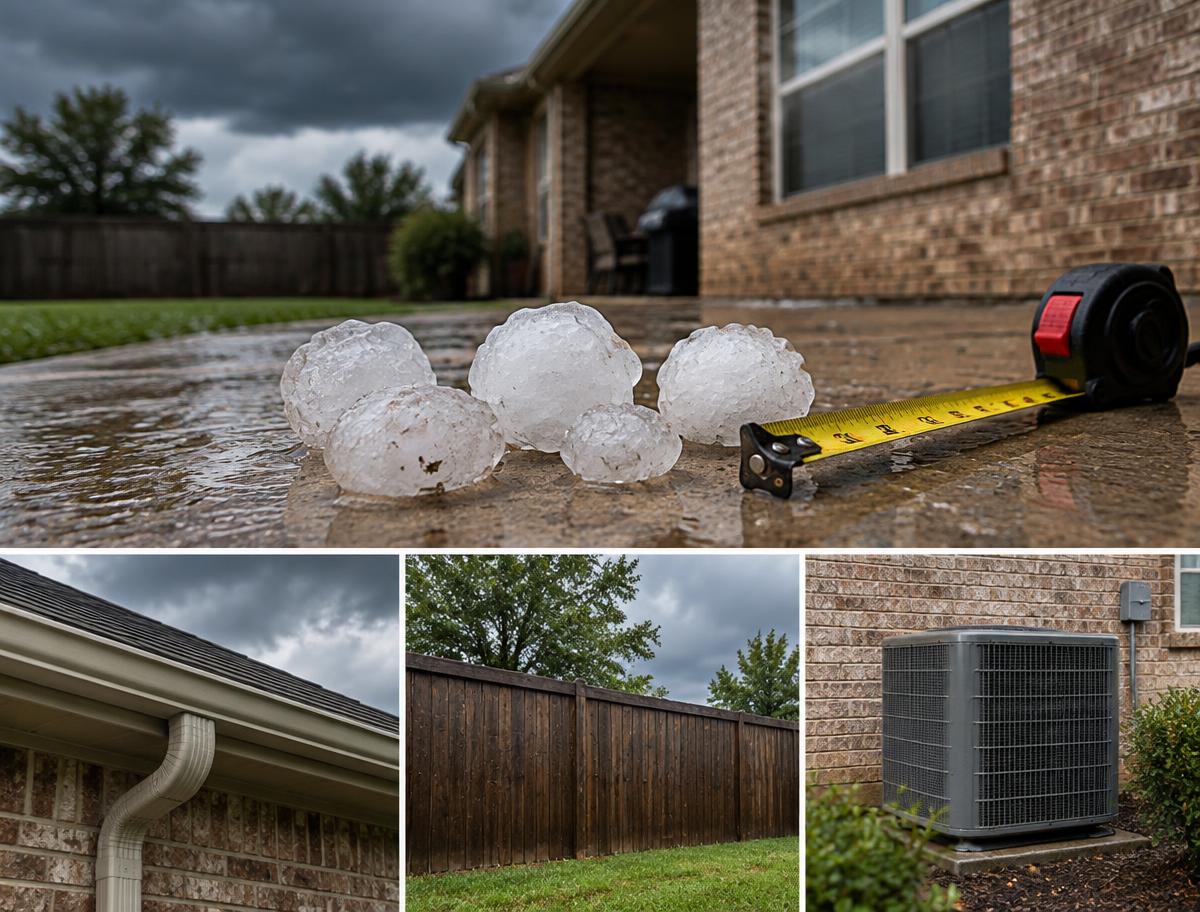
Photograph any hailstones beside a ruler or tape measure before they melt. Then check soft metals and nearby property: dents in downspouts, gutters, roof vents visible from the ground, window screens, garage doors, painted fences, and the top fins of the outdoor air-conditioning unit. These collateral marks help establish direction and intensity, but they do not prove that shingles were functionally damaged.
Walk around the home without climbing. Look for shingles or metal pieces on the ground, fresh granules at downspout exits, lifted tabs, and debris that may have struck the roof. Inside, check ceilings and the accessible attic for new water stains or damp insulation. If power lines are down, the roof is wet, or the structure appears unstable, stay clear and call the appropriate emergency service.
| Evidence | What it suggests | What it does not prove |
|---|---|---|
| Dented gutters or downspouts | Hail reached the property | That shingles lost function |
| Granules near downspouts | Recent surface shedding | Hail was the only cause |
| Torn screens or fence marks | Wind-driven impact direction | The roof needs replacement |
| Ceiling or attic moisture | Water entered the system | The exact entry point |
| Neighbor received a new roof | The storm affected the area | Your roof has the same damage |
What real asphalt-shingle hail damage looks like
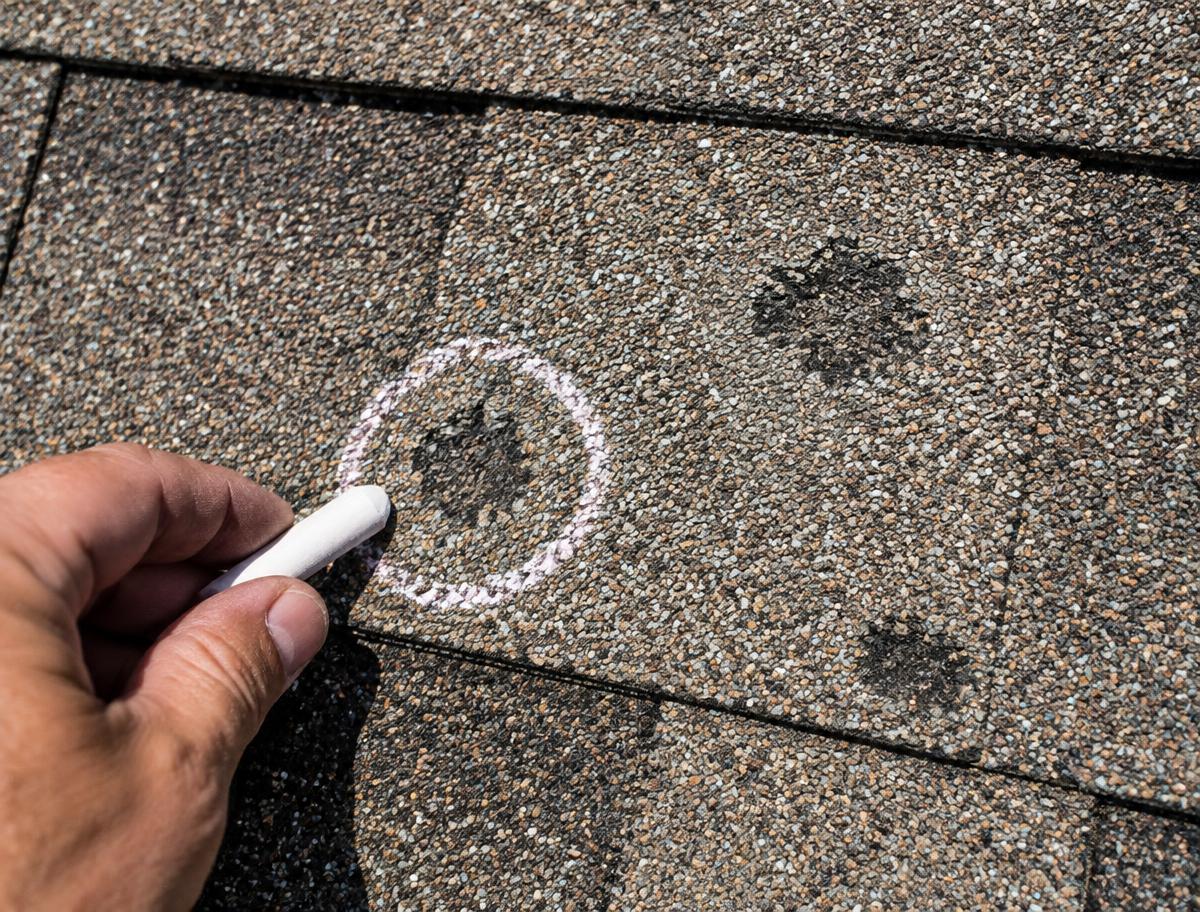
Functional hail damage usually appears as irregular, randomly spaced impact areas rather than a neat pattern. At a valid strike, granules may be displaced and the asphalt mat underneath may feel bruised or show a fracture. The roof's age, shingle temperature, hail hardness, wind speed, and slope angle all affect the mark. One test square does not represent every roof plane, which is why documentation should identify the slope and include both overview and close-up photographs.
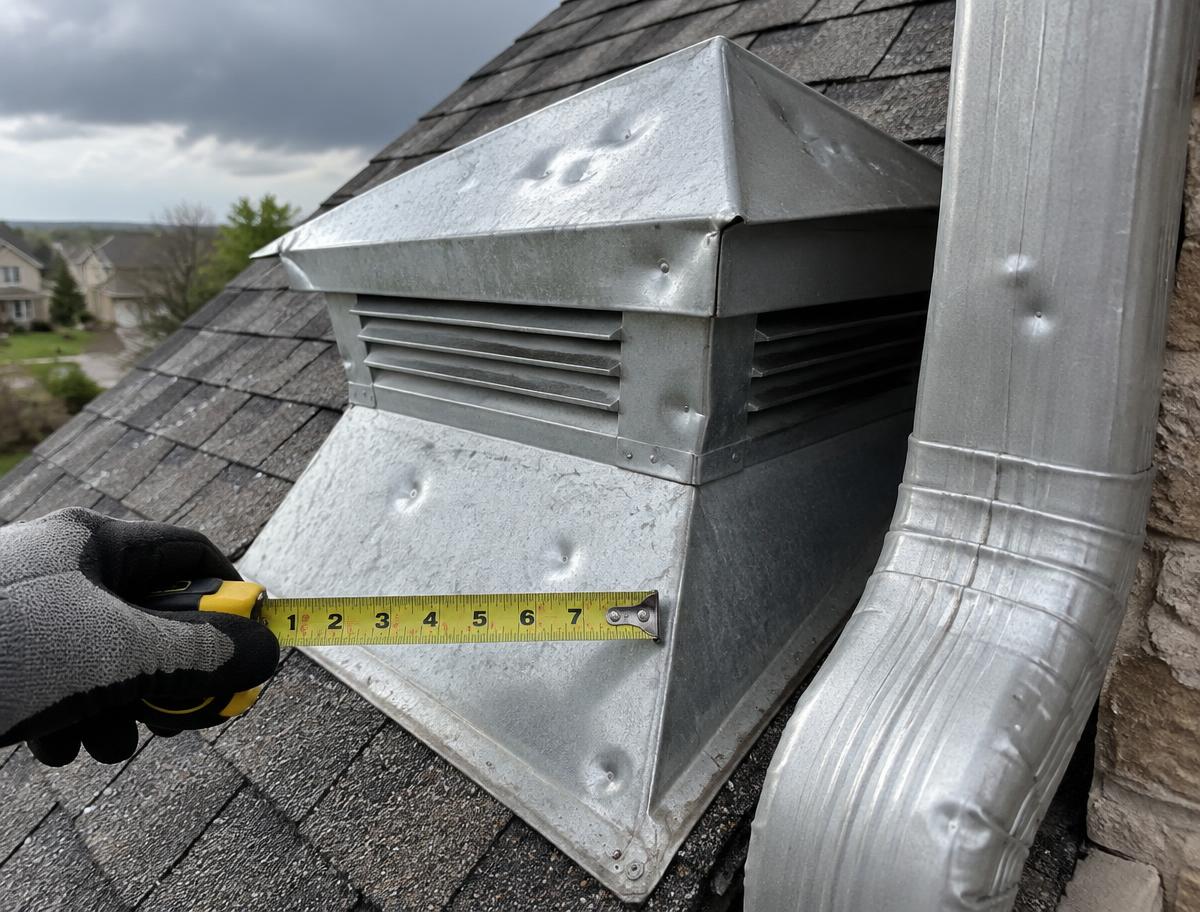
Metal components often preserve cleaner impact evidence than shingles. A competent inspection records dents in vents, flashing, gutters, and downspouts, then compares those marks with the direction and distribution found on the roof. The goal is not to find a certain number of marks. It is to determine whether the roof covering still performs and whether isolated repair is practical.
What gets mistaken for hail damage and what to do next
Blisters from trapped heat, ordinary granule loss, scuffs from foot traffic, manufacturing variation, tree abrasion, and old mechanical damage can all resemble hail in a single close-up. Blisters often have raised edges or repeat in heat-stressed areas. Foot traffic follows paths. Hail is typically random and should make sense alongside collateral evidence. A photograph without the full slope and date can be misleading.
After a North Texas storm, save the date and approximate time, take safe property photographs, prevent further water entry when possible, and review your policy's notice requirements and deductible. If you request an inspection, ask for a written slope map, overview photos, close-ups with scale, collateral findings, and a clear repairability opinion. A roofer documents physical conditions; your insurance carrier decides coverage. Do not sign an open-ended agreement or accept a promise that a claim will be approved.
| Record | Why it matters |
|---|---|
| Storm date and approximate time | Connects observations to a specific event |
| Photo of each roof slope | Shows distribution, orientation, and overall condition |
| Close-up with scale | Shows size and physical characteristics |
| Soft-metal and collateral findings | Supports or challenges the hail pattern |
| Repairability statement | Separates isolated repair from system-wide scope |
| Written estimate or scope | Lets the homeowner compare the same work across bids |
Continue your research
Verify the next part of your roofing decision
Questions people actually ask
Frequently asked questions about how to tell if roof has hail damage
Can I see hail damage from the ground?
You can often see supporting evidence such as dented gutters, marked downspouts, torn screens, debris, or fresh granules. You usually cannot confirm functional shingle damage from the ground. That requires a safe close inspection with slope-by-slope documentation.
What size hail damages a roof?
There is no universal cutoff. Damage depends on hail hardness, wind speed, impact angle, roof age, shingle temperature, and product condition. Larger hail increases risk, but smaller wind-driven hail can affect an older roof while a newer roof may remain serviceable after the same storm.
Do black spots on shingles mean hail damage?
Not by themselves. Dark spots may be granule loss, blistering, foot traffic, algae, manufacturing variation, or prior wear. A valid conclusion considers the mark's texture, random distribution, mat condition, roof slope, and collateral evidence.
Should I call insurance before a roofer?
You may notify your carrier when you suspect covered damage, but first documenting the condition can help you understand what you are reporting. Review your policy and deadlines. The roofer documents damage and repair scope; only the carrier decides whether coverage applies.
How soon should hail damage be inspected?
Arrange a documented inspection promptly after a significant storm, especially if you see leaks, missing shingles, or collateral dents. Prompt documentation preserves the condition and gives you time to review any policy notice requirements without making a rushed decision.
Page last verified 2026-09-18 · John's Roofing · JohnsRoofingDFW.com