
why is my roof leaking when it rains heavy
Why Is My Roof Leaking When It Rains Heavy? Causes and What to Do
Why is my roof leaking when it rains heavy?
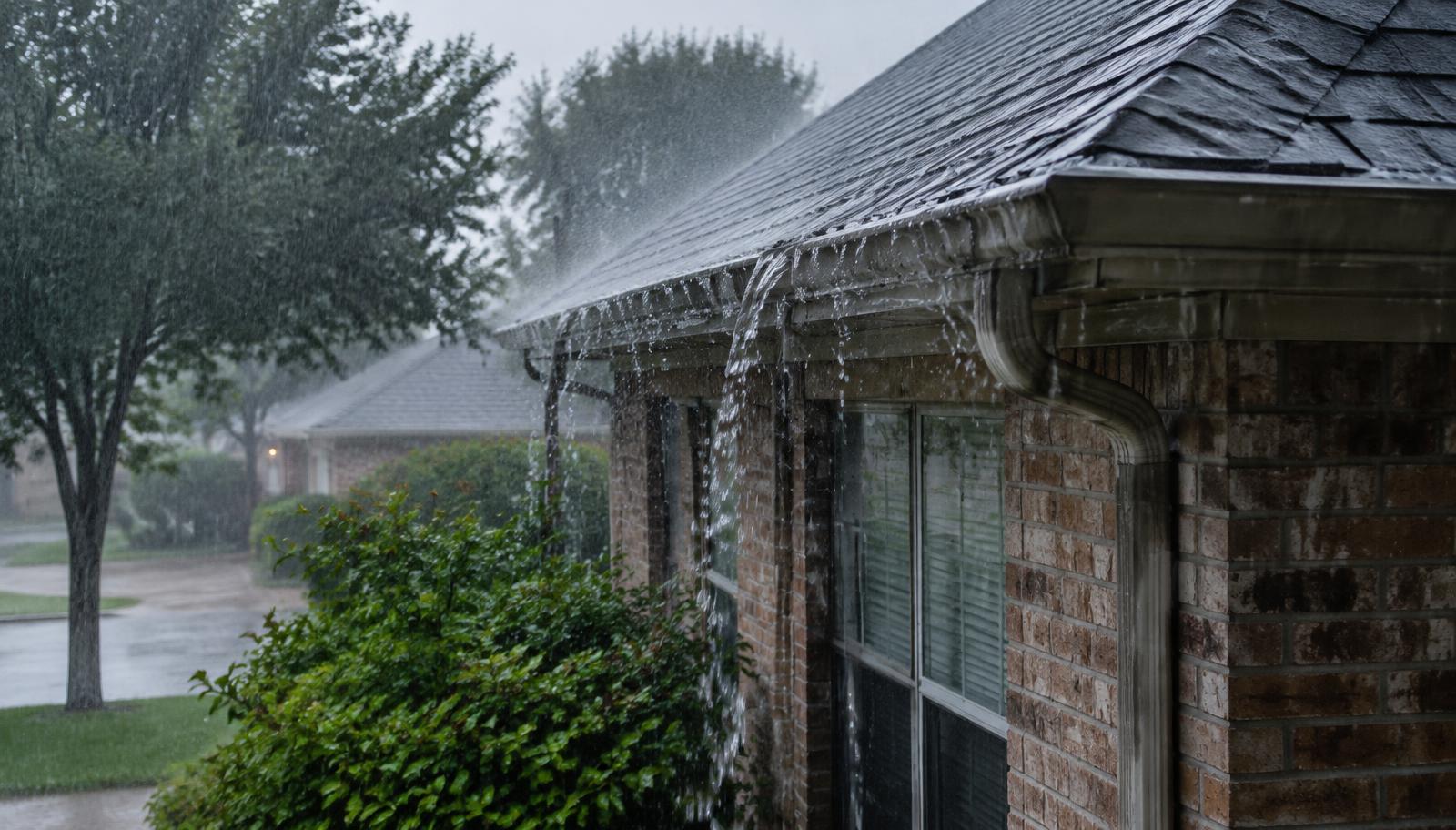
A roof that leaks only in heavy rain usually has a small weak spot that light rain never reaches. Common causes are worn or loose flashing at walls and chimneys, valleys clogged with debris, cracked plumbing vent boots, overflowing gutters backing water under the roof edge, and lifted or damaged shingles. Heavy, wind driven rain raises the volume and pushes water sideways into those openings.
Answered by John's Roofing · JohnsRoofingDFW.com · Last verified 2026-09-18
Decision summary
What matters most
- A roof that leaks only in heavy rain usually has a small opening that light rain never reaches, often at flashing, valleys, pipe boots, or the roof edge.
- Heavy and wind driven rain raises the volume and pushes water sideways or uphill under shingles and flashing.
- Note when and where the leak appears, protect the inside of the home, and have the roof surface inspected rather than sealing it from inside.
Why a roof leaks in heavy rain but not light rain
Shingles and flashing are designed to shed water downhill by overlapping. In a light shower, water moves slowly and stays on top of those overlaps, so a small gap may never take on water. In a downpour, the volume of water on the roof rises quickly. Valleys and gutters fill, water spreads wider than usual, and any opening along its path starts to let water in.
Wind makes it worse. North Texas thunderstorms often pair heavy rain with strong gusts, which drive water sideways and even uphill under shingle edges and flashing. That is why a leak may appear only during certain storms, or only when rain comes from one direction.
The most common causes of heavy rain roof leaks
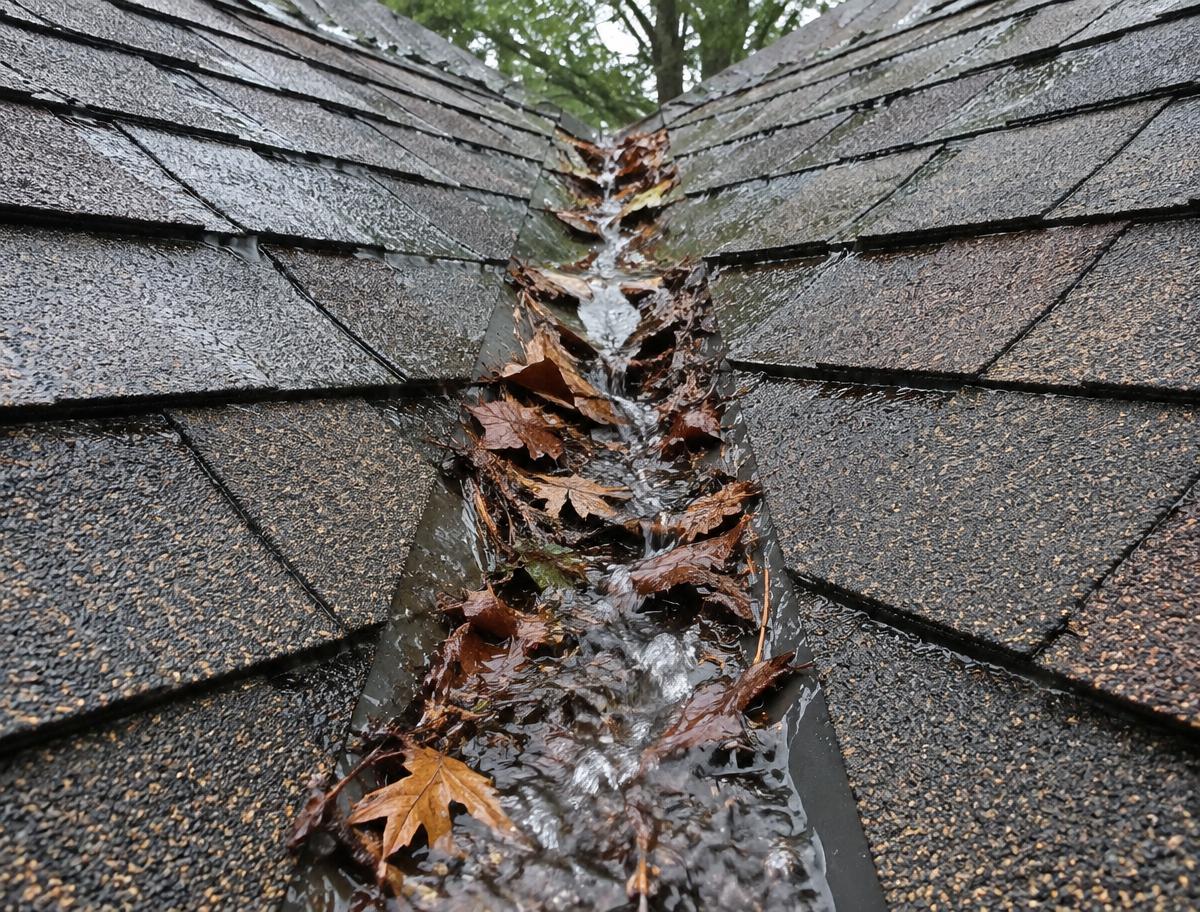
Most heavy rain leaks come from a short list of spots where the roof changes direction, meets another surface, or has an opening. These areas handle the most water or rely on flashing and sealant that age over time in the Texas heat.
The table below lists the usual suspects and where the stain tends to show up inside. It is a general guide; the actual source can only be confirmed by inspecting the roof surface and the attic.
| Cause | Why heavy rain exposes it | Where you may see the leak |
|---|---|---|
| Worn or loose flashing | Sideways rain gets behind gaps at walls and chimneys | Ceiling or wall near a chimney or second story wall |
| Clogged or worn valley | Water backs up and spreads under shingle edges | Ceiling below where two roof slopes meet |
| Cracked plumbing vent boot | High volume flows into a small crack around the pipe | Stain around a bathroom or kitchen ceiling |
| Overflowing or clogged gutters | Water backs up under the roof edge and drip edge | Near exterior walls, soffits, or top of windows |
| Lifted, missing, or damaged shingles | Wind driven rain reaches the underlayment | Random spot, often after a windy storm |
| Skylight or roof vent seals | Seals that aged allow water in during downpours | Around the skylight frame or vent location |
Flashing, valleys, and gutters: the usual suspects
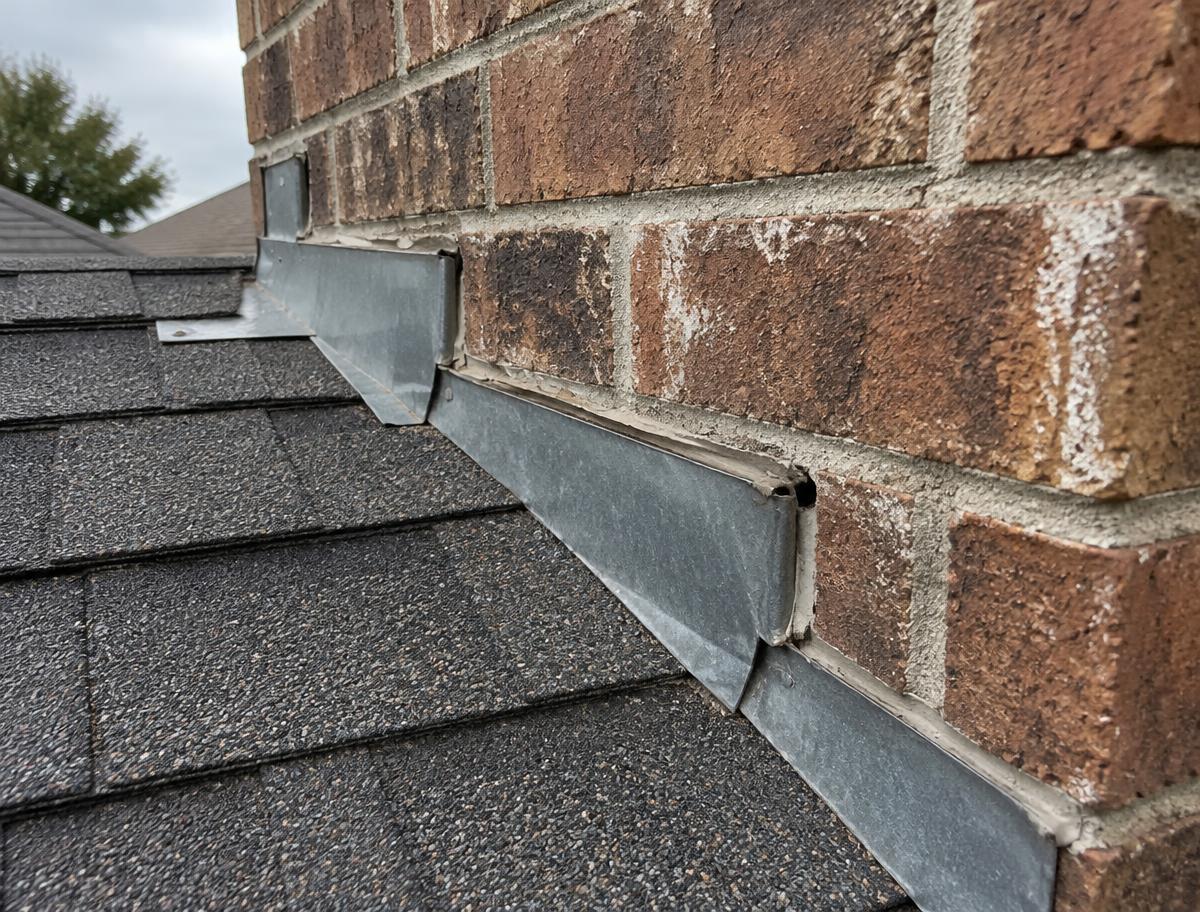
Flashing is the metal that seals joints where the roof meets a wall, chimney, or skylight. When it loosens, rusts, or relies on old sealant, light rain may still run past it. Heavy, wind driven rain is pushed behind it instead. Step flashing along a brick wall and counter flashing at a chimney are frequent sources on North Texas homes.
Valleys carry water from two slopes at once, so they see the most volume on the roof. Leaves and debris slow the water down, and worn shingles or underlayment in the valley can let it through. Gutters matter too: when they are clogged or undersized for a downpour, water can back up under the roof edge and into the fascia or wall cavity, which can look like a roof leak.
What to do when your roof leaks in heavy rain
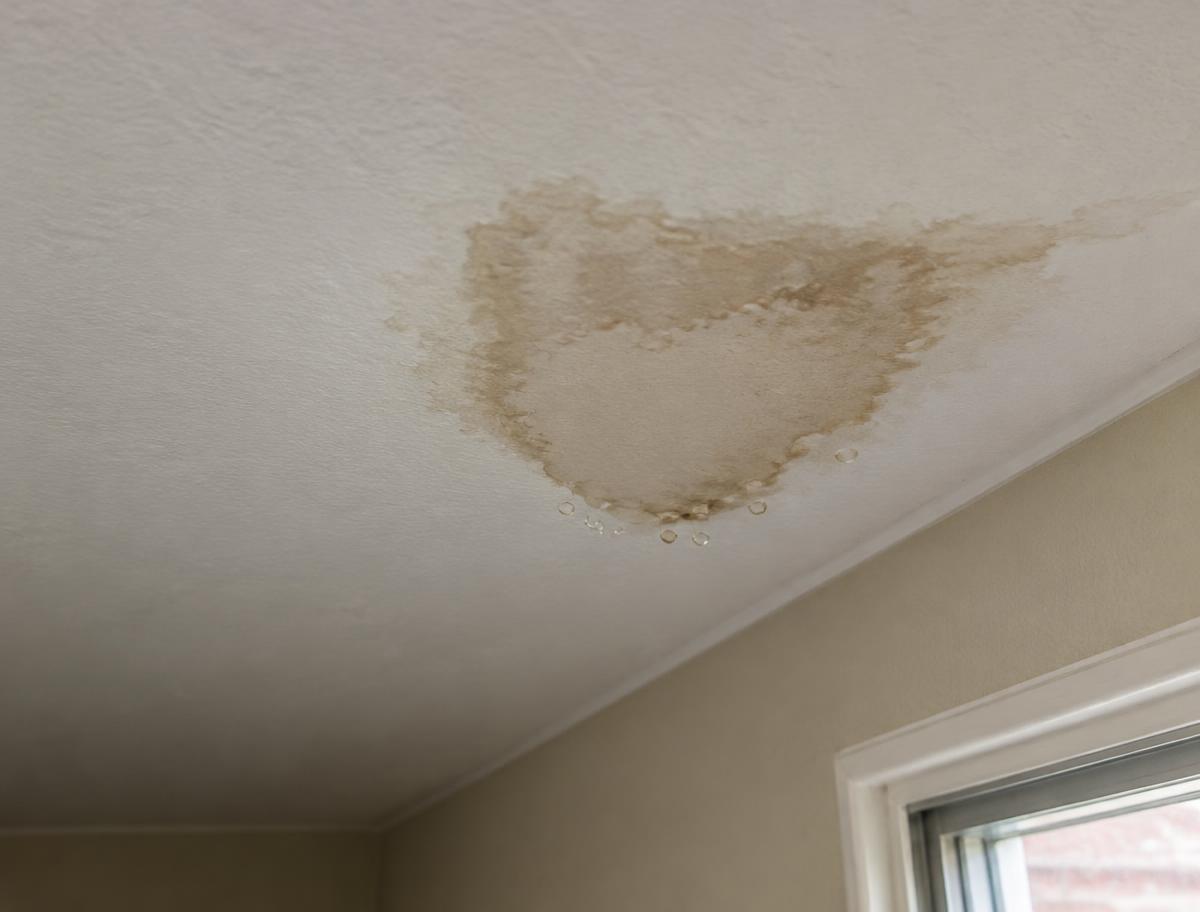
First, protect the inside of your home. Move furniture and electronics, place a bucket under the drip, and if a ceiling bulges with water, keep people away from it. Do not climb onto a wet roof; it is dangerous, and a temporary patch from inside does not stop the water at its source.
Next, write down what you see: the date, how hard it was raining, the wind direction if you know it, and exactly where the water appeared. Take dated photographs of the stain and any damage you can see from the ground. When it is safe, check the attic with a flashlight for wet decking or insulation. This information helps a roofer find the true entry point, which can be several feet away from the ceiling stain.
| Step | What to do | Why it helps |
|---|---|---|
| Protect the room | Move belongings, catch drips, stay clear of bulging drywall | Limits interior damage and injury |
| Record details | Date, rain intensity, wind direction, leak location | Narrows down the entry point |
| Photograph | Dated photos inside and from the ground outside | Useful for repairs and any claim discussion |
| Check the attic | Look for wet decking or insulation when safe | Shows the leak path above the ceiling |
| Schedule an inspection | Have the roof surface checked by a professional | Finds and fixes the source, not the symptom |
Repair or replace, and what insurance may consider
Many heavy rain leaks are repairable: replacing a pipe boot, resetting or replacing flashing, clearing and repairing a valley, or replacing damaged shingles. Replacement becomes worth discussing when leaks appear in several places, the shingles are near the end of their life, or the decking underneath has rotted. A documented inspection should explain which repairs fix the source and whether the roof has enough life left to justify them.
Insurance policies generally treat gradual wear differently from sudden damage such as hail or wind, and policies vary. If a storm caused the damage, prompt, dated documentation helps, but only your insurance carrier decides whether coverage applies. John's Roofing offers true 24 hour emergency service for active leaks, and its work carries a five year written workmanship warranty.
Continue your research
Verify the next part of your roofing decision
Questions people actually ask
Frequently asked questions about why is my roof leaking when it rains heavy
Why does my roof only leak during heavy rain?
Light rain flows slowly over the overlaps of shingles and flashing, so a small gap may stay dry. Heavy rain raises the volume of water and often comes with wind, which pushes water sideways into worn flashing, clogged valleys, cracked pipe boots, or lifted shingles.
Can clogged gutters cause a roof leak?
Yes. When gutters are clogged or overwhelmed in a downpour, water can back up under the roof edge and into the fascia, soffit, or wall. The resulting stain often appears near an exterior wall or above a window and can look like a roof leak.
Is it normal for a roof to leak in heavy rain?
No. A roof in good condition should shed heavy rain without leaking. A leak during a downpour means there is a weak spot somewhere along the water's path, and it usually gets worse over time if it is not repaired.
Why is the ceiling stain not under the leak on the roof?
Water often enters at one spot, then runs along the decking, rafters, or top of the insulation before dripping onto the ceiling. The stain can appear several feet away from the actual entry point, which is why inspecting the attic and roof surface matters.
Will homeowners insurance cover a roof leak from heavy rain?
It depends on the cause and your policy. Damage from a sudden event like hail or wind may be treated differently than a leak from gradual wear, and policies vary. Only your insurance carrier decides coverage, so document the damage and review your own policy.
Page last verified 2026-09-18 · John's Roofing · JohnsRoofingDFW.com