
how long does a roof replacement take
How Long Does a Roof Replacement Take? Full DFW Timeline
How many days will my roof replacement take, and what has to happen before the crew shows up?
How long does a roof replacement take? For most North Texas single-family homes, tear-off and installation take one to three working days, weather permitting. The whole project runs longer, because the inspection, any insurance claim, the permit, materials and dry weather come first, so plan in weeks rather than days.
Answered by John's Roofing · JohnsRoofingDFW.com · Last verified 2026-11-10
Decision summary
What matters most
- Install day or days: most single-family roofs are torn off and replaced in one to three working days.
- Before the crew arrives: inspection, written scope, any insurance claim, permit and material order.
- Texas law sets claim deadlines: 15 days to acknowledge a claim and 15 business days to decide after the insurer has what it needs.
- Weather is the wild card: rain, storms and cold below 40 degrees can push an install day.
- The job ends with cleanup, any city final inspection and a walkthrough with the written warranty.
Install days versus the whole project
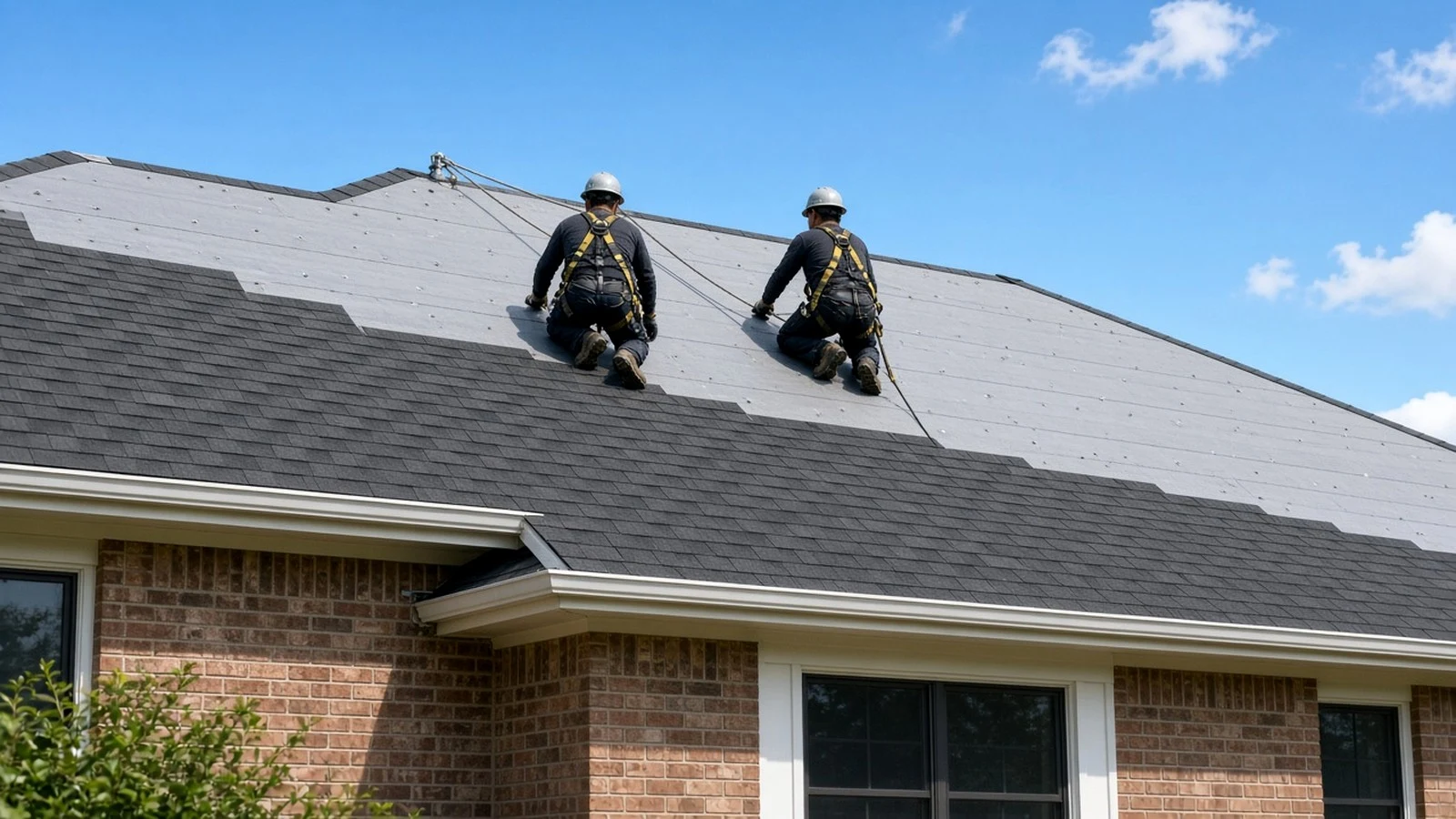
When people ask how long a roof replacement takes, they usually mean how long the crew will be at the house. For most single-family roofs in North Texas, that is one to three working days, weather permitting. Larger or steeper roofs, tile and metal take longer.
The full project is a different number. Before anyone climbs a ladder, the roof has to be inspected, the scope agreed, any claim worked through, a permit pulled where required and materials delivered. Each step has its own pace.
Our roof replacement service page explains what happens on site. This guide walks through the whole timeline so you know what to expect at each stage.
Step 1: Inspection and a written scope
Every replacement starts with a documented look at the roof. A useful inspection photographs every slope, checks flashing, penetrations, ventilation and the decking you can see from the attic, and ends with a written summary.
That summary drives everything after it. It tells you whether the roof truly needs replacing, what materials make sense and what could change once the old shingles come off. If you are still deciding, our guide to the signs you need a roof replacement helps you judge the condition first.
Our roof inspection service explains what a documented inspection includes, from slope photos to the written summary. Plan for the inspection itself to be a single visit. The written scope and price follow, and nothing should be scheduled until you have them in hand and understand them.
Step 2: The insurance claim, if there is one
If a storm caused the damage, the claim often sets the pace. The Texas Department of Insurance guide to getting your insurance claim paid lists the deadlines your company must meet:
- Acknowledge the claim, start its review and ask for any information it needs within 15 days.
- Accept or reject the claim within 15 business days after it gets everything it needs from you, with reasons in writing if it rejects.
- Pay within 5 business days after agreeing to pay.
Those clocks can stretch. TDI says a company can extend the decision deadline by 45 days if it explains why, and TDI can extend deadlines by 15 more days after a weather-related catastrophe. Answering adjuster questions quickly is the best way to keep your own part short.
With replacement cost coverage, TDI notes you may get two payments: the first for estimated repair cost minus depreciation, and the second after repairs are done. Our page on Texas roof insurance claim deadlines covers the time limits on your side.
Step 3: Permits, HOA approval and materials
Most North Texas cities require a permit to replace a roof. McKinney lists roofing among home repairs that require a permit and takes applications through its online portal. Plano's re-roof handout says a roof permit is required on re-roof projects, with an exemption for work not exceeding 25 percent of the roof.
Some cities make this fast. The City of Frisco offers self-service residential permits with immediate access when replacing roofs with the same material, and its eTrakit portal lets you check a contractor's registration status.
If you live in a neighborhood with a homeowners association, check whether it must approve the shingle style or color before work starts. Plano's handout reminds homeowners to contact their HOA for deed restriction requirements.
Once the scope, permit and color are settled, materials are ordered and delivered. Choosing your shingle line and color early is one of the easiest ways to avoid a delay at this stage.
Step 4: Waiting for the right weather
A roof is open to the weather between tear-off and dry-in, so crews schedule around the forecast. Rain, high wind and storms can all move an install day.
Cold matters too. GAF's cool weather installation guidance says asphalt shingles lose flexibility and may crack below 40°F, and that the self-sealing strip needs warmth, sun and temperatures above 40°F to activate. Below that, the manufacturer calls for extra steps such as hand sealing.
In North Texas, spring is the busiest storm season, so a project scheduled for April or May has a higher chance of a weather pause than one in a dry, mild stretch of fall.
What happens on install day
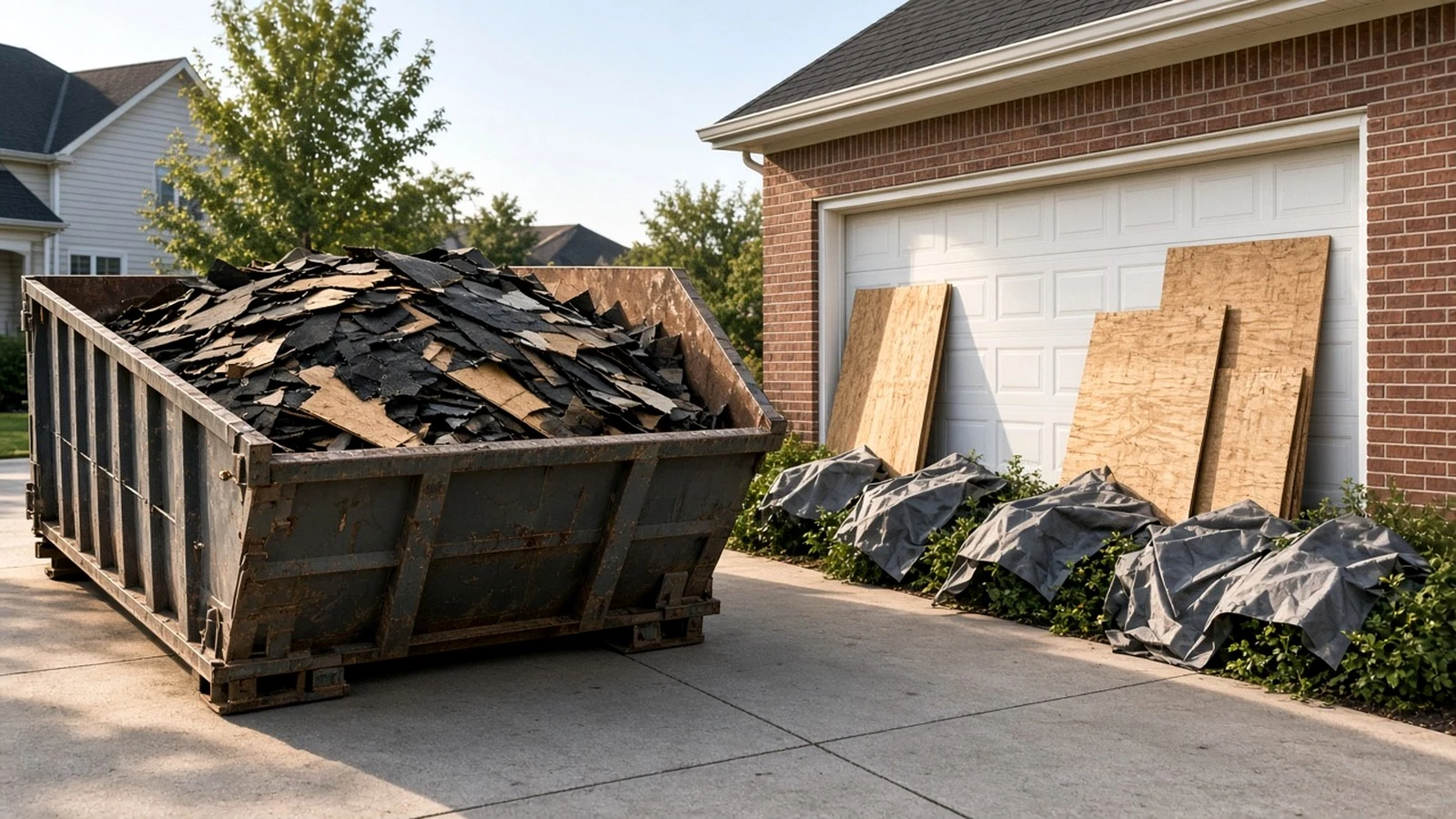
Here is what a typical one to three day replacement looks like on site:
- Protect the property. Tarps go over shrubs and plywood leans against walls or the garage, and a dumpster arrives for debris.
- Tear off. Old shingles and underlayment are stripped down to the deck.
- Check the deck. Soft or rotted decking is replaced, and you should be shown damaged wood before it is replaced.
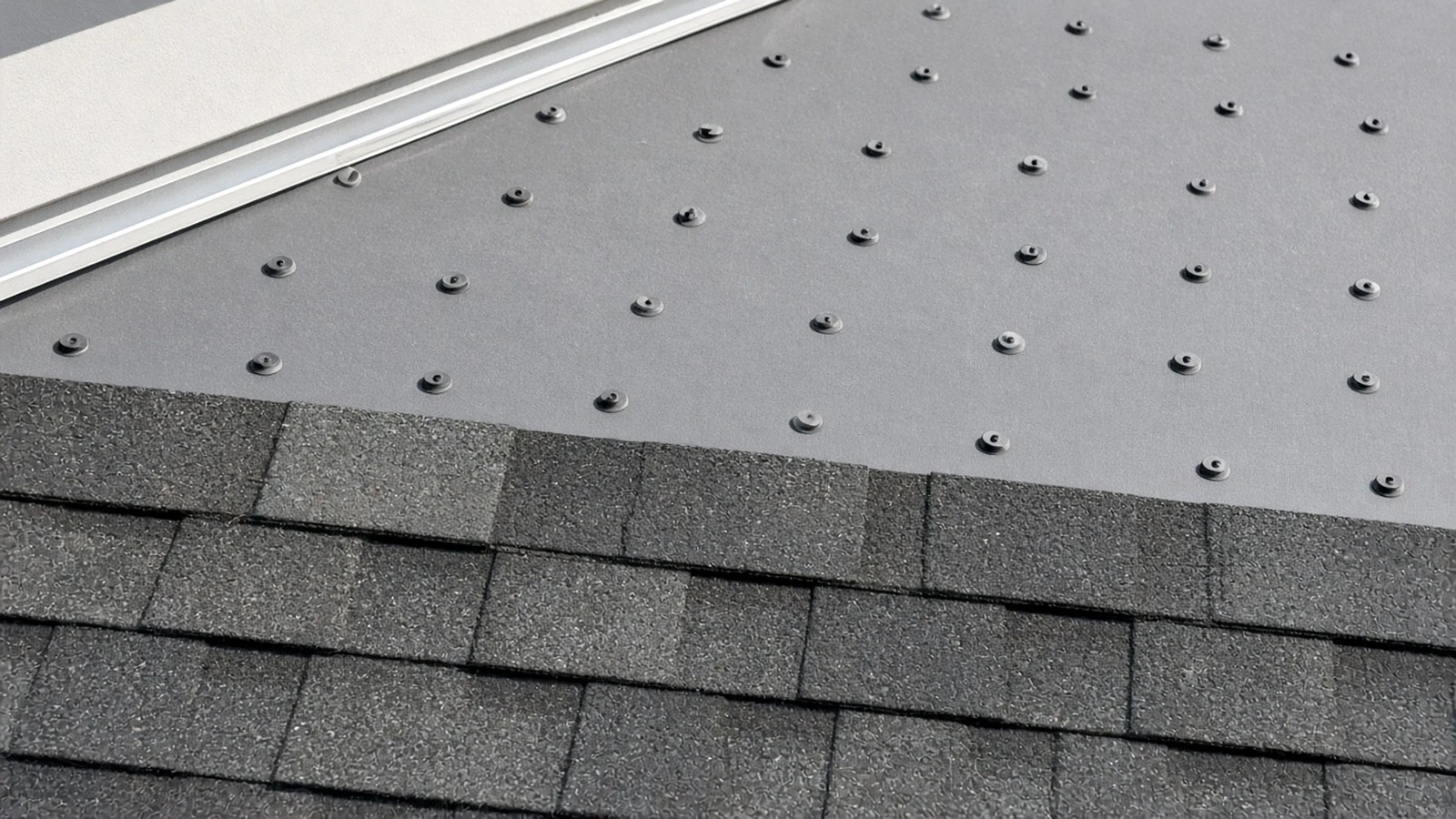
- Install edge metal and underlayment. Drip edge goes on, and the code requires underlayment over the drip edge along eaves and under it along rake edges.
- Flash and shingle. New flashing, vents and pipe boots go on with the shingles, working up to the ridge.
- Ridge and ventilation. Ridge caps and exhaust vents finish the roof.
On a simple roof, steps 2 through 6 can all happen in one day. On a bigger or steeper roof, crews may tear off and dry in one section at a time, so the house is never left open overnight without underlayment.
Expect noise on work days and plan to move vehicles out of the driveway. Pets are usually happier away from the house while the tear-off is happening.
Cleanup, final inspection and walkthrough
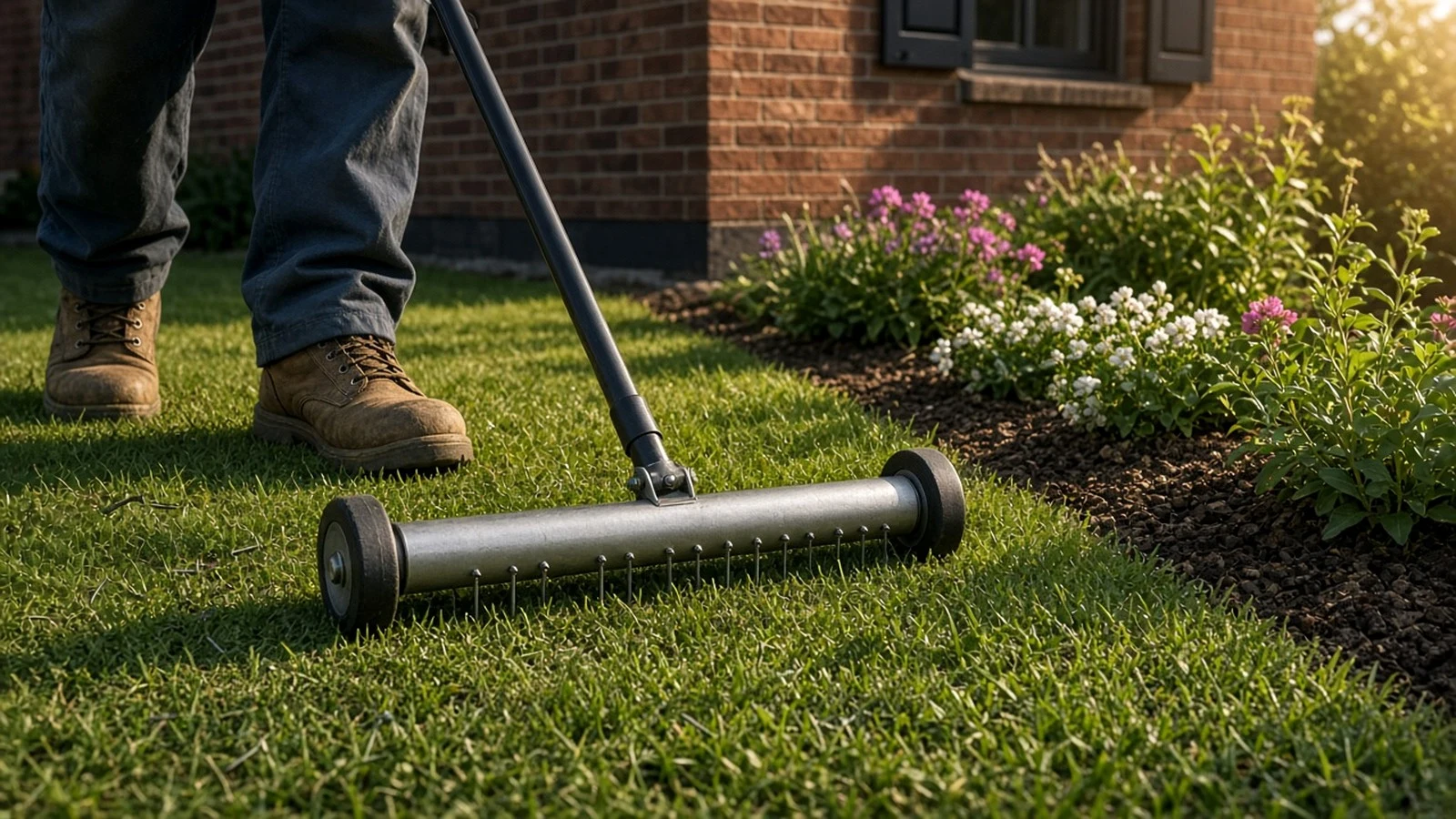
Cleanup is part of the job, not an afterthought. Debris goes into the dumpster, and a magnetic sweeper is rolled across the lawn, beds and driveway to pick up nails.
Where the city requires it, a final inspection follows. Plano's final roof inspection includes an attic check of vent piping, rafters and water heater and furnace exhaust vents, and the city also allows the homeowner to certify that the roofing contractor completed that check instead.
The last step is a walkthrough with you. At John's Roofing, the 5-year workmanship warranty is issued in writing at the final walkthrough, and the manufacturer material warranty is registered in the homeowner's name.
What can stretch the timeline
Most delays come from a short list:
- Rotten decking found after tear-off, which adds material and time.
- Rain, storms or a cold snap during the install window.
- A steep, tall or complex roof with many valleys and penetrations.
- Tile, metal or special-order materials.
- Claim questions, a second adjuster visit or a revised estimate.
- HOA review of shingle color or style.
Hypothetical example: A family in Allen has hail damage confirmed in early April. The claim is acknowledged and decided within the state deadlines, the permit is issued online, and the crew is scheduled for a Tuesday. A line of storms pushes the start to Thursday, and tear-off reveals three soft deck sheets. The install still takes two working days, but the full project from inspection to walkthrough runs several weeks.
Decking is the most common surprise because it cannot be seen until the shingles come off. Our guide to tear-off and replacement cost explains why honest bids carry a per-sheet deck repair price, which also tells you in advance how an extra half day of deck work will be handled.
None of these are unusual. A clear written scope that prices extra decking and explains the weather plan keeps surprises small.
Roof replacement timelines in DFW and North Texas
Storm season shapes local timelines. The National Weather Service Fort Worth office says severe weather peaks in spring and that large hail and damaging winds occur nearly every year somewhere in the Dallas/Fort Worth Metroplex. After a widespread storm, many homeowners call at the same time, so booking an inspection early helps.
Permit steps vary from city to city across Collin, Rockwall and Dallas counties, so the timeline in McKinney may differ slightly from one in Frisco or Plano. A local contractor should know each city's process and pull the permit before work starts where required.
John's Roofing confirms the expected day count in writing before work starts. To plan your replacement, call or text +1 (469) 547-5435, answered 24/7, or request a documented inspection and we will walk you through each step and its timing.
Sources and disclaimer
Sources
Texas Department of Insurance: Steps to getting your home or car insurance claim paid: https://www.tdi.texas.gov/tips/getting-your-insurance-claim-paid.html
Texas Department of Insurance: How do I file a homeowners insurance claim? (PDF): https://www.tdi.texas.gov/tips/documents/filing-home-claim.pdf
Texas Insurance Code Chapter 542: Processing and Settlement of Claims: https://tcss.legis.texas.gov/resources/IN/htm/IN.542.htm
City of McKinney: Home Repairs and Permit Information: https://www.mckinneytexas.org/3350/Home-Repairs-Permit-Information
City of Frisco: Apply for Residential Permits: https://www.friscotexas.gov/1696/Residential-Permits
City of Plano: Re-roof Residential Permit Requirements: https://www.plano.gov/residential-permits
GAF: Cool Weather Roofing, Tips for Installing Shingles in Cool Temperatures: https://www.gaf.com/en-us/blog/residential-roofing/cool-weather-roofing-must-know-tips-for-installing-shingles-in-cool-temperatures-c1f35062-b49f-45ef-b2bb-fbc0304d6b69
International Code Council: 2021 International Residential Code R905.2.8.5 Drip Edge: https://codes.iccsafe.org/content/IRC2021P2/chapter-9-roof-assemblies
National Weather Service Fort Worth: Dallas/Fort Worth Climate Narrative: https://www.weather.gov/fwd/dfw_narrative
Disclaimer: This article is general information for North Texas homeowners, not legal or insurance advice. Timelines vary with your roof, your city, your policy and the weather. Your insurance carrier decides coverage and claim outcomes, and John's Roofing is a roofing contractor, not a public adjuster.
Continue your research
Verify the next part of your roofing decision
Questions people actually ask
Frequently asked questions about how long does a roof replacement take
How many days does it take to replace a roof?
Most single-family roofs in North Texas are torn off and replaced in one to three working days, weather permitting. Larger or steeper roofs, tile and metal take longer. The day count should be confirmed in writing before work starts.
Can a roof be replaced in one day?
Many smaller, simpler asphalt shingle roofs can be torn off and replaced in a single working day with a full crew. Steep pitches, multiple stories, rotted decking or bad weather can push the job into a second or third day.
How long does the insurance part take in Texas?
Texas law gives your company 15 days to acknowledge a claim and 15 business days to accept or reject it after it receives everything it needs. It can extend the decision by 45 days with an explanation, and TDI can add 15 days after a catastrophe. See our Texas roof insurance claim deadlines page.
Do I need to be home during a roof replacement?
You do not have to stay home all day, but be reachable. The crew may need to show you damaged decking before replacing it, and you will want to attend the final walkthrough. Move vehicles out of the driveway and keep pets and children away from the work area.
Can roofs be replaced in winter in North Texas?
Yes, on suitable days. GAF says shingles can be installed in cool weather when its precautions are followed, such as hand sealing, because the self-sealing strip needs temperatures above 40°F to activate on its own. Crews plan around cold mornings and rain.
Does a roof replacement need a permit?
Usually. McKinney lists roofing among repairs that require a permit, Frisco offers self-service permits for same-material roof replacements, and Plano requires a re-roof permit except for work under 25 percent of the roof. Your contractor should pull the permit before work starts where required.
Page last verified 2026-11-10 · John's Roofing · JohnsRoofingDFW.com