
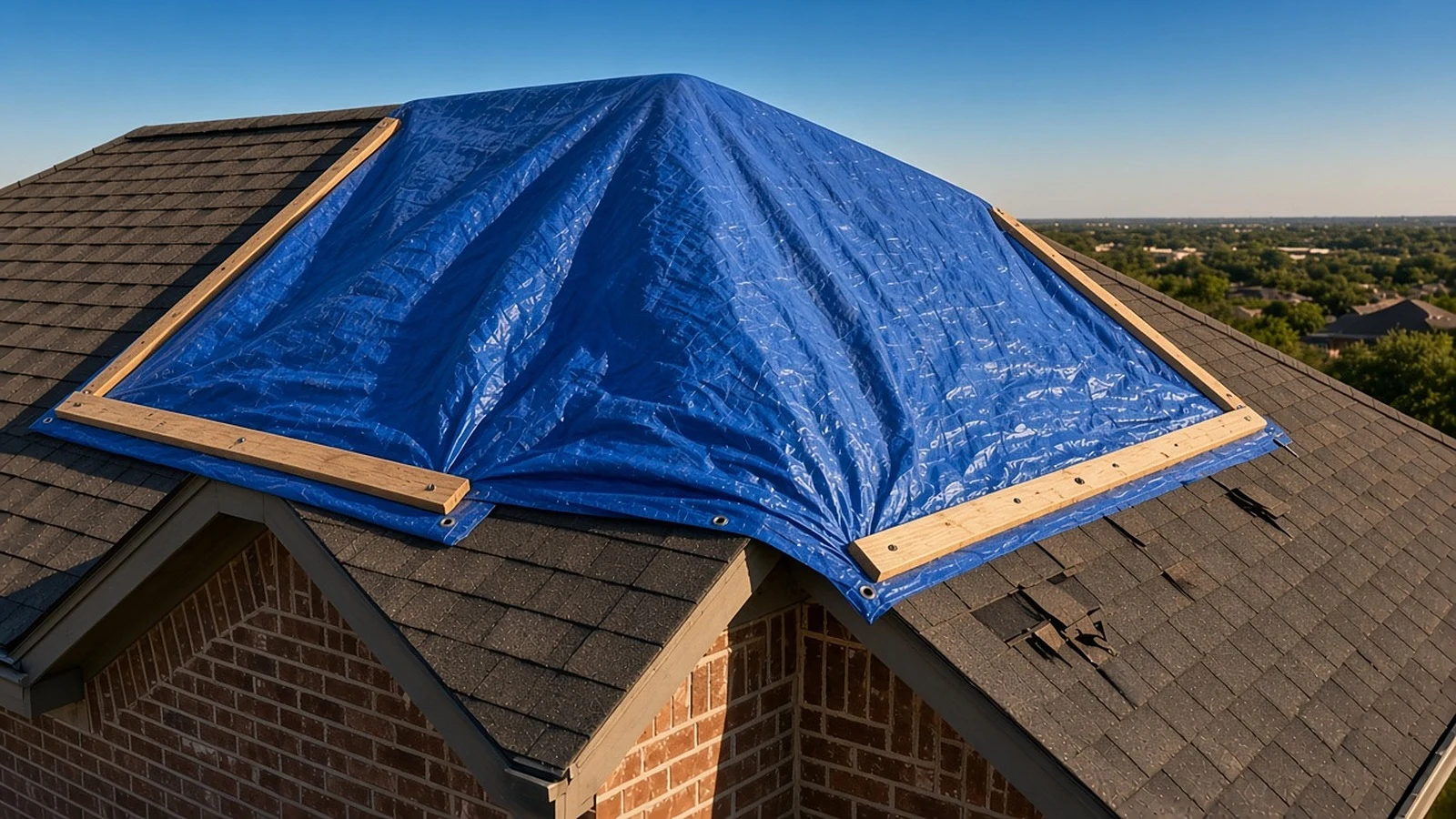
how to tarp a roof
How to Tarp a Roof: Safe Steps for North Texas Homeowners
How do I tarp a damaged roof safely after a storm, and when should I call a roofer instead?
How to tarp a roof safely: wait until rain, wind and lightning have passed, photograph the damage, then cover the damaged area with a heavy-duty tarp that runs over the ridge and is fastened through wood boards, not loose tarp. If the roof is steep, wet, sagging or two stories high, stay off it and call a roofer.
Answered by John's Roofing · JohnsRoofingDFW.com · Last verified 2026-09-18
Decision summary
What matters most
- Never tarp during rain, wind or lightning. OSHA's tarping guidance says never install a tarp during a storm.
- Photograph the damage before you cover it, and keep every receipt for the tarp and materials.
- Run the tarp over the ridge so water sheds off it, and fasten it through wood boards, not through bare tarp.
- Steep, wet, sagging or two-story roofs are a job for a professional crew with fall protection.
- A tarp is temporary. The permanent repair still happens at the shingles, flashing or deck.
Is it safe for you to tarp your own roof?
Start with this question, because no tarp is worth a fall. OSHA's roof tarping safety fact sheet is written for trained workers, and it still warns that a damaged roof should not be walked on until its strength and structural integrity have been checked. Homeowners usually have less equipment and less training than those crews.
Stay off the roof and call a professional if any of these are true:
- It is raining, windy, or you can still hear thunder.
- The roof is wet, icy, covered in hail or debris, or the decking feels soft.
- You can see sagging, a hole into the attic, or a tree limb resting on the roof.
- The roof is steep or the home is two stories or taller.
- Power lines are down near the house or touching the roof.
- You would be working alone, in the dark, or without a helper on the ground.
If none of those apply, you may be able to do a small, low-risk tarp on a single-story, low-slope roof in calm, dry daylight. If you are unsure, treat that as a no. The inside of the home can be protected while you wait, as our guide on how to fix a leaking roof from the inside explains.
Ladder and fall safety before you climb
Most of the real danger in tarping comes from the ladder and the roof edge. OSHA recommends doing as much of the work as possible from a ladder or other stable platform instead of on the roof itself.
OSHA's tarping guidance gives these ladder and roof rules:
- Set the ladder at a 4:1 angle: one foot out from the wall at the base for every four feet of ladder height to the eave.
- Extend the ladder three feet above the roof edge so you have something to hold as you step on and off.
- Do not use a metal ladder near power lines, and treat every downed line as live.
- Watch for tripping hazards such as vent pipes, satellite dishes and cables.
- Never walk on a tarp. A tarped roof is very slippery, especially when wet.
OSHA also separates low-slope roofs (a rise of 4 inches or less per 12 inches) from steep roofs (more than 4 in 12). Its guidance says no one should stand on a steep roof without conventional fall protection, such as a guardrail, safety net or personal fall arrest system. If your roof is steep and you do not own and know how to use that equipment, this is not a do-it-yourself job.
Document the damage before you cover it
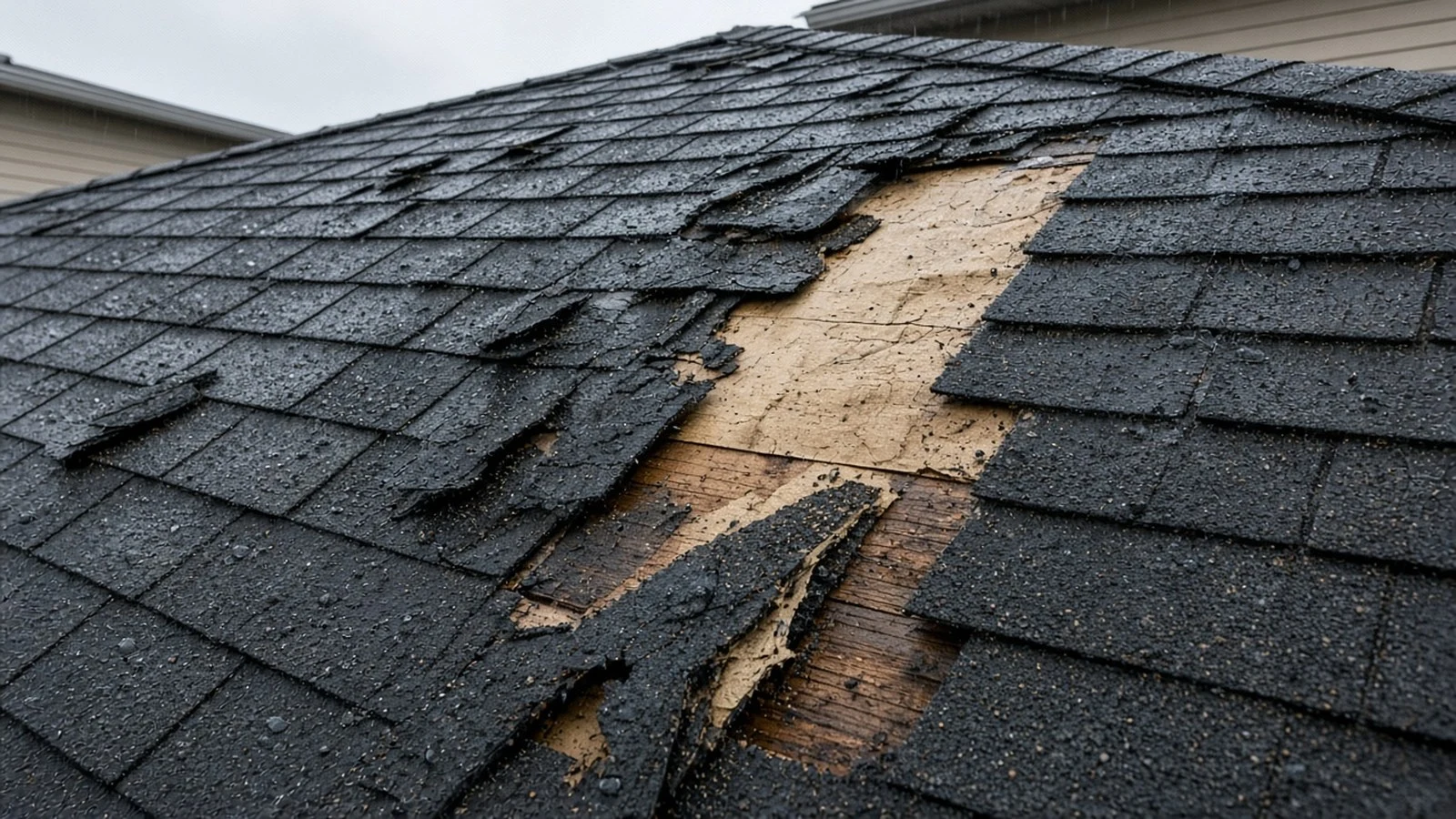
Photos come first, because once a tarp goes on, the damage is hidden. The Texas Department of Insurance claim tips say to take pictures or video of damaged property before making repairs when you can, and to keep all receipts for repairs you make.
TDI also notes that homeowners policies may require you to make reasonable temporary repairs to prevent further damage, and that your policy covers the cost of those repairs. A tarp is the most common temporary roof repair. Leaving an open roof uncovered can let water damage spread to the decking, insulation and ceilings.
What to capture before tarping:
- Wide photos of each side of the house and the damaged roof area, taken from the ground.
- Close-ups from the ladder only if you can take them safely.
- Interior stains, drips and wet insulation, before anything dries.
- The date and approximate time of the storm.
- Receipts for the tarp, boards, fasteners and any labor.
TDI's guidance is also clear on one more point: don't make permanent repairs until the adjuster has inspected the damage. Tarp now, and hold off on new shingles until your carrier has seen the roof. Our insurance claim help page explains how we document storm damage for that visit.
What you need to tarp a roof
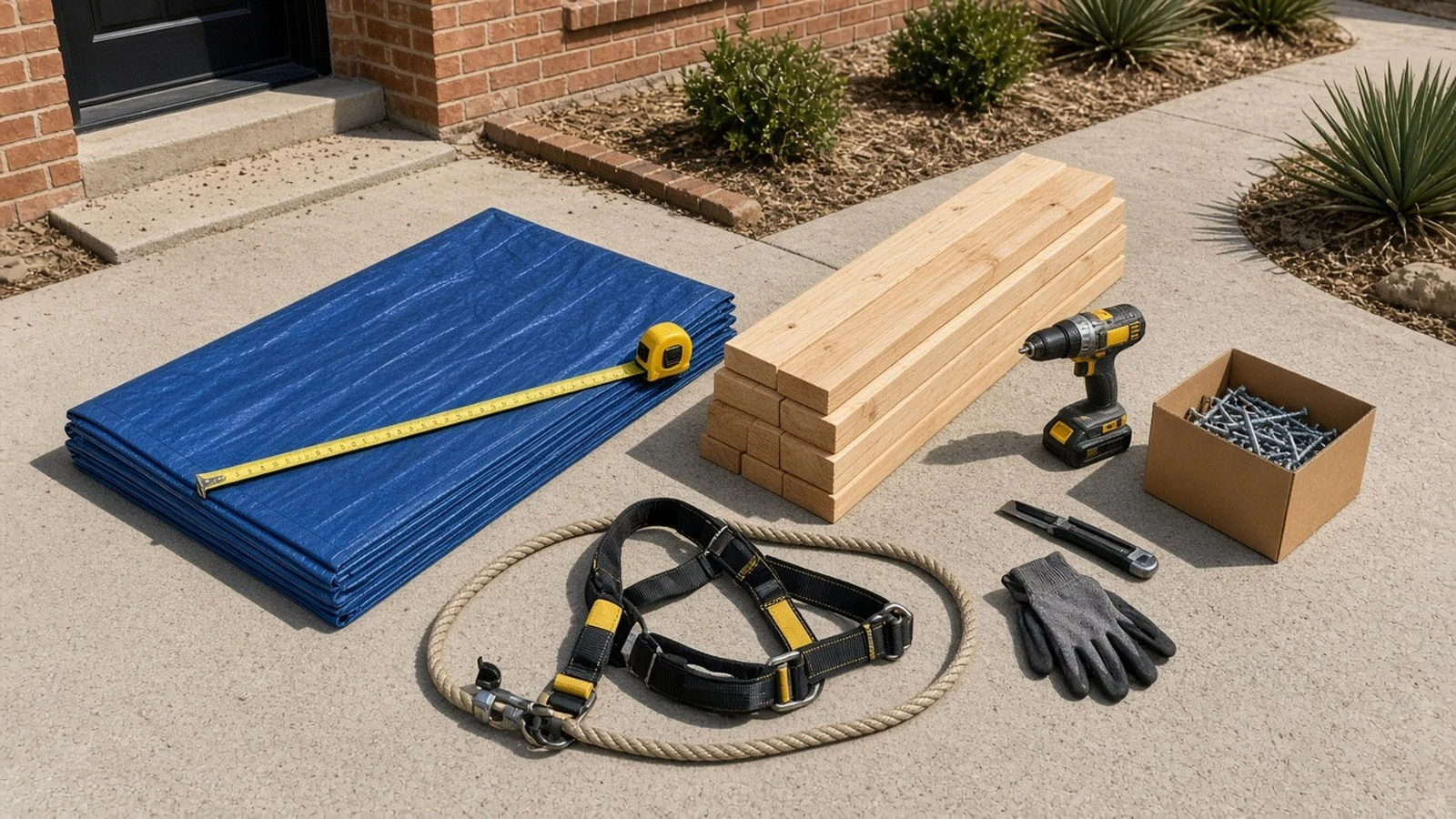
Gather everything on the ground before anyone climbs, so you are not carrying loads up and down the ladder.
A typical homeowner kit:
- A heavy-duty, reinforced poly tarp large enough to cover the damage, run over the ridge and extend well past the damaged area on every side.
- Straight 2x4 boards for battens along the top, bottom and side edges.
- Exterior screws or nails long enough to pass through two boards and into the roof deck, plus a drill or hammer.
- A tape measure, utility knife and work gloves.
- A sturdy extension ladder rated for your weight plus tools.
- Fall protection if the roof is steep, and a helper on the ground.
This matches how federal programs do it. FEMA describes Operation Blue Roof sheeting as plastic held in place with strips of wood secured to the roof with nails or screws, and the U.S. Army Corps of Engineers calls it fiber-reinforced sheeting that covers the roof until permanent repairs can be made.
How to tarp a roof, step by step
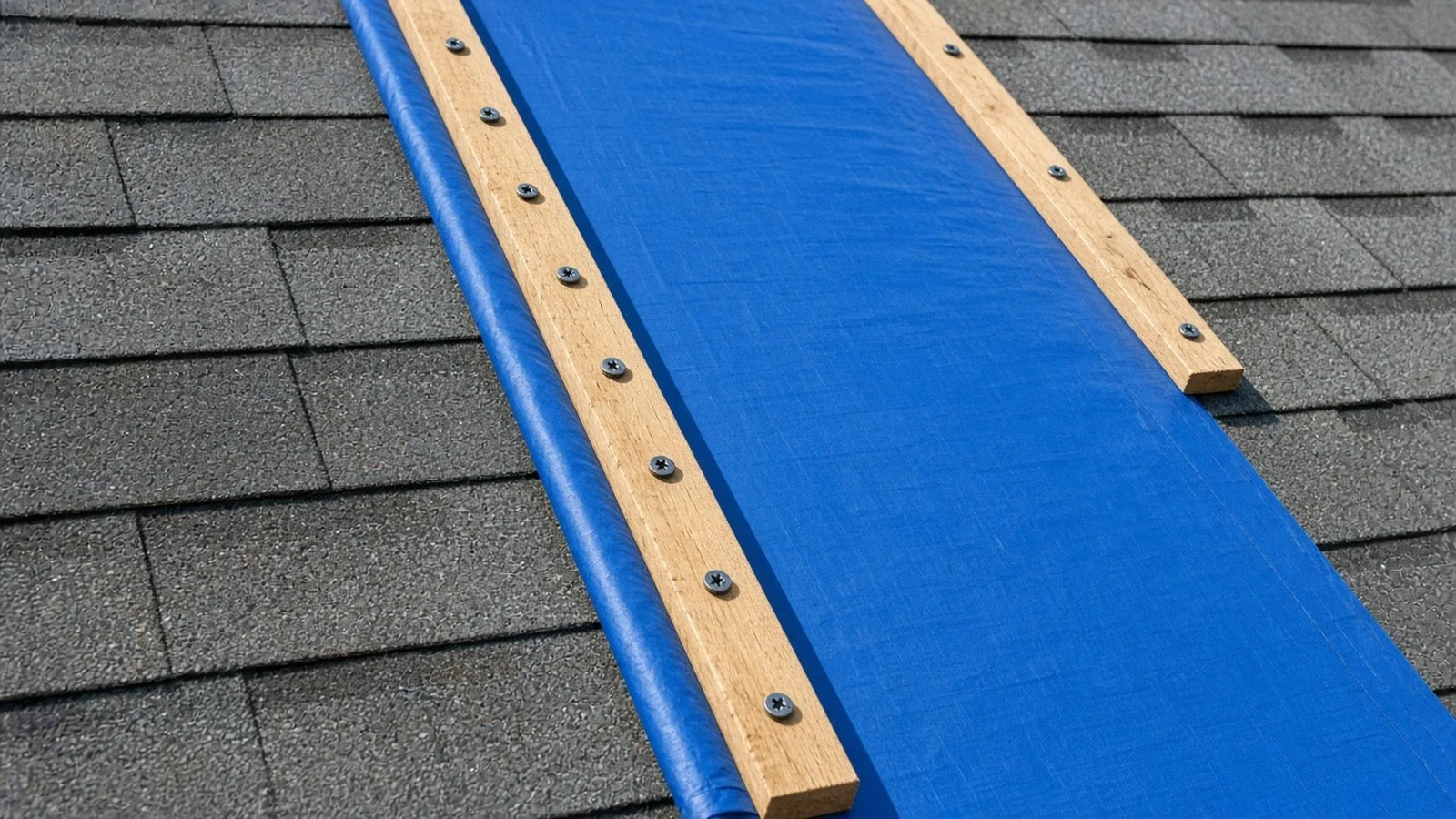
These steps assume a calm, dry day, a single-story or low-slope roof, and a helper on the ground. If you cannot do a step safely, stop and call a roofer.
- Check the weather. The National Weather Service advises staying in a safe shelter until at least 30 minutes after the last thunder. Wait for dry, calm daylight.
- Clear the area. Use a roof rake or brush from the ground or ladder to remove loose debris where you can, and keep people out of the drop zone below.
- Measure. From the ladder or your photos, measure the damaged area. Plan for the tarp to run from the eave on the damaged side, over the ridge, and onto the other slope, with extra margin on both sides.
- Prepare the top edge on the ground. Roll the top edge of the tarp around a 2x4 and fasten it, then set a second 2x4 on top to sandwich the tarp.
- Anchor over the ridge. Place the top board on the opposite slope just past the ridge and fasten the board sandwich into the roof deck. Fasten through the boards, never through bare tarp.
- Unroll down the slope. Let the tarp fall over the damaged area toward the eave, working beside it, not on it.
- Secure the bottom and sides. Pull the tarp smooth and taut, wrap the bottom edge around a board near the eave, and add boards along the sides running down the slope so water can drain past them.
- Check your work. From the ground, look for flapping edges or loose spots. In the attic, check that drips have stopped during the next rain.
Every fastener you drive makes a new hole in the roof. Note where the boards sit so the crew doing the permanent repair can address those holes along with the storm damage.
Mistakes that make a tarp fail
Most failed tarps come down to a few avoidable errors:
- Stopping the tarp below the ridge, which lets water run under the top edge.
- Nailing or screwing through the tarp alone, so wind tears it at the grommets or fastener holes.
- Running boards across the slope in a way that dams water instead of letting it drain.
- Leaving the tarp loose, so it flaps and wears through in the next wind.
- Stepping on the tarp, which OSHA flags as very slippery, especially when wet.
- Weighing the tarp down with bricks or loose objects that can slide off and fall.
If you see any of these after a storm, do not climb up to fix them in bad weather. Call for help instead.
After the tarp: what happens next
A tarp buys time; it does not fix the roof. The water still entered at a damaged shingle, flashing, vent or deck section, and that spot needs a permanent repair from the outside.
Hypothetical example: A homeowner in Allen finds a few missing shingles and a ceiling drip after a spring wind storm. They photograph the ceiling and the roof from the ground, a crew tarps the area the next morning once the wind dies down, and the homeowner files the claim with the photos and the tarp receipt. The adjuster then inspects the roof before any permanent repair is made.
Check the tarp after every storm, and plan the permanent repair as soon as your claim and the weather allow. Texas claim timelines matter here, and our Texas roof insurance claim deadlines page explains the general rules. For help judging whether the damage came from hail, see how to tell if your roof has hail damage.
Tarping roofs in DFW and North Texas
Storm damage is a regular part of owning a home here. The National Weather Service Fort Worth office says thunderstorms and the severe weather that comes with them peak in spring, and that large hail, damaging winds, flooding and tornadoes occur nearly every year somewhere in the Dallas/Fort Worth Metroplex.
Storms rarely hit every street evenly, so one McKinney or Frisco subdivision can need tarps while the next one is fine. To check the storms recorded near your address, use our DFW hail history guide, which explains how to pull records from the NOAA Storm Events Database.
After a federally declared disaster, Operation Blue Roof may also be an option. The Corps of Engineers runs it for FEMA only after FEMA assigns the mission at the request of the affected state. It is FEMA-funded, it is for primary residences, and the roof framing cannot be more than 50 percent damaged.
The Corps says Blue Roof representatives never ask for Social Security or bank account numbers. Report anyone charging for the service to the FEMA Disaster Fraud Hotline at 1-866-720-5721.
TDI also warns Texans to avoid contractors who offer to waive a deductible, which is illegal under state law. Get more than one bid, and don't pay in full up front.
When to call a professional for emergency tarping
Call a roofer instead of climbing if the roof is steep, wet, two stories or more, sagging, or near power lines, or if water is already coming through a ceiling. A crew with fall protection can tarp safely once conditions allow and photograph the damage for your claim at the same time.
John's Roofing provides true 24-hour emergency roofing service across its North Texas service area. During an active storm, we tarp the affected area from outside to stop the water, then schedule the permanent, photographed repair. Our storm and hail damage service shows how emergency tarping fits into the documented inspection process.
Call or text 469.394.4386 any hour. You can send photos of the damage straight from your phone to the same number.
Sources and disclaimer
Sources
- Texas Department of Insurance: Tips for filing a claim with your insurance company: https://www.tdi.texas.gov/consumer/claimtips.html
- Texas Department of Insurance: Hail damage to your home or car? What to do next: https://www.tdi.texas.gov/tips/after-hail-or-windstorms.html
- Texas Department of Insurance: Help after a storm: https://tdi.texas.gov/consumer/storms/recoverytips.html
- OSHA: Roof Tarping (Blue Roof) Safety fact sheet (OSHA 3926): https://www.osha.gov/sites/default/files/publications/OSHA3926.pdf
- OSHA: 29 CFR 1926.501, Duty to have fall protection: https://www.osha.gov/laws-regs/regulations/standardnumber/1926/1926.501
- U.S. Army Corps of Engineers: Operation Blue Roof: https://www.usace.army.mil/Missions/Emergency-Operations/Blue-Roof-Info/
- FEMA: Fact Sheet: The Difference between FEMA Tarps and USACE Blue Roofs: https://www.fema.gov/press-release/20250121/fact-sheet-difference-between-fema-tarps-and-usace-blue-roofs
- FEMA: Operation Blue Roof (printable fact sheet): https://www.fema.gov/print/pdf/node/671068
- National Weather Service Fort Worth: Dallas/Fort Worth Climate Narrative: https://www.weather.gov/fwd/dfw_narrative
- National Weather Service: Lightning Safety Tips: https://www.weather.gov/safety/lightning-tips
Disclaimer
This article is general safety and insurance information for North Texas homeowners, not legal, insurance or engineering advice. Working on a roof carries a real risk of serious injury. Your insurance policy and your carrier decide coverage, and John's Roofing is a roofing contractor, not a public adjuster.
Continue your research
Verify the next part of your roofing decision
Questions people actually ask
Frequently asked questions about how to tarp a roof
Can I tarp a roof myself?
Sometimes. A small tarp on a single-story, low-slope roof in calm, dry daylight, with a helper and a properly set ladder, may be manageable. If the roof is steep, wet, sagging, two stories or more, or near power lines, stay off it and call a professional with fall protection.
Should I tarp my roof in the rain?
No. OSHA's roof tarping guidance says never install a tarp during a storm while it is windy or raining. The National Weather Service advises waiting at least 30 minutes after the last thunder before going back outside. Protect the inside of the home with buckets and towels until conditions are safe.
Do I need to take photos before tarping?
Yes. The Texas Department of Insurance advises taking pictures or video of damaged property before making repairs when possible. Photograph the roof from the ground, any interior water, and the storm date, then keep receipts for the tarp and materials.
Will insurance pay for an emergency roof tarp?
It may. TDI says homeowners policies may require reasonable temporary repairs to prevent further damage and that your policy covers the cost of those repairs. Coverage depends on your policy and whether the damage is covered, so keep every receipt and ask your carrier.
How long can a tarp stay on a roof?
A tarp is a temporary cover, not a repair. The Corps of Engineers describes Blue Roof sheeting as protection until permanent repairs can be arranged. Check the tarp after every storm and schedule the permanent repair as soon as your claim and the weather allow.
Should a roof tarp go over the ridge?
Yes, in most cases. When the tarp runs over the ridge and is anchored on the other slope, water sheds off the top instead of running underneath. Fasten it through wood boards rather than through bare tarp so wind is less likely to tear it.
What is Operation Blue Roof?
Operation Blue Roof is a FEMA-funded program run by the U.S. Army Corps of Engineers after a declared disaster. Contracted crews install fiber-reinforced sheeting on eligible primary residences. It only runs when FEMA assigns a mission at the request of the affected state.
Page last verified 2026-09-18 · John's Roofing · JohnsRoofingDFW.com