
how big does hail have to be to damage a roof
How Big Does Hail Have to Be to Damage a Roof? Size Guide
What size hail starts to damage asphalt shingles, metal and tile roofs, and why can smaller hail still matter?
How big does hail have to be to damage a roof? Haag Engineering's research puts the smallest damaging size at about 1 inch for lightweight asphalt shingles, the size the National Weather Service calls severe. Heavier shingles, tile and metal usually need larger stones, and wind, hail hardness and roof age can change the result.
Answered by John's Roofing · JohnsRoofingDFW.com · Last verified 2026-11-10
Decision summary
What matters most
- The National Weather Service classifies hail 1 inch or larger, about quarter size, as severe.
- Published research thresholds start near 1 inch for lightweight asphalt shingles and rise for heavier shingles, tile and metal.
- Thresholds are rules of thumb, not guarantees: wind, hail hardness, impact angle and roof age all matter.
- IBHS research shows repeated small hail can wear shingles and make them more vulnerable to later large hail.
- UL 2218 Class 4 shingles passed a 2-inch steel ball test in the lab, which helps but does not make a roof hail-proof.
Hail sizes, from pea to softball
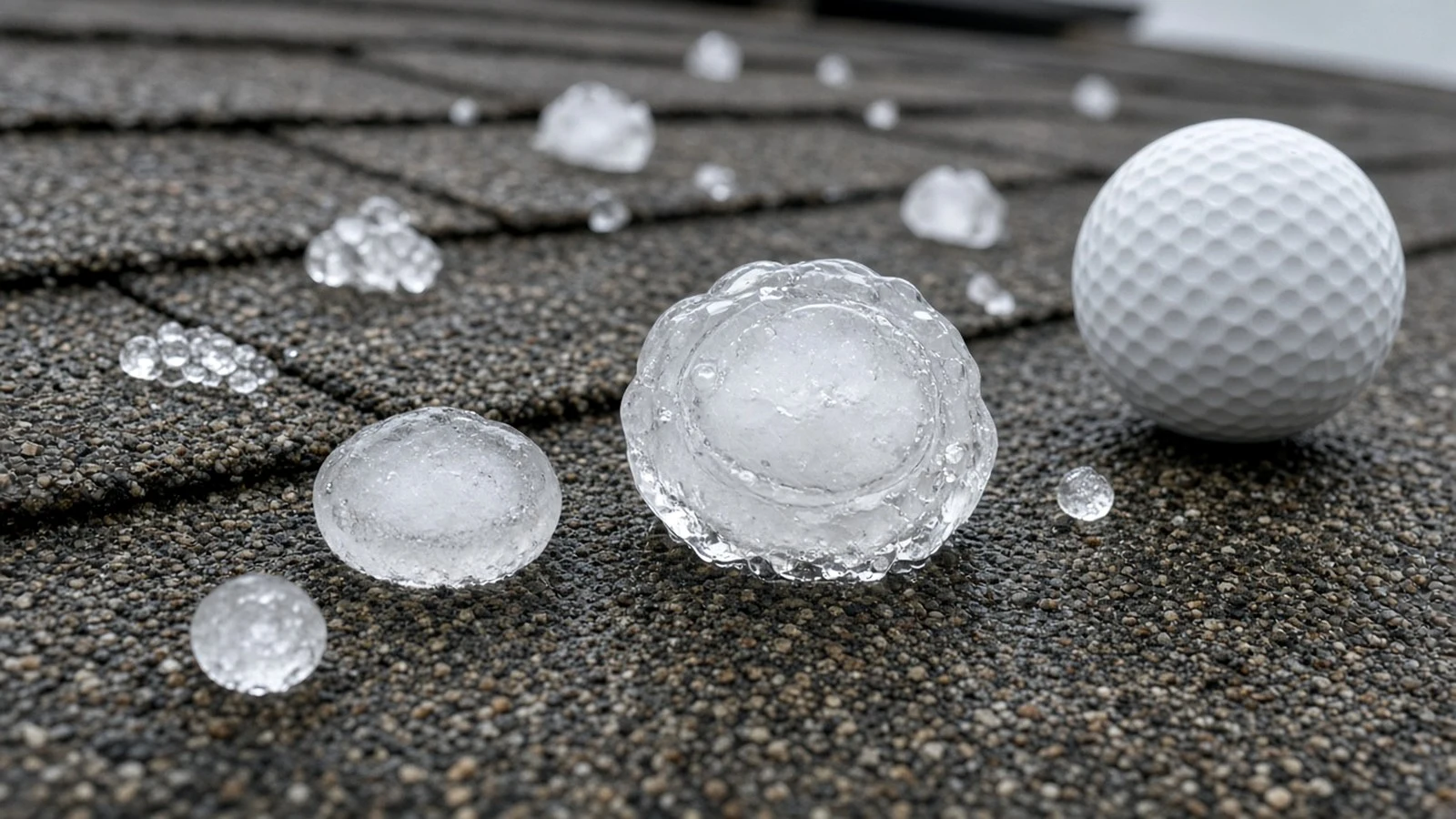
Hail is measured by diameter, and spotters compare stones with everyday objects. The National Weather Service severe weather definitions call a thunderstorm severe when it produces hail at least 1 inch in diameter, and they use this size guide:
- Less than 0.50 inch: pea
- 0.50 inch: marble or mothball
- 0.75 inch: dime or penny
- 0.88 inch: nickel
- 1.00 inch: quarter
- 1.25 inches: half dollar
- 1.50 inches: walnut or ping pong ball
- 1.75 inches: golf ball
- 2.00 inches: hen egg
- 2.50 inches: tennis ball
- 2.75 inches: baseball
- 3.00 inches: tea cup
- 4.00 inches: grapefruit
- 4.50 inches: softball
The 1 inch line matters for roofs because it is close to where research starts to see damage on the lightest shingles. It is also the size that triggers a Severe Thunderstorm Warning.
What size hail will damage a roof? Thresholds by material
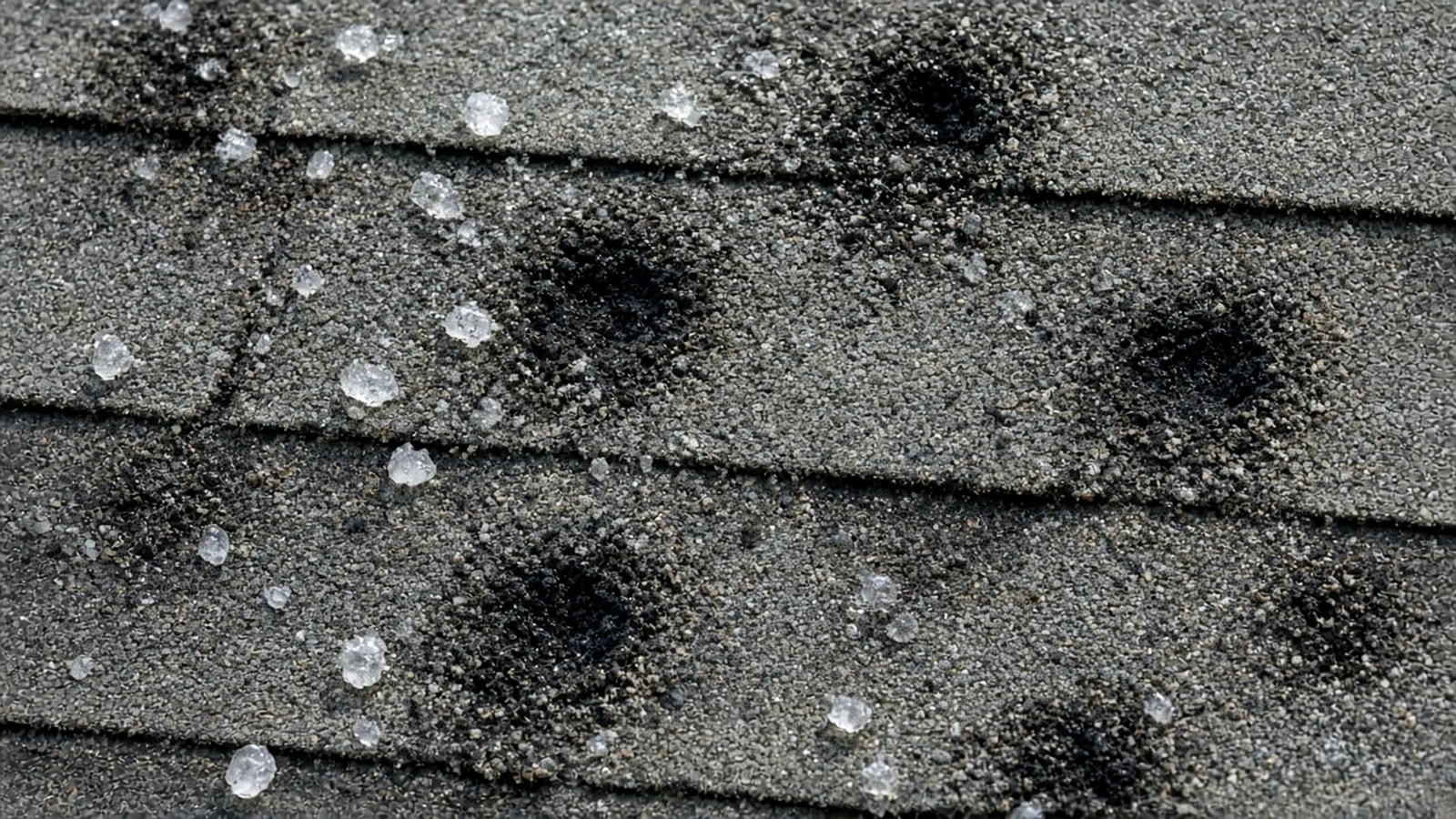
Haag, a Dallas-based engineering firm, has impact-tested roofing since 1963. Its article on hail damage thresholds defines a threshold as the smallest hail size that might cause functional damage to a type of roofing, based on lab impacts with hard ice balls and thousands of field inspections. Its published thresholds:
- Lightweight asphalt shingles: 1 inch
- Heavyweight asphalt shingles and wood shingles: 1¼ inches
- Medium wood shakes and clay tiles: 1½ inches
- Concrete tiles: 1¾ inches
- Smooth built-up roofing and smooth EPDM membranes: 2 inches
- Modified bitumen membranes: 1½ to 2 inches
- Gravel-ballasted membranes and galvanized steel panels: 2½ inches
Haag is clear that a threshold is not a guarantee that hail of a certain size did or did not damage a roof. It calls thresholds rules of thumb that ballpark the opportunity for damage. Treat this list as a starting point for a conversation, not a verdict on your roof.
Asphalt shingles: 3-tab versus architectural
Most North Texas homes have asphalt shingles, and thickness makes a real difference. In a Haag study of hail damage threshold sizes presented to the American Meteorological Society, 11-year-old 3-tab fiberglass shingles were damaged in 60 percent of tests by 1.25-inch ice stones. The same-age laminated shingles showed no damage at 1.25 inches and were damaged in 60 percent of tests at 1.5 inches.
In other words, thicker architectural shingles generally need a bigger stone before the mat is bruised or fractured. Older, thinner and more brittle shingles are the most vulnerable.
Functional damage on asphalt shingles usually looks like randomly spaced impact marks where granules are displaced and the mat underneath is bruised or fractured. Our guide on how to tell if your roof has hail damage explains how inspectors confirm it.
Why small hail still matters
Hail under 1 inch is called sub-severe, and it falls far more often than large hail. The Insurance Institute for Business and Home Safety studied it in its research on high concentrations of small hail.
IBHS found that repeated small hail knocks protective granules off asphalt shingles, exposing the asphalt to sunlight and speeding up aging. In its tests, shingles exposed to natural weathering and two simulated sub-severe hail events became up to ten times more susceptible to damage from later large hail than new shingles.
That does not mean every small hailstorm damages a roof. It means a roof's history matters, and a storm that seems minor can add to wear that shows up in the next big one.
Impact-rated shingles and UL 2218 classes
Manufacturers describe hail resistance with UL 2218, a lab test that drops steel balls on a roofing sample. The class depends on the ball size the product survives without cracking through:
- Class 1: 1¼-inch steel ball dropped 12 feet
- Class 2: 1½-inch steel ball dropped 15 feet
- Class 3: 1¾-inch steel ball dropped 17 feet
- Class 4: 2-inch steel ball dropped 20 feet
UL notes that the test does not evaluate weathering, temperature or aging, which all affect field performance. IBHS also points out that UL 2218 pass criteria do not necessarily match how insurers decide whether to repair or replace after hail.
Because steel balls do not behave exactly like ice, IBHS built its own hail impact test protocol. It tests commercially available asphalt shingles with laboratory-made hailstones of 1.5 and 2.0 inches, designed to match the density and strength of natural hail, and compares products by relative performance.
A Class 4 shingle is still a meaningful upgrade in hail country. The Texas Department of Insurance says your insurance company might give you a discount for using roofing materials less likely to be damaged by wind, hail or fire, so ask your agent before you choose.
Metal, tile and other roofs
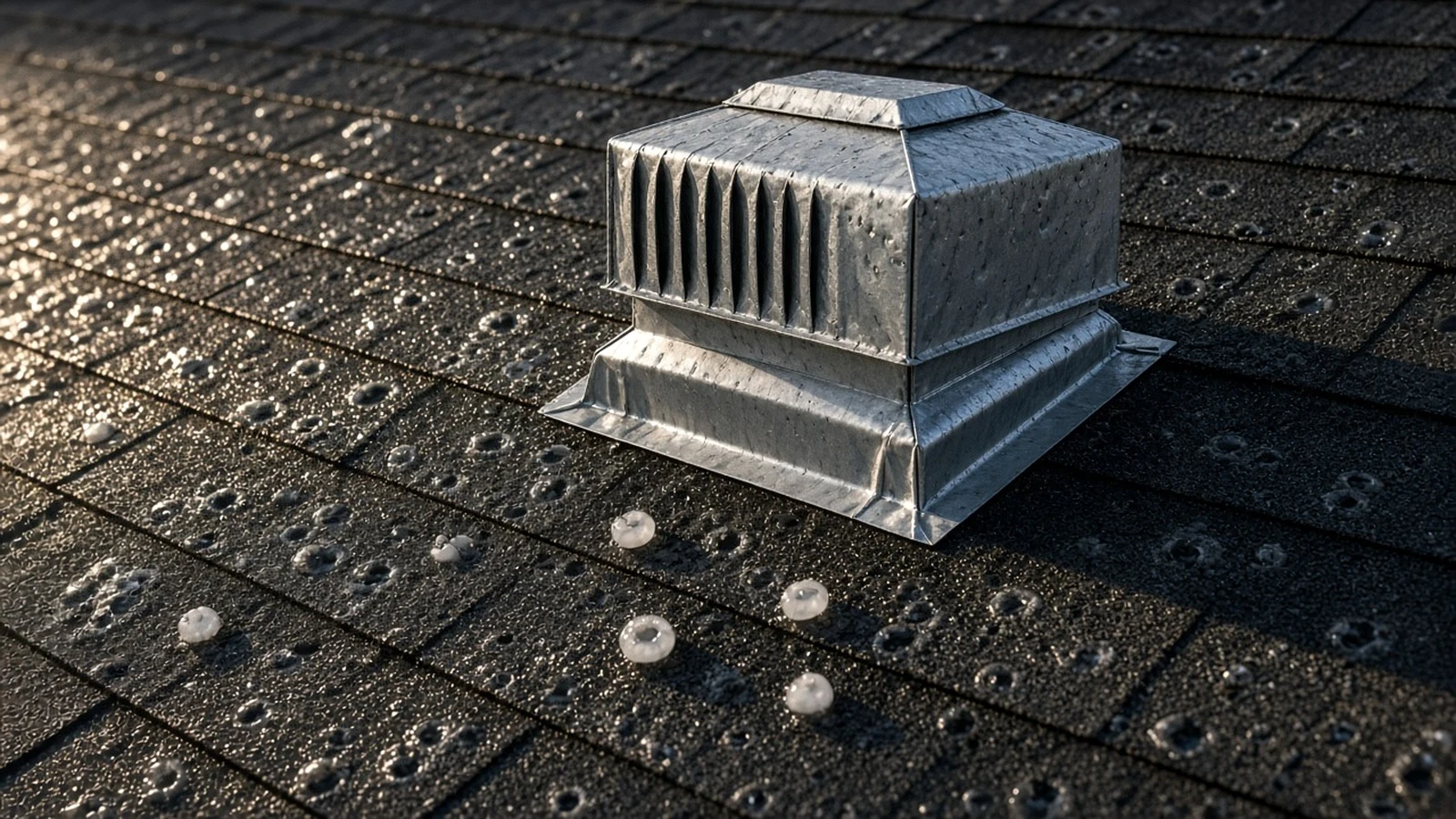
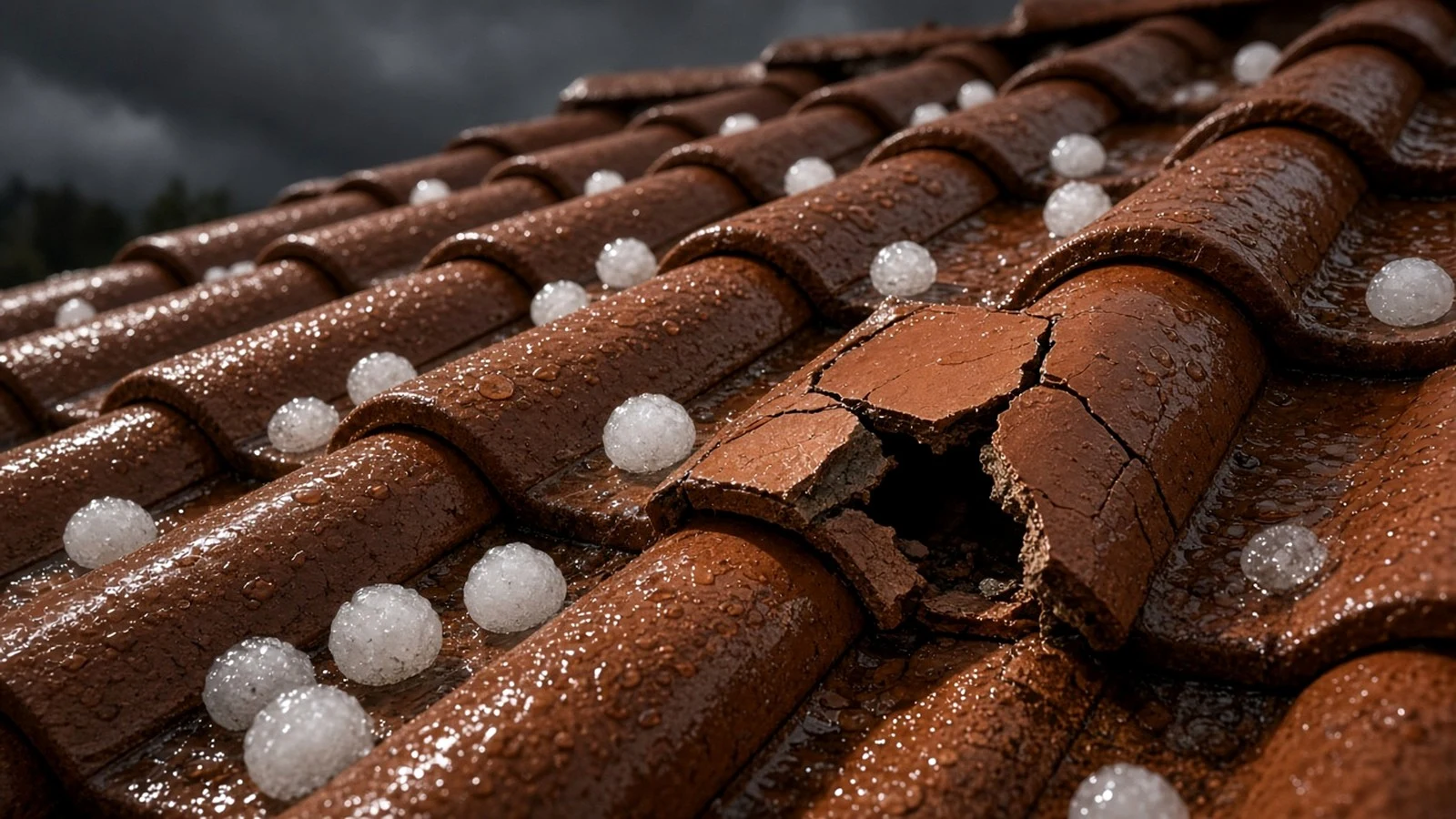
Metal and tile behave differently from shingles. Haag's threshold for galvanized steel panels is 2½ inches, and concrete tile starts at 1¾ inches, with clay tile at 1½ inches. Tile tends to crack or break rather than bruise.
Soft metal parts on any roof, such as vents, flashing, gutters and downspouts, dent more easily than the roof covering. Those dents are useful evidence of hail size and direction, but a dented vent does not by itself prove the shingles lost function.
If you are choosing a new roof with storms in mind, our guide to the best roofing material for high winds compares how common materials hold up in North Texas weather.
Why size is not the whole story
Two roofs can see the same storm and come out differently. These factors change what a hailstone does on impact:
- Wind: wind-driven hail hits harder and at an angle, and it often damages one side of a house more than the others.
- Hardness: dense, hard stones transfer more energy than soft, slushy ones.
- Roof age and condition: older, brittle shingles break more easily.
- Slope and direction: the slope facing the storm takes the most direct hits.
- Temperature: shingle temperature at the time of the storm affects how they respond.
Hypothetical example: Two neighbors in Frisco both find 1-inch hail in their yards. One has a 15-year-old 3-tab roof facing the storm, and the other has a 4-year-old architectural roof facing away. An inspection finds bruised shingles on the older roof and only dented gutters on the newer one. Same hail, different results.
That is why there is no single cutoff that applies to every roof. Thresholds tell you when damage becomes possible, and a slope-by-slope inspection tells you whether it actually happened on your house.
Hail in DFW and North Texas
Hail is a regular part of life here. The National Weather Service Fort Worth office says thunderstorms and severe weather peak in spring, and that large hail and damaging winds occur nearly every year somewhere in the Dallas/Fort Worth Metroplex.
Storms are also patchy. One McKinney or Plano neighborhood can see golf ball size hail while the next sees pea size. To check reports near your address, our DFW hail history guide explains how to pull records from the NOAA Storm Events Database.
Reported sizes are a guide, not a measurement taken on your roof. The best evidence is a photo of the hailstones you found, next to a ruler, taken before they melted.
What to do after a hailstorm
Start from the ground. Photograph hailstones beside a ruler or tape measure before they melt, then look for dents in gutters, downspouts, vents you can see from the yard, window screens and the outdoor air conditioning unit. Stay off the roof, especially when it is wet.
If you see damage or leaks, schedule a documented inspection. Our storm and hail damage service explains how we photograph every slope, record hail size evidence and give you a written scope. Policy time limits matter, so review our page on Texas roof insurance claim deadlines.
A roofer documents physical damage; your insurance carrier decides coverage. Call or text John's Roofing at +1 (469) 547-5435, answered 24/7, or request a documented inspection after the next storm.
Sources and disclaimer
Sources
National Weather Service Binghamton: Severe Weather Definitions and hail size guide: https://www.weather.gov/bgm/severedefinitions
National Weather Service Fort Worth: Dallas/Fort Worth Climate Narrative: https://www.weather.gov/fwd/dfw_narrative
Haag: Hail Damage Thresholds, What do they really mean?: https://haagglobal.com/articles/may-2018-blog-post/
Haag Engineering (Herzog, Morrison, Smith and co-authors): Hail Damage Threshold Sizes for Common Roofing Materials, AMS: https://ams.confex.com/ams/pdfpapers/45858.pdf
Insurance Institute for Business and Home Safety: Impact Testing of High Concentrations of Small Hail: https://ibhs.org/hail/impact-testing-of-high-concentrations-of-small-hail/
Insurance Institute for Business and Home Safety: Relative Impact Resistance of Asphalt Shingles: https://ibhs.org/wp-content/uploads/member_docs/Relative-Impact-Resistance-of-Asphalt-Shingles_IBHS.pdf
UL Standards and Engagement: UL 2218, Impact Resistance of Prepared Roof Covering Materials: https://shopulstandards.com/ProductDetail.aspx?productId=UL2218
Texas Department of Insurance: Insurance and your roof: https://tdi.texas.gov/tips/replacing-your-roof.html
Disclaimer: This article is general information for North Texas homeowners, not engineering or insurance advice. Hail thresholds are research rules of thumb and cannot confirm or rule out damage on a specific roof. Your insurance carrier decides coverage, and John's Roofing is a roofing contractor, not a public adjuster.
Continue your research
Verify the next part of your roofing decision
Questions people actually ask
Frequently asked questions about how big does hail have to be to damage a roof
What size hail will damage a roof?
Published research thresholds start around 1 inch for lightweight asphalt shingles, about 1¼ inches for heavier shingles, 1½ to 1¾ inches for tile and about 2½ inches for galvanized steel panels. Haag notes these are rules of thumb, not guarantees, because wind, hardness and roof age also matter.
Can pea-size hail damage a roof?
Pea-size hail is far below published damage thresholds and rarely causes functional damage on its own. IBHS research shows repeated small hail can wear away granules and make shingles more vulnerable to later large hail, so frequent storms still add up.
Is quarter-size hail big enough to damage shingles?
It can be on older or lightweight shingles. Quarter size is 1 inch, which the National Weather Service calls severe and which Haag lists as the threshold for lightweight asphalt shingles. Newer architectural shingles often need larger stones, so an inspection is the only way to know.
Does golf ball size hail always damage a roof?
Not always, but the odds rise sharply. Golf ball hail is 1¾ inches, above the published thresholds for asphalt shingles and at the threshold for concrete tile. Have the roof documented after any golf ball size hail, even if you see no leaks.
Are Class 4 shingles hail-proof?
No. Class 4 means a sample passed a UL 2218 lab test with a 2-inch steel ball without cracking through. The test does not account for aging or weathering, and very large or wind-driven hail can still cause damage. They are a strong upgrade, not a guarantee.
How do I prove the size of the hail that hit my house?
Photograph hailstones next to a ruler or coin before they melt, note the date and time, and save local storm reports. Our DFW hail history guide explains how to find NOAA Storm Events records for your area.
Page last verified 2026-11-10 · John's Roofing · JohnsRoofingDFW.com