
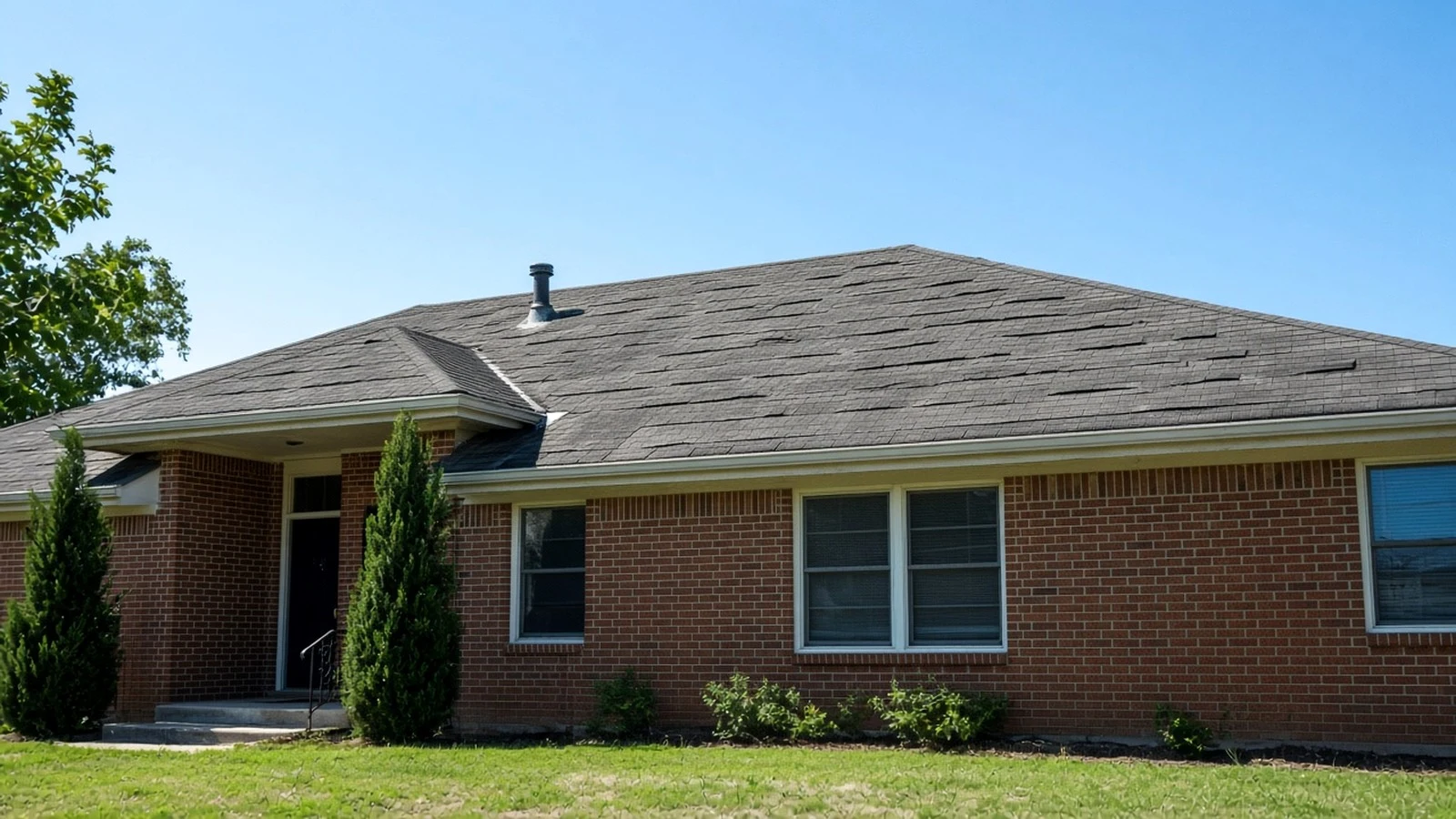
how to tell how old your roof is
How to Tell How Old Your Roof Is: 7 Reliable Ways
How can I find out when my roof was installed if I did not put it on myself?
How to tell how old your roof is: start with records, such as a city roofing permit, closing documents, the seller's disclosure, a manufacturer warranty or a contractor invoice. If none exist, the county appraisal district lists the home's year built, and shingle wear plus a documented inspection can narrow the estimate.
Answered by John's Roofing · JohnsRoofingDFW.com · Last verified 2026-11-10
Decision summary
What matters most
- Paper records beat guesses: permits, invoices, warranties and the seller's disclosure give the most reliable date.
- City permit portals in McKinney, Frisco and other cities can show a past re-roof permit for your address.
- The appraisal district's year built tells you the roof's maximum age if it was never replaced.
- Shingle wear only gives a range, not a year, because heat, storms and ventilation age roofs at different speeds.
- Roof age can affect insurance: TDI says some companies switch older roofs to actual cash value coverage.
Why your roof's age matters
Knowing your roof's age helps you plan a budget, compare repair quotes and understand your insurance. It also helps when you sell, because buyers and their inspectors will ask.
Age is also a starting point for maintenance. A roof in its first few years mostly needs storm checks, while an older roof deserves a closer look at sealants, pipe boots and flashing before small problems turn into leaks.
Insurance is the biggest reason to find out. The Texas Department of Insurance explains that actual cash value coverage pays less as a roof ages. In TDI's example of a $10,000 roof replacement, the actual cash value is $8,500 for a 5-year-old roof, $7,000 for a 10-year-old roof and $4,000 for a 20-year-old roof, before the deductible.
TDI also notes that as roofs age, some companies switch roof coverage to actual cash value at renewal. Check your declarations page and any roof endorsement so you know which kind of coverage you have.
Method 1: Search city permit records
A re-roof permit is often the single best record of when a roof went on, because most North Texas cities require one. McKinney lists roofing among home repairs that require a permit and takes applications through its online portal. Plano requires a permit for re-roof projects, except work under 25 percent of the roof.
Many cities let you look up past permits online. The City of Frisco uses its eTrakit portal for permits and inspections. Search by your address and look for a roofing or re-roof permit, then note the issue date and the final inspection date.
Write down the contractor named on the permit too. That company may still have the invoice, the shingle product and the warranty registration on file, which can fill in details the permit does not show.
If you cannot find it online, call the city's building inspections office. Keep in mind that a small repair may not have needed a permit, and very old work may predate online records.
Method 2: Check your closing and sale documents
If you bought the home, your closing file may already answer the question. The Texas Real Estate Commission Seller's Disclosure Notice form includes a line for roof type and approximate age, and it asks whether there has been a previous structural or roof repair.
Look for the home inspection report from your purchase as well. Inspectors usually describe the roof covering and its general condition, and some note an estimated age or the date of a recent replacement.
If you refinanced, check that file too. An appraisal or other report prepared for the lender may describe the roof covering and its condition, and it gives you another dated snapshot to compare with the disclosure.
Remember that a disclosure says approximate age, and sellers may not know the exact date. Use it as a lead, then confirm with a permit or invoice if you can.
Method 3: Find warranty and contractor records
A roof warranty is dated proof. Manufacturer material warranties are usually registered to the homeowner, and the registration shows the install date. Ask the previous owner, or the manufacturer, whether a warranty was registered for your address.
Contractor invoices and workmanship warranties are just as useful. Check files, email and any stickers or paperwork left in the garage or attic. Leftover shingle bundles in the garage can also tell you the product line used, which helps an inspector identify the roof.
Your insurance records may help as well. Ask your agent whether your policy file lists a roof year or roof age, and whether it came from an inspection or from information given when the policy started.
At John's Roofing, the manufacturer material warranty is registered in the homeowner's name and the 5-year workmanship warranty is issued in writing at the final walkthrough, so future owners have a clear record.
Method 4: Use the appraisal district's year built
Every Texas county has an appraisal district that keeps property records. In Collin County, the Collin Central Appraisal District offers a property search by address, and its data includes the year the main improvement was built. Dallas, Rockwall and Denton counties have their own appraisal districts with similar searches.
Collin CAD's records also separate the actual year built from an effective year built, which is the year used for appraisal purposes. For roof age, the actual year built is the one that matters.
To search, enter your street address in the district's property search, open the property detail page and look for the improvement or building section, where the year built is listed. The search is public and does not require an account.
If the roof has never been replaced, the year built gives you its maximum age. If permits or invoices show a re-roof, the newer date wins.
Method 5: Read the clues on the shingles
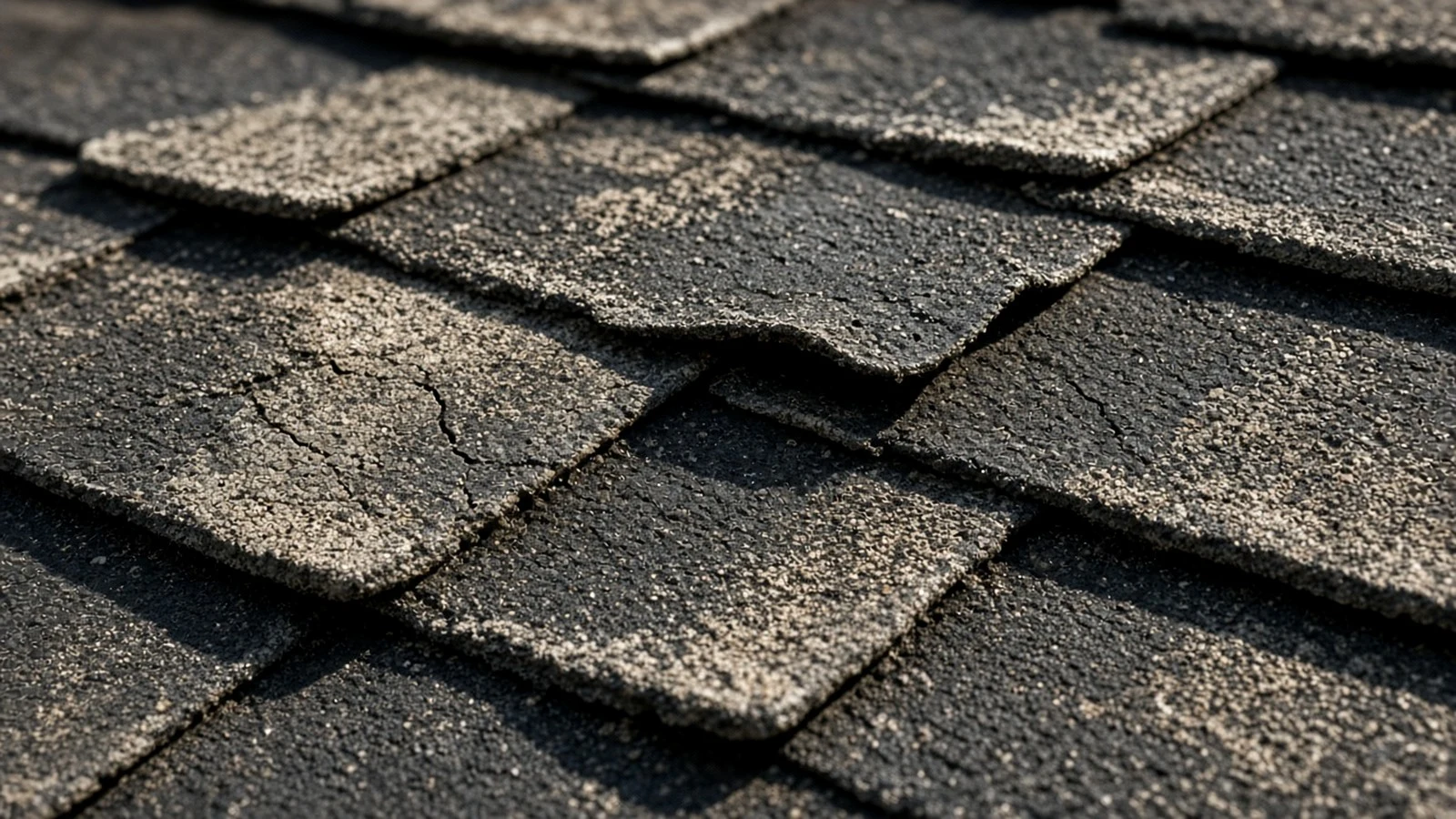
When records run out, the roof itself offers clues. Common signs of an older asphalt roof include:
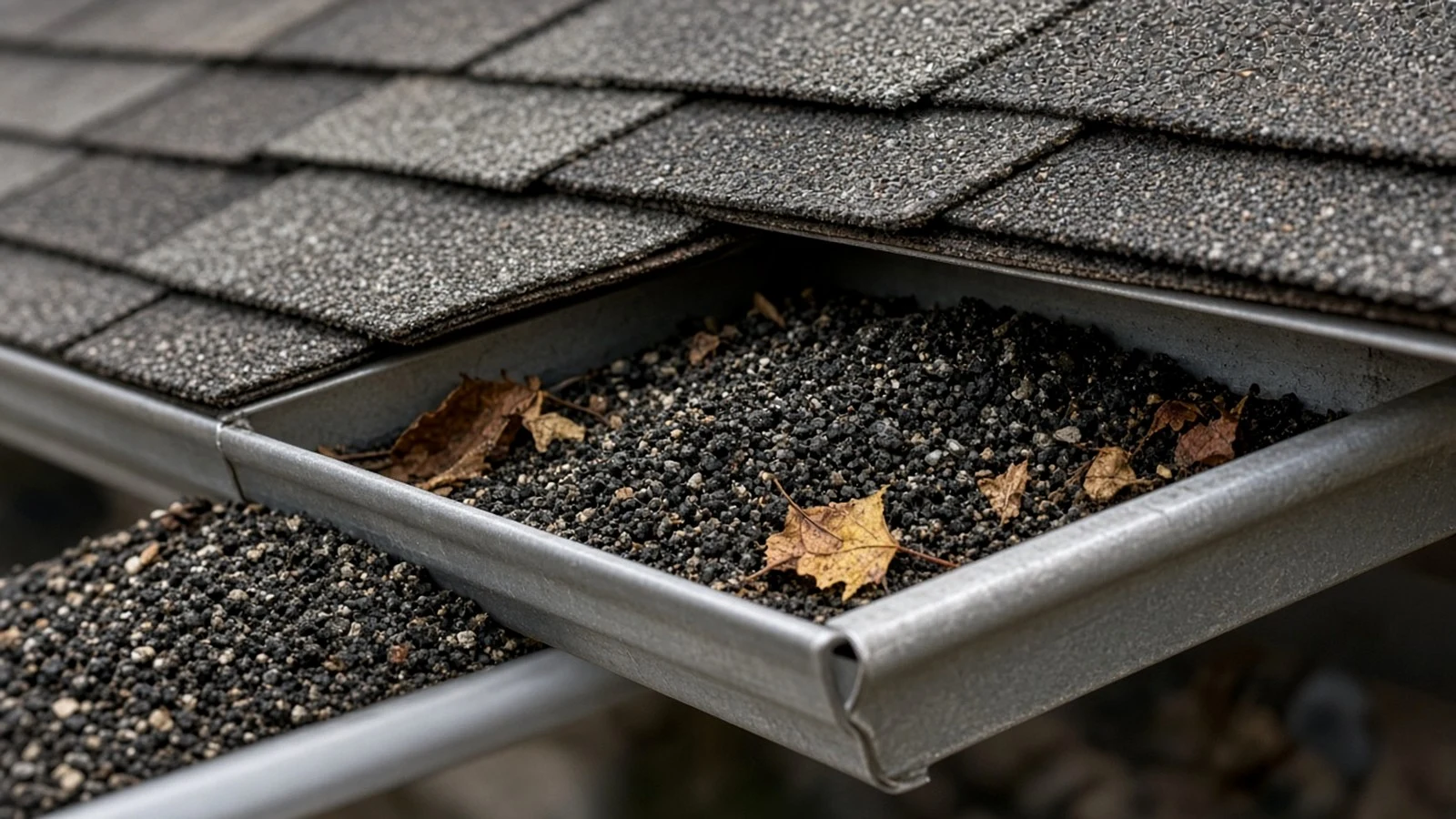
- Granules collecting in gutters and at downspout exits.
- Shingle edges curling or cupping upward.
- Cracks across tabs and rounded, worn corners.
- Bald patches where the dark asphalt shows through.
- Several mismatched patches from past repairs.
These clues give you a range, not a year. Our guide to how long an architectural shingle roof lasts explains why heat, ventilation and storms can age two same-year roofs very differently.
Look from the ground or with binoculars only. Walking on an older roof can damage brittle shingles and is a real fall risk.
Method 6: Check your neighborhood's storm history
In North Texas, many roofs were replaced after a hailstorm rather than at the end of their life. If your neighborhood had a major storm, your roof may be newer than the house, even if no one told you.
Our DFW hail history guide explains how to look up storm reports near your address in the NOAA Storm Events Database. A big hail date followed by a permit or a wave of new roofs on your street is a strong clue.
Neighbors can help too. If several houses built by the same builder were reroofed after the same storm, ask when, and compare the shingle color and style with yours.
Method 7: Get a documented inspection
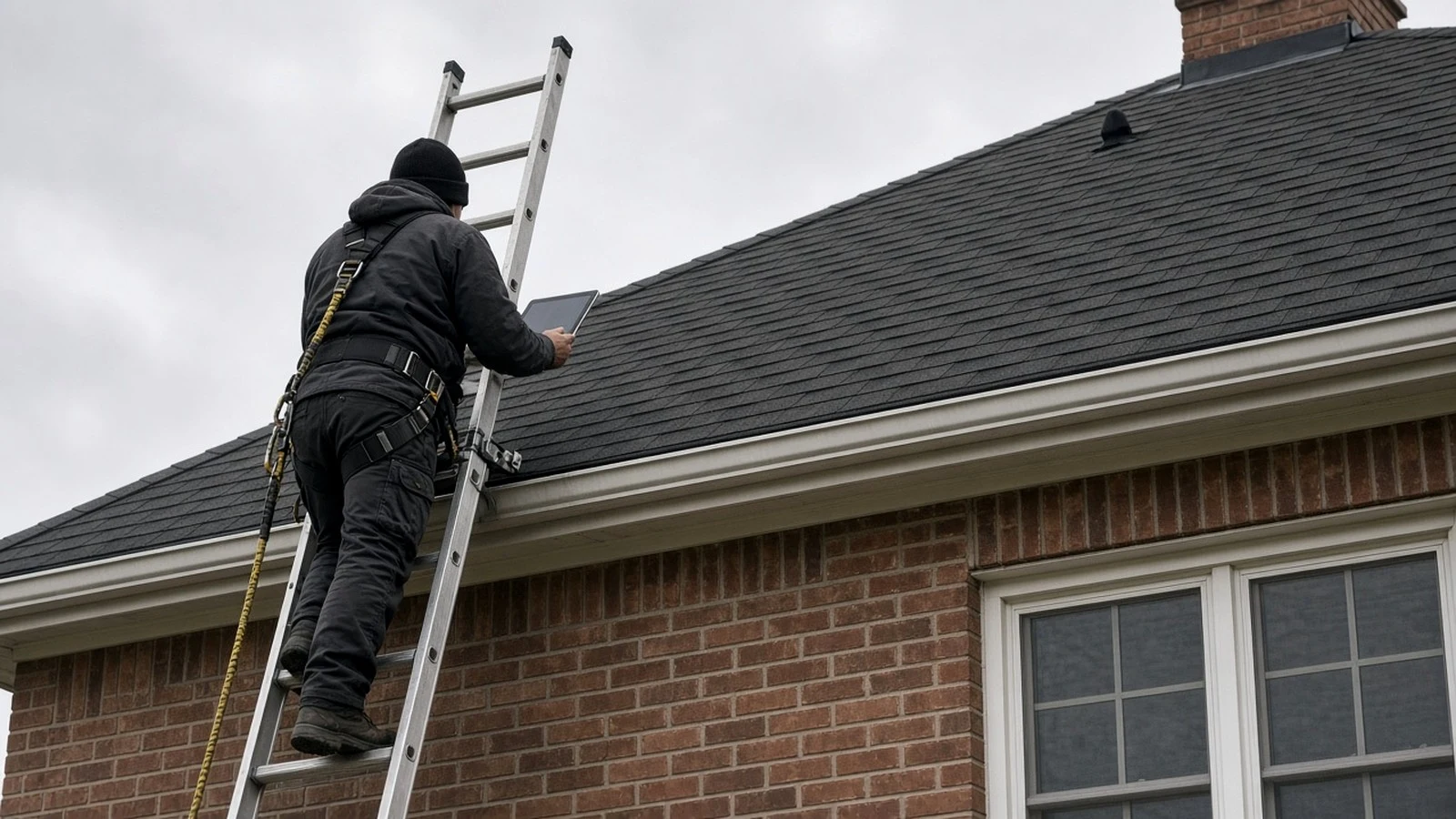
A roofer can usually tell you a likely age range and, more importantly, the roof's real condition. A documented inspection photographs every slope, checks flashing, penetrations, ventilation and visible decking, and ends with a written summary.
Our roof inspection service explains what we document on each visit. Condition matters more than the calendar. Our residential roof inspection checklist shows what a good inspection covers, and our guide to the signs you need a roof replacement helps you judge what the findings mean.
Hypothetical example: A couple buys a 2004 home in Allen. The seller's disclosure lists the roof as about 10 years old, but the city permit search shows a re-roof permit issued after a spring hailstorm several years later. The inspection confirms architectural shingles in good condition, and the couple updates their records with the permit date.
Finding your roof's age in DFW and North Texas
Where you look depends on your address. Homes in McKinney, Allen, Frisco and Plano fall under the Collin Central Appraisal District, while Rockwall, Dallas and Denton counties each have their own districts. Permits are kept by your city, not the county.
Plano's re-roof handout also notes that homeowners who do the work themselves on their homestead do not need to register as a contractor, so a do-it-yourself roof may still show up as a permit under the owner's name rather than a company's.
Start with the city permit search and your closing file, then check the appraisal district's year built, and fill in the gaps with an inspection. Together, those three sources usually give a confident answer.
John's Roofing works across Collin, Rockwall, Dallas, Tarrant, Ellis and Kaufman counties. Call or text +1 (469) 547-5435, answered 24/7, or request a documented inspection and we will photograph your roof and give you a written summary of its condition.
Sources and disclaimer
Sources
Texas Department of Insurance: Home policies, replacement cost or actual cash value?: https://tdi.texas.gov/tips/home-insurance-policies-replacement-cost-or-actual-cash-value.html
Texas Department of Insurance: Insurance and your roof: https://tdi.texas.gov/tips/replacing-your-roof.html
Texas Real Estate Commission: Seller's Disclosure Notice (OP-H): https://www.trec.texas.gov/sites/default/files/pdf-forms/OP-H.pdf
Collin Central Appraisal District: https://collincad.org/
Collin CAD: Appraisal data field descriptions (year built and effective year built): https://link.collincad.org/public/folder/1j1vp-rhx06rqkh3vz2ipw/AppraisalData/LiteDatabase_FileLayout.pdf
Dallas Central Appraisal District: https://www.dallascad.org/
Rockwall Central Appraisal District: https://www.rockwallcad.com/
Denton Central Appraisal District: https://www.dentoncad.com/
City of McKinney: Home Repairs and Permit Information: https://www.mckinneytexas.org/3350/Home-Repairs-Permit-Information
City of Frisco: Apply for Residential Permits: https://www.friscotexas.gov/1696/Residential-Permits
City of Plano: Re-roof Residential Permit Requirements: https://www.plano.gov/residential-permits
Disclaimer: This article is general information for North Texas homeowners, not legal, real estate or insurance advice. Public records can be incomplete, and visual age estimates are ranges, not dates. Your insurance carrier decides coverage, and John's Roofing is a roofing contractor, not a public adjuster.
Continue your research
Verify the next part of your roofing decision
Questions people actually ask
Frequently asked questions about how to tell how old your roof is
What is the easiest way to find out how old my roof is?
Check for a re-roof permit on your city's online permit portal, then look at your closing documents, including the seller's disclosure and inspection report. A contractor invoice or registered manufacturer warranty is equally strong proof of the install date.
Can a roofer tell how old a roof is just by looking?
A roofer can estimate a range from shingle style, granule loss, curling, cracking and repair history, but not an exact year. Heat, ventilation and storm exposure age roofs at different speeds, so records are always more reliable than appearance.
Does the appraisal district show when my roof was replaced?
Usually not directly. Appraisal district records show the year the home was built, which is the roof's maximum age if it was never replaced. Re-roof dates are more likely to appear in city permit records or the previous owner's paperwork.
Where is roof age listed on a Texas seller's disclosure?
The Texas Real Estate Commission Seller's Disclosure Notice includes a line for roof type and approximate age, and it asks about previous structural or roof repairs. Ask your agent for a copy if it is not in your closing file.
Why does my insurance company care how old my roof is?
Roof age affects how a claim may be paid. The Texas Department of Insurance explains that actual cash value coverage pays less as a roof ages, and that some companies switch older roofs to actual cash value at renewal. Check your declarations page and roof endorsement.
How old is too old for a roof in North Texas?
There is no single number, because condition decides. Our guide to how long an architectural shingle roof lasts gives a practical planning range for North Texas, and an inspection shows whether your roof is still performing.
Page last verified 2026-11-10 · John's Roofing · JohnsRoofingDFW.com