
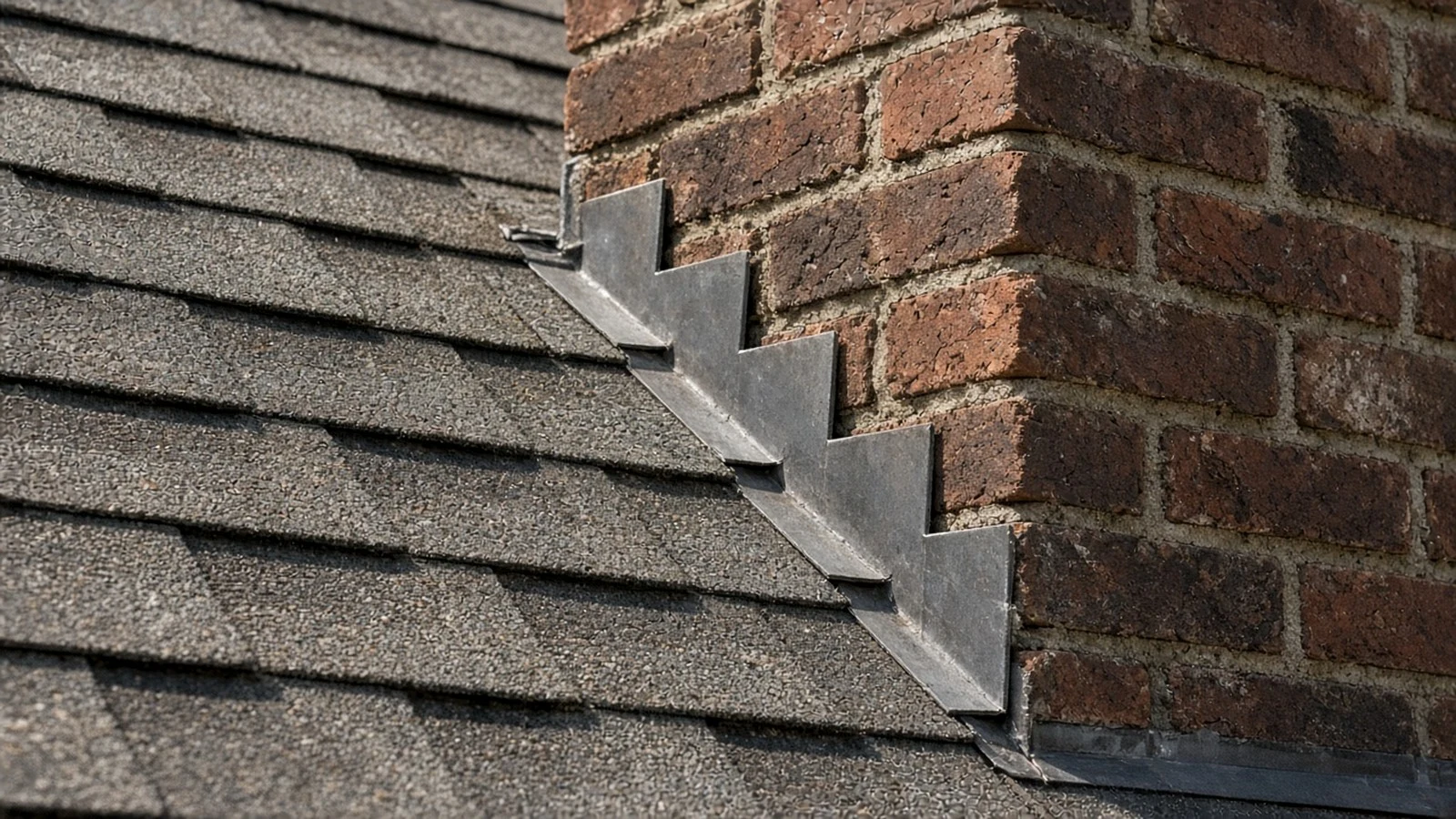
roof flashing repair
Roof Flashing Repair: Types, Warning Signs and Fixes
How do I know if my roof flashing is failing, and should it be repaired or replaced?
Roof flashing repair means fixing or replacing the metal that seals the joints where a roof meets walls, chimneys, valleys and edges. A few loose nails or one lifted piece can often be repaired. Rusted, bent or missing flashing should be replaced and woven into the shingles, not covered with sealant.
Answered by John's Roofing · JohnsRoofingDFW.com · Last verified 2026-11-10
Decision summary
What matters most
- Flashing seals the joints: wall and roof intersections, chimneys, valleys, edges and roof openings.
- Warning signs include stains near chimneys or walls, rust, lifted or bent metal, gaps and old caulk smeared over joints.
- Small, isolated problems can be repaired; rusted, bent or missing flashing should be replaced.
- Sealant alone is a short-term patch. A lasting repair puts new flashing under and behind the right layers.
- Building code sets minimums, such as 0.019-inch corrosion-resistant metal and step flashing at least 4 inches by 4 inches.
What roof flashing does
Shingles shed water well across an open slope. The weak points are the joints: where the roof meets a wall or chimney, where two slopes meet, and where pipes, vents or skylights pass through. Flashing is the thin metal, or sometimes membrane, that covers those joints and turns water back onto the shingles.
The International Residential Code section R903.2.1 requires flashing at wall and roof intersections, wherever the roof changes slope or direction, and around roof openings. It also requires metal flashing to be corrosion resistant and at least 0.019 inch thick, which the code equates to No. 26 galvanized sheet.
Because flashing sits at the joints, it is behind a large share of roof leaks. When it fails, water can run behind siding or brick and show up far from the actual entry point.
Types of roof flashing
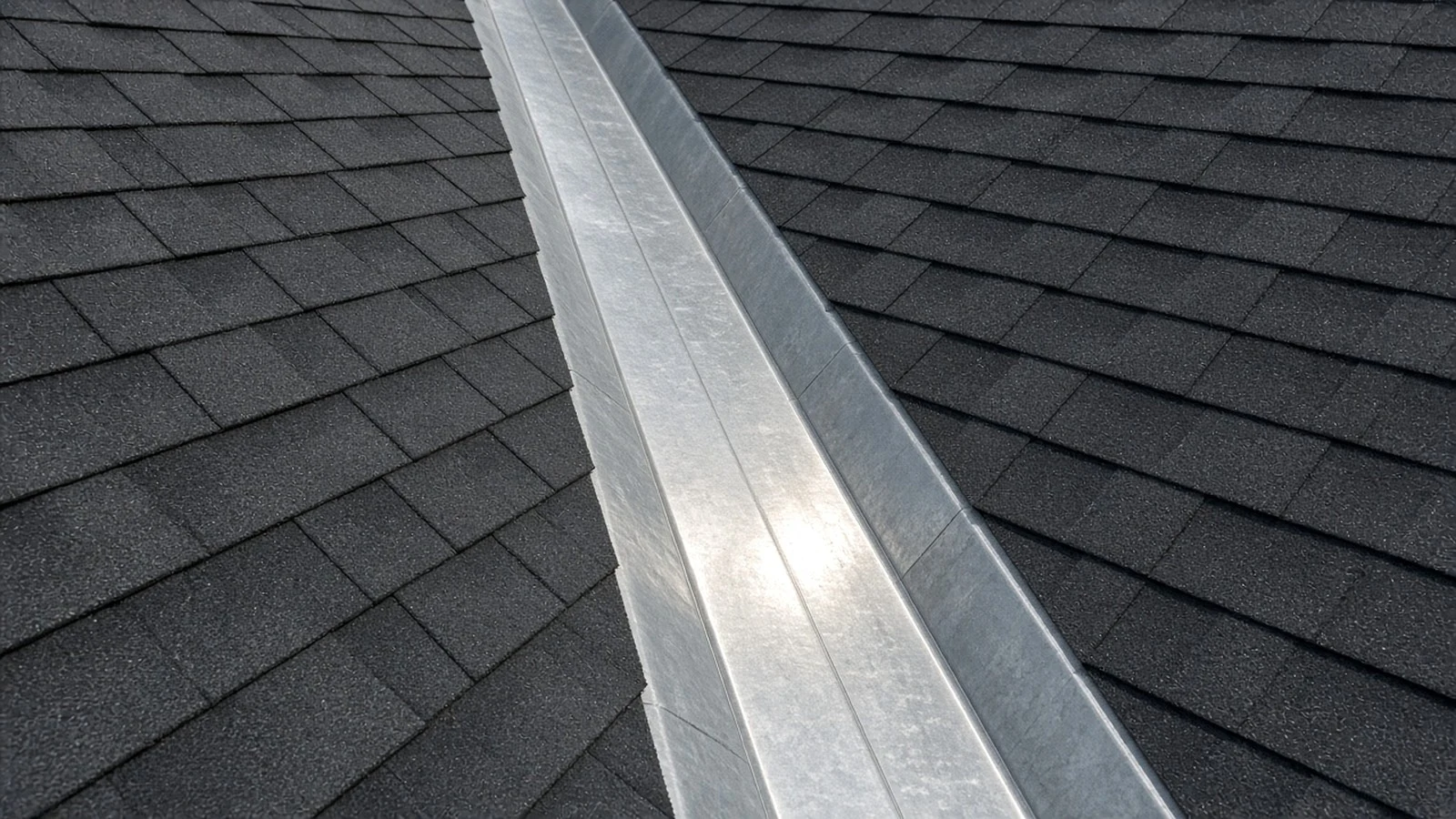
Most homes have several kinds of flashing, each doing a different job:
- Step flashing: small L-shaped pieces woven into each shingle course where the roof meets a sidewall.
- Counter flashing: metal set into or over a wall or chimney that laps down over the step flashing, so water cannot get behind it.
- Chimney flashing: step and counter flashing around the sides, plus front and back pieces. The code requires a cricket or saddle on the uphill side of chimneys more than 30 inches wide.
- Valley flashing: lining where two slopes meet. Open metal valleys must be at least 24 inches wide under the code.
- Drip edge: metal at eaves and rakes that guides water off the roof edge and protects the deck edge.
- Kickout flashing: a small diverter where a roof eave meets a sidewall, so water goes into the gutter instead of down the wall.
- Pipe and vent flashing: boots and collars around plumbing vents and other penetrations.
Pipe boots are their own topic, and our post on a roof leaking around a vent pipe covers them in detail. This guide focuses on the other flashing on your roof.
Signs your flashing is failing
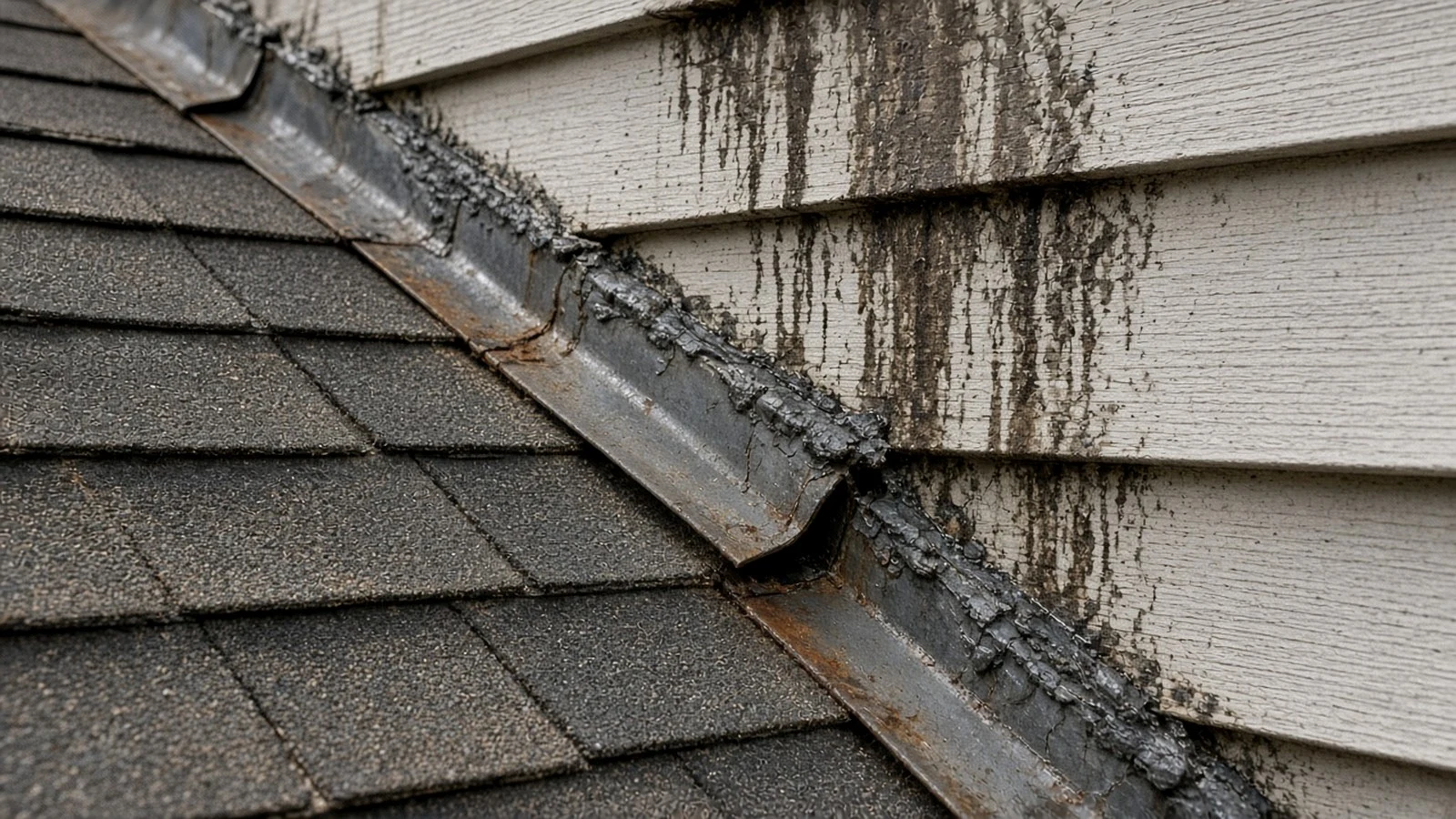
Flashing problems usually show up inside first. Look for ceiling or wall stains near a chimney, a second-story wall, a skylight or where a lower roof meets the house. A stain that grows during wind-driven rain is a classic flashing clue.
From the ground or with binoculars, look for:
- Rusted, bent or lifted metal along walls and chimneys.
- Gaps between the flashing and the wall, chimney or shingles.
- Thick layers of caulk or roofing tar smeared over a joint, a sign of earlier patches.
- Dark streaks or water stains on siding or brick below a roof and wall joint.
- Missing kickout flashing where an eave meets a wall.
If the leak only appears in heavy storms, our guide on why a roof leaks when it rains heavy explains why flashing and valleys are the usual suspects. Do not climb onto the roof to check, especially when it is wet.
Chimney flashing problems
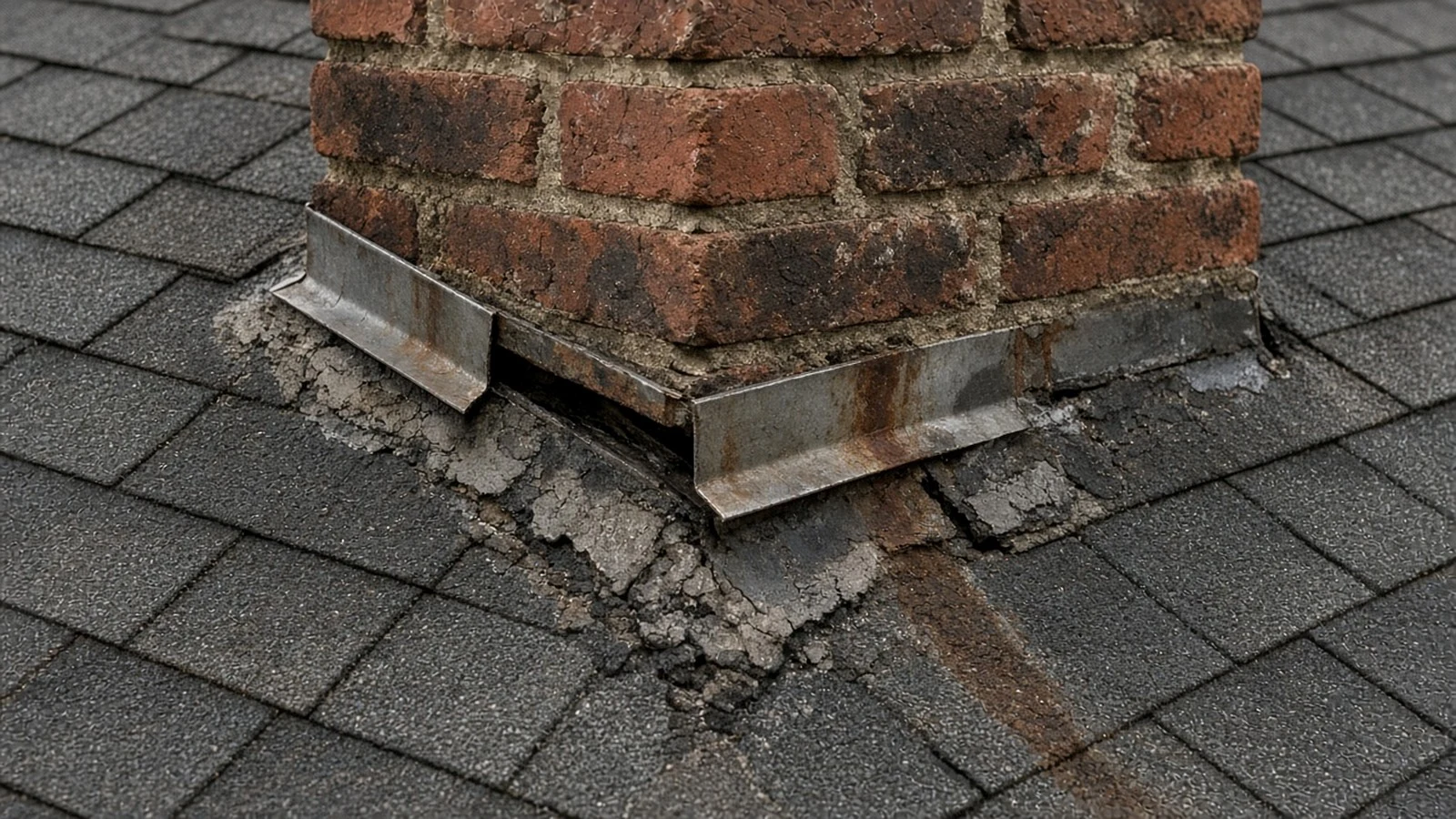
Chimneys are one of the most common flashing leak points because they combine every type of flashing in one small area. Brick and mortar also move and weather differently from the roof around them.
Typical failures include counter flashing that has pulled out of the mortar joint, sealant that has dried and cracked, rusted step flashing, and a missing or undersized cricket that lets water pond against the uphill side. Any one of these can let water run down inside the chimney chase.
Where a sidewall has anchored brick veneer, the code calls for base flashing plus counter flashing in line with the masonry veneer rules. In practice, that means the repair often involves the masonry joint as well as the shingles.
Repair or replace the flashing?
A repair can make sense when the metal is sound and the problem is small: a few nails backed out, one piece lifted by wind, or a short stretch of counter flashing that has pulled from the mortar but is not rusted.
Replacement is the better call when the flashing is rusted through, bent, cracked, missing, was installed on top of the shingles instead of woven under them, or has been patched with tar or caulk more than once. At that point, the metal no longer does its job, and sealant only hides the problem.
Caulk has a place as a secondary seal at some joints, but it is not a flashing. A repair that relies on sealant alone usually needs to be redone, and the hidden damage keeps growing in the meantime.
What a proper flashing repair includes
A lasting flashing repair rebuilds the joint in the right order. A typical job looks like this:
- Photograph the area and confirm the leak source.
- Lift or remove shingles along the joint and take out the old flashing.
- Check the deck and wall sheathing for water damage and replace soft wood.
- Install new step flashing one piece per shingle course, so each piece laps the one below it.
- Install or reset counter flashing over the step flashing, set into the mortar joint on masonry.
- Re-shingle with matched materials and photograph the finished work.
- Water test where appropriate.
The International Residential Code section R905.2.8.3 says sidewall base flashing must be continuous or step flashing at least 4 inches high and 4 inches wide, directing water onto the roof or into the gutter. Where there is siding, the vertical leg must run continuously under it. Other flashing, such as chimney and front wall flashing, must follow the shingle manufacturer's printed instructions.
Flashing during a roof replacement
If your roof is near the end of its life, a flashing repair may only buy a short time. During a full replacement, the old roof comes off down to the deck and new underlayment, flashing, vents and shingles go on, which is the cleanest way to fix flashing problems for good.
Reusing old flashing on a new roof leaves the oldest metal in the most leak-prone spots. Ask your contractor to list each type of flashing in the written scope so you know what is new and what, if anything, is being kept.
Our roof replacement service page explains what a full tear-off includes. For a single problem on a roof with life left, a targeted roof repair is usually the better value.
Flashing repair in DFW and North Texas
North Texas is hard on flashing. Summer heat dries out sealants, and the National Weather Service Fort Worth office says large hail and damaging winds occur nearly every year somewhere in the Dallas/Fort Worth Metroplex. Wind can lift flashing edges, and hail can dent soft metal.
Many homes here have brick veneer walls and chimneys, so counter flashing set into mortar is common, and so is mortar that has eroded around it. Two-story homes with lower roofs against upper walls add long runs of step and kickout flashing.
Insurance only applies when a covered event caused the damage. The Texas Department of Insurance guide to insurance and your roof notes that companies won't pay for a new roof just because it is old or worn out, and flashing worn out by age is usually treated the same way. Your carrier decides coverage.
Hypothetical example: A McKinney homeowner sees a stain on a second-floor ceiling under a wall where a lower roof meets the house. An inspection finds no kickout flashing and rusted step flashing behind the siding. The repair replaces the step flashing, adds a kickout and swaps out a short run of soft sheathing.
When to call a roofer about flashing
Call a roofer when you see a stain near a chimney, wall or skylight, rust or gaps in the metal, or old tar patches on joints. Early repairs are smaller, because flashing leaks feed water into sheathing and framing you cannot see. If water is already coming in, protect the inside first, as our guide on how to fix a leaking roof from the inside explains.
John's Roofing traces leaks to the real entry point, photographs the flashing before and after, and rebuilds failed flashing instead of covering it with sealant. Our workmanship warranty is 5 years, in writing.
Call or text +1 (469) 547-5435, answered 24/7, or request a documented inspection and we will confirm the details before we schedule.
Sources and disclaimer
Sources
International Code Council: 2021 International Residential Code, Chapter 9 Roof Assemblies (R903.2, R903.2.1, R903.2.2, R905.2.8.1 to R905.2.8.5): https://codes.iccsafe.org/content/IRC2021P2/chapter-9-roof-assemblies
UpCodes: 2021 IRC Chapter 9 Roof Assemblies (public code viewer): https://up.codes/viewer/connecticut/irc-2021/chapter/9/roof-assemblies
Texas Department of Insurance: Insurance and your roof: https://tdi.texas.gov/tips/replacing-your-roof.html
National Weather Service Fort Worth: Dallas/Fort Worth Climate Narrative: https://www.weather.gov/fwd/dfw_narrative
John's Roofing: Roof repair service (common repair causes): https://johnsroofingdfw.com/services/roof-repair
Disclaimer: This article is general information for North Texas homeowners, not engineering, code or insurance advice. Local code amendments and manufacturer instructions vary, and working on a roof carries a real risk of injury. Your insurance carrier decides coverage, and John's Roofing is a roofing contractor, not a public adjuster.
Continue your research
Verify the next part of your roofing decision
Questions people actually ask
Frequently asked questions about roof flashing repair
Can roof flashing be repaired, or does it have to be replaced?
Small problems such as a few backed-out nails or one lifted piece can often be repaired. Flashing that is rusted through, bent, missing, installed on top of the shingles or patched repeatedly should be replaced and woven into the shingles correctly.
Is caulk a good fix for leaking flashing?
Only as a short-term patch. Caulk and roofing tar dry and crack in Texas heat, and they do not redirect water the way flashing does. The lasting fix is new flashing installed in the right order under the shingles and behind the wall covering.
What is the difference between step flashing and counter flashing?
Step flashing is a series of small L-shaped pieces woven into each shingle course along a wall or chimney. Counter flashing is set into or over the wall or chimney and laps down over the step flashing, so water cannot run behind it.
Why does my chimney leak only when it rains hard?
Heavy or wind-driven rain pushes water into small gaps at counter flashing, cracked sealant or a missing cricket that light rain never reaches. Have the chimney flashing documented, because the same symptom can also come from the masonry itself.
Does homeowners insurance cover flashing repair?
It depends on the cause and your policy. Flashing damaged by a covered event such as wind or hail may be part of a claim, but the Texas Department of Insurance says companies won't pay for a new roof just because it is old or worn out. Only your carrier decides coverage.
Should flashing be replaced with a new roof?
In most cases, yes. A full replacement installs new underlayment, flashing, vents and shingles. Reusing old flashing leaves aging metal at the joints most likely to leak, so ask for each flashing type to be listed in the written scope.
Page last verified 2026-11-10 · John's Roofing · JohnsRoofingDFW.com