
what is roof underlayment
What Is Roof Underlayment? Types, Code Rules and Uses
What is roof underlayment, which type should my roof have, and what does the code require?
What is roof underlayment? It is the water-shedding layer installed on the roof deck under your shingles. It backs up the shingles when wind-driven rain gets past them, protects the deck during installation, and is required by the building code for asphalt shingle roofs. The main types are asphalt felt, synthetic and self-adhered membranes.
Answered by John's Roofing · JohnsRoofingDFW.com · Last verified 2026-09-18
Decision summary
What matters most
- Underlayment sits between the wood roof deck and the shingles. It is a second line of defense, not a substitute for shingles.
- The three common types are asphalt-saturated felt, synthetic sheets and self-adhered polymer-modified bitumen membranes.
- The 2021 IRC requires underlayment under asphalt shingles and requires two layers on slopes from 2:12 up to 4:12.
- Manufacturer system warranties often require the brand's own underlayment, so check before you approve a bid.
- On a full replacement, old underlayment comes off with the shingles and new underlayment goes on the deck.
What roof underlayment does
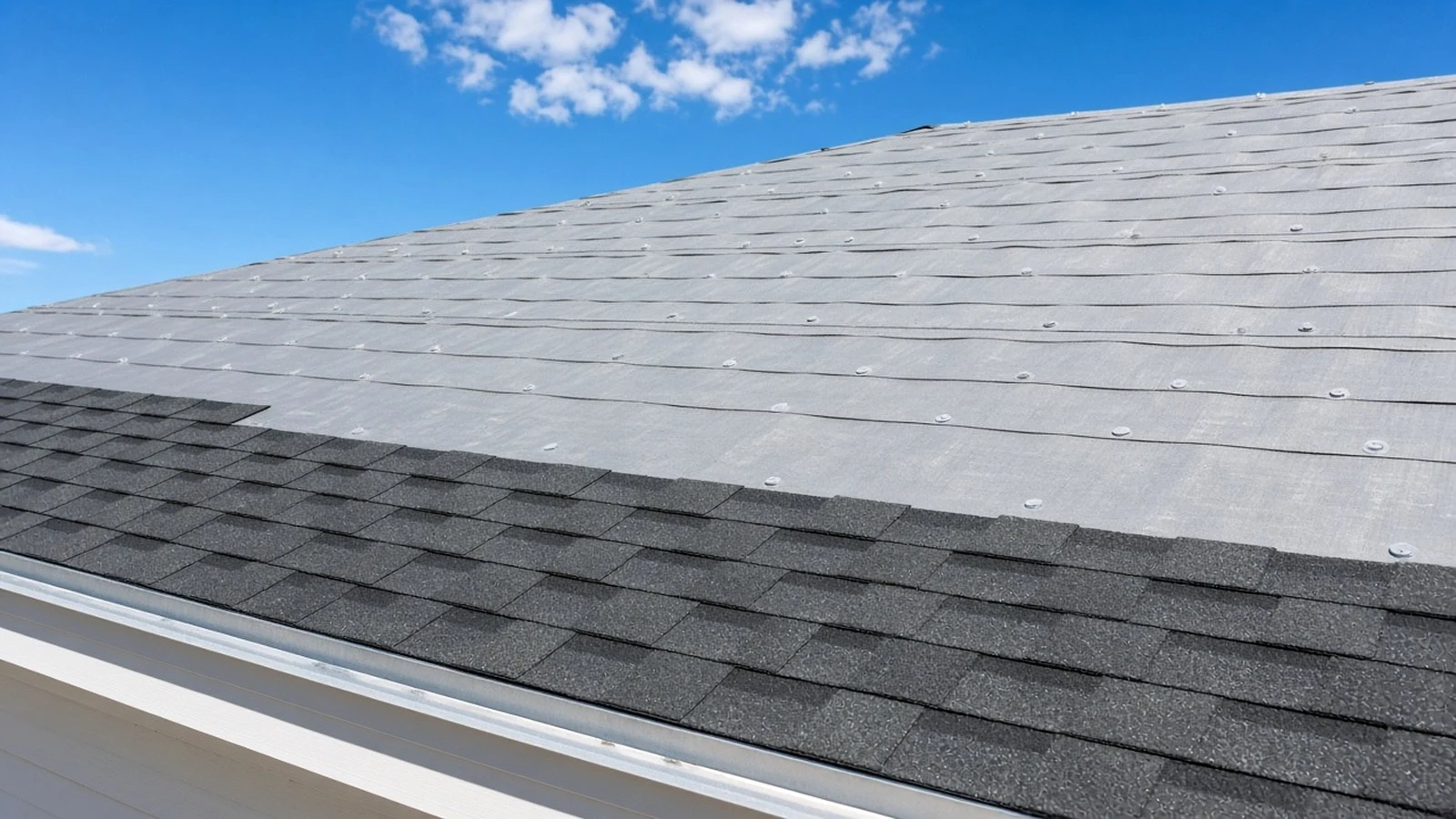
Roof underlayment is a sheet material rolled out over the roof deck before the shingles go on. Shingles shed most of the water, and underlayment catches what gets past them, such as wind-driven rain pushed up under a tab or water that enters at a damaged shingle.
It also protects the wood deck during installation, and it helps the roof keep shedding water for a short time if shingles blow off in a storm. That is one reason a roof that loses shingles may not leak right away.
Underlayment is not optional on a shingle roof. Section R905.1.1 of the 2021 International Residential Code requires underlayment for asphalt shingles and many other roof coverings, and requires the product to carry a label showing the standard it meets.
Asphalt-saturated felt underlayment
Felt is the traditional option. It is a mat saturated with asphalt, sold in rolls, and it has been used under shingles for generations.
The IRC lists felt by its standard, ASTM D226, in Type I and Type II. In the trade these are commonly called No. 15 and No. 30 felt, with Type II being the heavier sheet.
For asphalt shingles in areas where wind design is not required, the 2021 IRC accepts ASTM D226 Type I or II, ASTM D4869 Type I through IV, or ASTM D6757. Where wind design is required, it narrows the list to ASTM D226 Type II or ASTM D4869 Type III or IV.
Felt is generally heavier than synthetic sheets and can tear or wrinkle if it gets wet before the shingles go on. Many crews still use it, especially on repairs that tie into an existing felt roof.
Synthetic underlayment
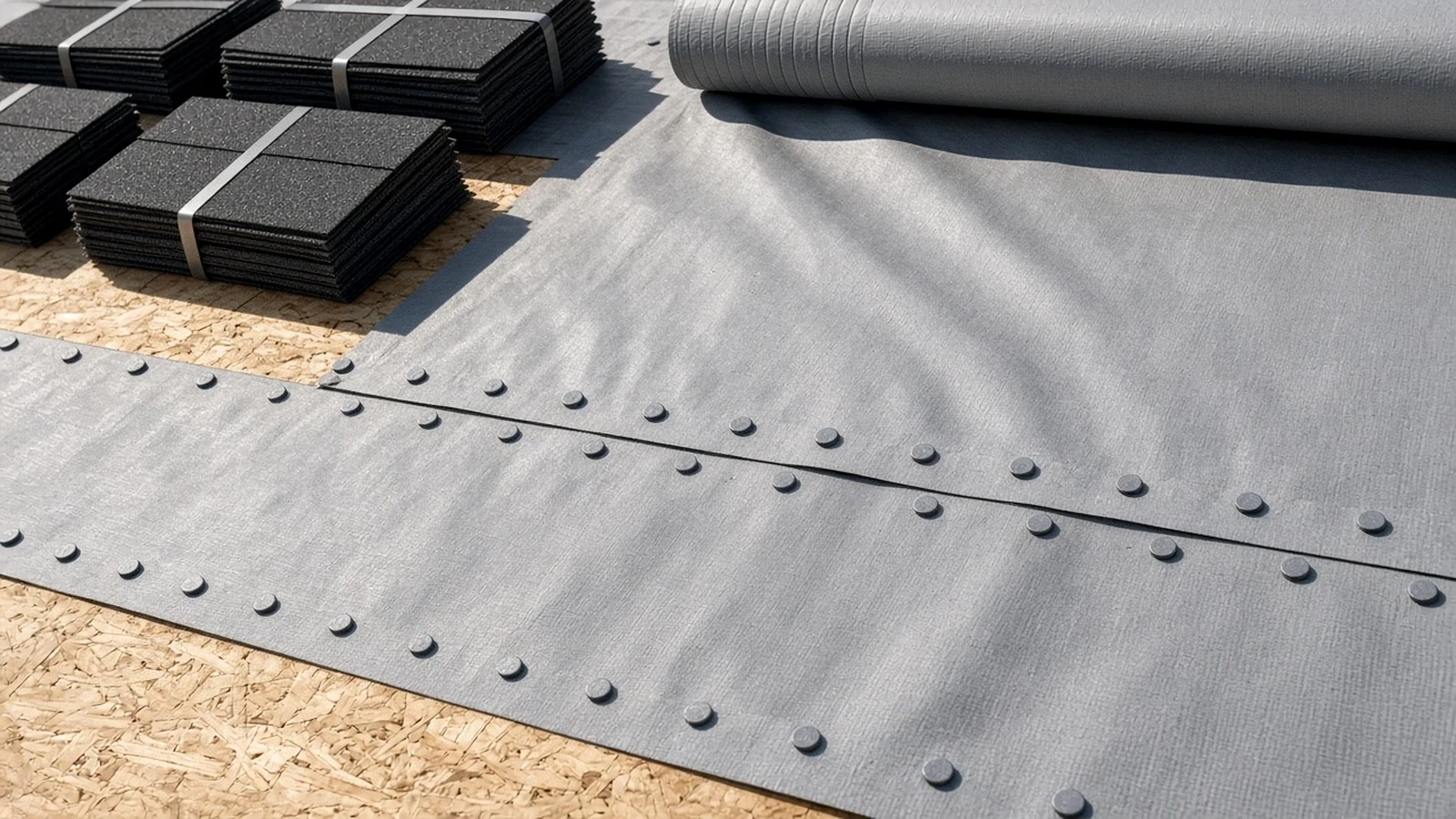
Synthetic underlayment is a woven or spun polymer sheet. It is generally lighter than felt, comes in larger rolls and resists tearing, which is why many roofers now use it on full replacements.
Code has been catching up with synthetics. Professional Roofing magazine reports that a code change added ASTM D8257, the standard for mechanically attached polymeric roof underlayment used in steep-slope roofing, to the IRC underlayment table in the 2024 edition. Under earlier editions, synthetic products were typically accepted through manufacturer evaluation reports and instructions.
Synthetics are not all the same. Fastening patterns, walkability, UV exposure limits and approved shingle pairings vary by product, so follow the underlayment manufacturer's written instructions as well as the shingle maker's.
Hypothetical example: A Wylie homeowner compares two bids. One lists synthetic underlayment by product name and fastening method, and the other just says underlayment. The detailed bid makes it easy to check the product against the shingle warranty requirements.
Self-adhered ice and water barrier
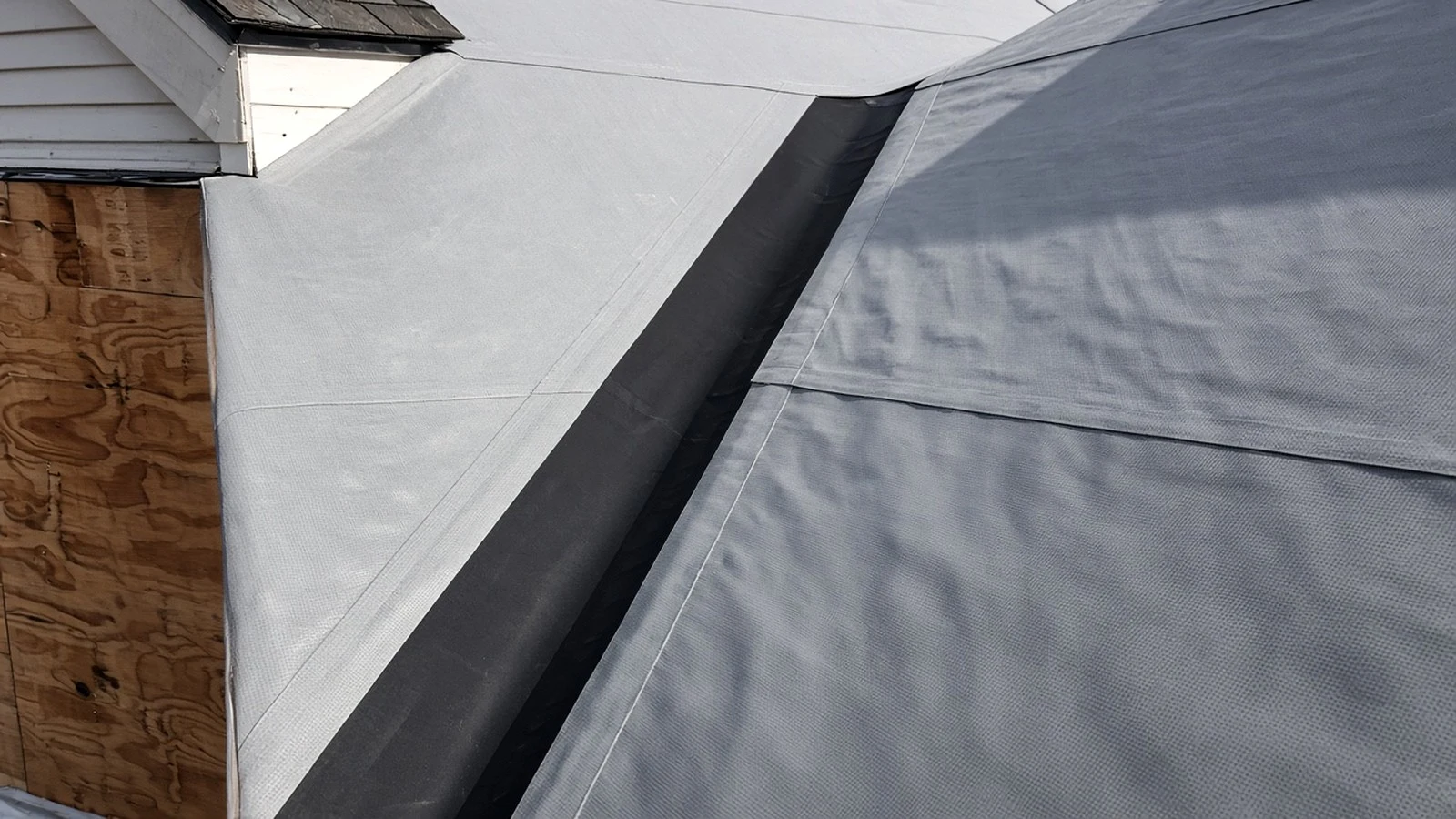
Self-adhered membranes are rubberized asphalt sheets with a sticky back that bonds directly to the deck. The IRC refers to them as self-adhering polymer-modified bitumen underlayment meeting ASTM D1970.
They seal around nails, which makes them useful in the places most likely to leak. The 2021 IRC allows an ASTM D1970 membrane in place of the standard lining in closed valleys, and it allows self-adhered underlayment as an alternative to standard underlayment when installed to both manufacturers' instructions.
The code also has a separate ice barrier rule. In areas with a history of ice forming along the eaves, as designated by the local jurisdiction, an ice barrier must run from the eave edge to at least 24 inches inside the exterior wall line.
Ice dams are far less common in North Texas than in northern states, so ask whether your city requires an ice barrier. Many roofers still use self-adhered membrane in valleys and around penetrations here.
How the code says underlayment goes on
Installation details matter as much as the product. The 2021 IRC sets these rules for underlayment under asphalt shingles where wind design is not required:
- On slopes from 2:12 up to 4:12, use two layers: a 19-inch starter strip at the eave, then 36-inch sheets lapped 19 inches.
- On slopes of 4:12 or more, use one layer applied shingle fashion, lapped 2 inches.
- End laps are 4 inches and are offset by 6 feet.
- Distortions in the underlayment must not keep the shingles from sealing.
- Asphalt shingles may only be used on slopes of 2:12 or more.
The code also links underlayment to the drip edge. Underlayment goes over the drip edge along the eaves and under the drip edge along the rake edges, so water running down the sheet lands on top of the metal and drains away.
Valleys get their own lining rules. For closed valleys covered with shingles, the code allows a smooth roll roofing lining at least 36 inches wide, or a self-adhered ASTM D1970 membrane.
Underlayment and your shingle warranty
Shingle makers treat underlayment as part of a roof system. Using the matching brand can affect which warranty you get.
Two examples from manufacturer documents:
- GAF says its 15-year WindProven wind warranty on Timberline HDZ shingles requires GAF starter strips, roof deck protection, ridge cap shingles, and leak barrier or attic ventilation, as listed on the Timberline HDZ page.
- Owens Corning's Platinum Protection warranty requires Owens Corning brand synthetic underlayment, or a qualifying self-adhered ice and water barrier covering the entire deck, along with other system parts.
So before you approve a bid, ask which underlayment is listed, whether it matches the shingle brand, and which warranty the full system qualifies for.
Underlayment in North Texas heat and storms
North Texas weather is hard on the layers under a roof. The National Weather Service Fort Worth office says July and August daytime temperatures are consistently in the 90s and often reach 100 degrees, and that large hail and damaging winds occur nearly every year somewhere in the Dallas/Fort Worth Metroplex.
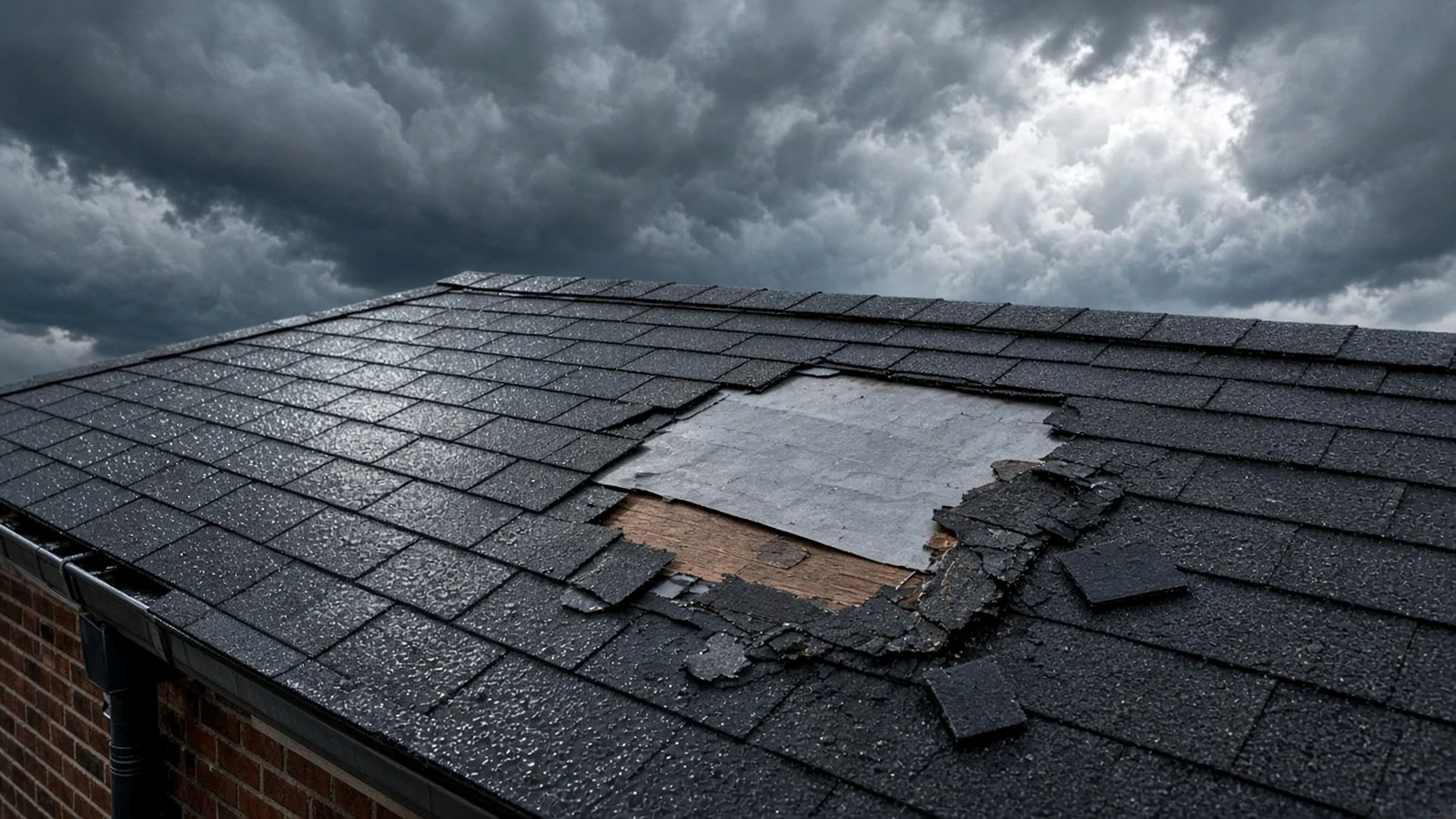
When wind strips shingles, the underlayment is often the only thing between rain and the deck until the roof is covered. Exposed underlayment is not designed to be a long-term roof, so missing shingles should be tarped or repaired quickly.
If storm damage leaves underlayment exposed, our guide on how to tarp a roof explains temporary protection. Leaks in valleys and at walls during heavy rain can also point to worn underlayment, as covered in our guide to a roof leaking when it rains heavy.
Hypothetical example: After a spring windstorm in Rockwall, a homeowner sees gray sheeting where shingles used to be. The underlayment held off the first rain, but the roof still needs to be covered and repaired before the next storm.
When underlayment gets replaced
On a full replacement, underlayment is replaced too. Section R908.3 of the IRC says roof replacement includes removing existing layers of roof coverings down to the roof deck, which takes the old underlayment with it. The one exception is an existing ice barrier membrane adhered to the deck, which may stay and be covered with a new ice barrier layer.
On a repair, the crew usually replaces underlayment only in the damaged area, lapping it into the existing sheet. Underlayment is also a line item worth checking on any quote, as our breakdown of the cost to tear off and replace a roof shows.
Going over an old roof instead of tearing off is only allowed in limited cases under the code. Our guide on whether you can put a metal roof over shingles explains when a recover is allowed and what you give up.
Questions to ask about underlayment on your bid
A good bid names the underlayment instead of just saying it is included. Ask these questions:
- Which underlayment product is listed, and what standard does it meet?
- Does it match the shingle brand, and which warranty does the system qualify for?
- Where will self-adhered membrane go: valleys, eaves, walls, penetrations?
- How will the crew lap and fasten it on your roof's slope?
- Is the drip edge installed in the right order with the underlayment?
John's Roofing lists underlayment, deck repair, flashing and shingles as separate lines, and we photograph the deck and underlayment during the install through our roof replacement process. Call or text 469.394.4386, 24/7, or request an inspection to get a written scope.
Sources and disclaimer
Sources
International Code Council: 2021 International Residential Code, Chapter 9 Roof Assemblies (R905.1.1, R905.1.2, R905.2, R908.3): https://codes.iccsafe.org/content/IRC2021P2/chapter-9-roof-assemblies
Professional Roofing (NRCA): Updating the code, June 2022: https://www.professionalroofing.net/Articles/Updating%2Dthe%2Dcode%2D%2D06%2D01%2D2022/5077
ASTM International: D8257 Standard Specification for Mechanically Attached Polymeric Roof Underlayment: https://doi.org/10.1520/d8257_d8257m-22
GAF: Timberline HDZ shingles and WindProven warranty requirements: https://www.gaf.com/en-us/roofing-materials/residential-roofing-materials/shingles/timberline-hdz
Owens Corning: Platinum Protection Limited Lifetime Warranty: https://www.owenscorning.com/dms/10020608
National Weather Service Fort Worth: Dallas/Fort Worth Climate Narrative: https://www.weather.gov/fwd/dfw_narrative
Disclaimer: This article is general information for North Texas homeowners, not engineering or code-compliance advice. Code sections are quoted from the 2021 International Residential Code; your city's adopted edition and local amendments govern, and manufacturer instructions and warranty terms can change.
Continue your research
Verify the next part of your roofing decision
Questions people actually ask
Frequently asked questions about what is roof underlayment
What is the purpose of roof underlayment?
Roof underlayment is a water-shedding layer between the roof deck and the shingles. It catches water that gets past the shingles, protects the deck during installation and helps the roof shed water for a short time if shingles blow off.
Is roof underlayment required by code?
Yes, for asphalt shingle roofs. The 2021 International Residential Code requires underlayment for asphalt shingles and many other roof coverings, with labeled products meeting listed standards such as ASTM D226 or ASTM D4869. Your city's adopted code edition and amendments govern.
Is synthetic underlayment better than felt?
Synthetic underlayment is generally lighter and more tear resistant, and many roofers prefer it for full replacements. Felt is still code-listed and common on repairs. The best choice is the product that meets code and matches your shingle manufacturer's warranty requirements.
What is the difference between underlayment and ice and water shield?
Standard underlayment is mechanically fastened and sheds water. Ice and water barrier is a self-adhered rubberized asphalt membrane, meeting ASTM D1970, that bonds to the deck and seals around nails. It is often used in valleys, at eaves and around penetrations.
How many layers of underlayment does a roof need?
Under the 2021 IRC, asphalt shingle roofs with slopes from 2:12 up to 4:12 need two layers, applied with a 19-inch starter strip and 36-inch sheets lapped 19 inches. Slopes of 4:12 or more need one layer lapped 2 inches.
Does underlayment get replaced with a new roof?
Yes. The IRC says a roof replacement removes existing roof coverings down to the deck, so new underlayment is installed. An existing adhered ice barrier membrane may stay and be covered with a new ice barrier layer.
How long can underlayment stay exposed?
It is meant to be covered by shingles, not left as a roof. Exposure limits vary by product, so check the underlayment manufacturer's instructions. If storm damage exposes it, tarp or repair the area as soon as conditions allow.
Page last verified 2026-09-18 · John's Roofing · JohnsRoofingDFW.com