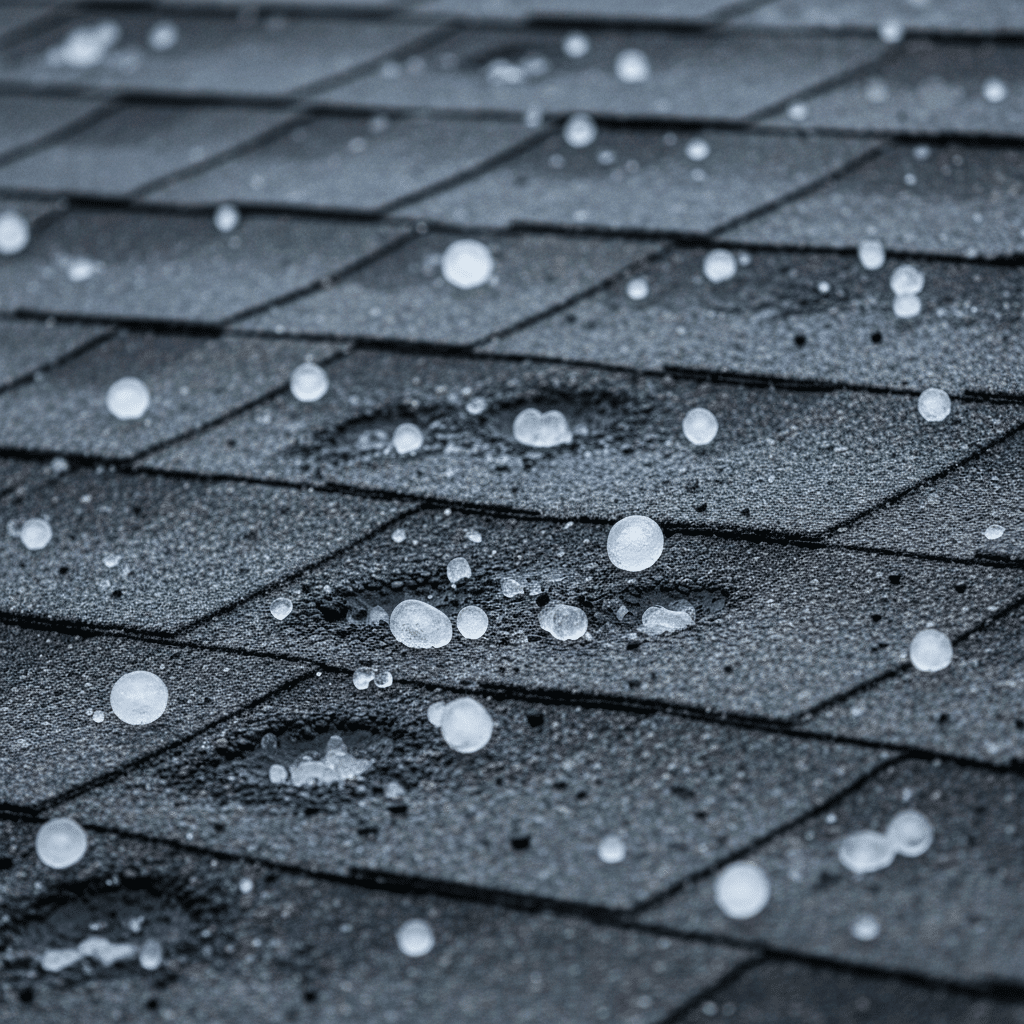
In the Dallas-Fort Worth area, the rumble of a severe thunderstorm often comes with an unnerving sound: the distinct, sharp impact of hail hitting the roof. For homeowners, this sound is a major cause for concern. Hailstorms are a frequent and destructive force in North Texas, and your roof bears the brunt of the assault. Understanding the specific ways hail damages your roof and knowing the correct steps to take afterward is essential for protecting your home’s value and integrity.
This guide will explain the impact of hail on DFW roofs, from hidden damage to obvious destruction. We will provide a clear, step-by-step plan for homeowners to follow after a storm, covering everything from initial inspection and documenting damage to navigating the insurance process and hiring a qualified contractor.
How Hail Damages Your Roof
Hailstones, whether pea-sized or as large as softballs, can cause significant harm to various roofing materials. The damage is not always as obvious as a gaping hole. Often, it’s the subtle, cumulative impact that compromises your roof’s ability to protect your home.
Damage to Asphalt Shingles
Asphalt shingles are the most common roofing material in DFW and are particularly vulnerable to hail.
- Granule Loss: The sandpaper-like granules on top of asphalt shingles are their primary defense against UV rays and water. Hail impacts knock these granules loose, creating “bald” spots. You may see an accumulation of these dark granules in your gutters or at the base of your downspouts. Without this protective layer, the shingle’s underlying asphalt is exposed to the elements, causing it to become brittle and deteriorate rapidly.
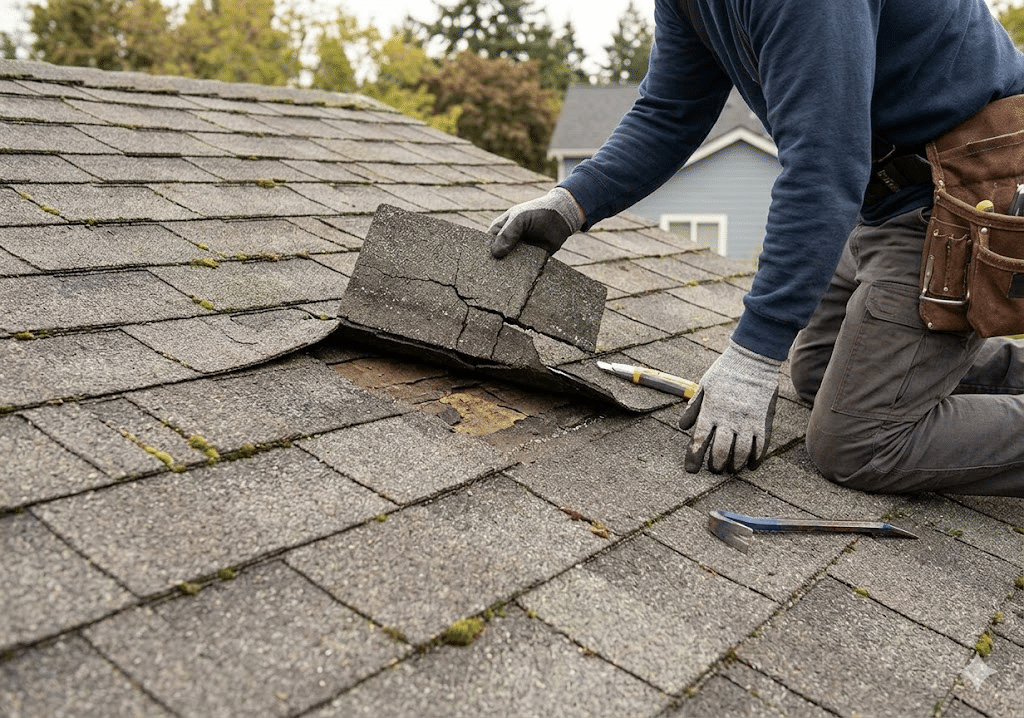
- Bruising and Cracking: A forceful hail strike can bruise the shingle, creating soft, spongy spots that feel like a thumbprint on an apple. Over time, these bruised areas can develop into cracks or fractures. This breaks the shingle’s water-shedding seal and creates a direct pathway for water to seep into the roof deck.
- Fiberglass Mat Fracture: On a harder impact, the hail can completely fracture the reinforced fiberglass mat within the shingle. While this might not be visible from the ground, it severely compromises the shingle’s structural integrity, making it likely to fail.
Damage to Other Roofing Components
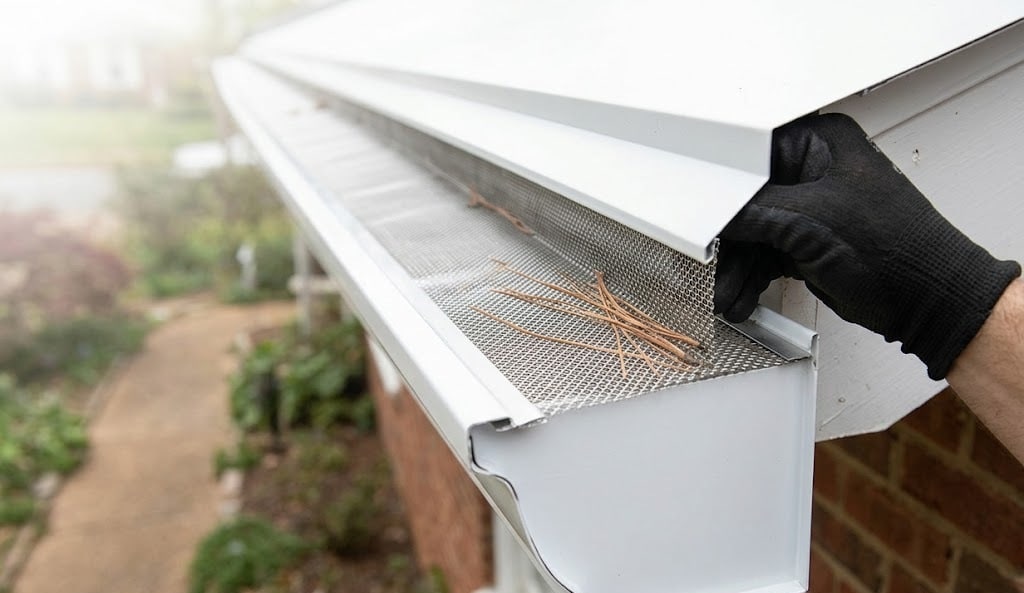
Hail doesn’t just damage the shingles. It also affects the entire roofing system. Be sure to check metal components like vents, flashing, and gutters. Hail can leave significant dents and dings in these areas. While a dented gutter may seem like a cosmetic issue, severe damage can impede proper water flow, leading to overflows that can damage your foundation or siding.
Your Post-Hailstorm Action Plan
After the storm passes and it’s safe to go outside, it’s time to assess the situation. Acting quickly and methodically can make the difference between a simple repair and a major restoration project.
Step 1: Perform a Safe Ground-Level Inspection
Your safety is the top priority. Do not climb on your roof, especially when it might be wet or structurally compromised. You can spot many signs of hail damage from the ground.
Walk around your property and look for:
- Dents in Gutters and Downspouts: Metal gutters are a good indicator of hail size and intensity. If they are dented, your roof likely sustained damage as well.
- Damage to Siding and Window Sills: Check for chips, cracks, or dents in your home’s siding and window frames.
- Scattered Debris: Look for any shingles or pieces of roofing material that may have been knocked loose and fallen into your yard.
- Visible Dents on Roof Vents: Use binoculars to get a closer look at vents and other metal fixtures on the roof.
Step 2: Document Everything
Before you touch anything or start any cleanup, document the damage thoroughly. This evidence is crucial for your insurance claim.
- Take Photos and Videos: Use your smartphone to capture wide shots of your roof and close-ups of any visible damage you can see from the ground. Photograph dents on gutters, damaged siding, and any other affected parts of your property.
- Note the Date and Time: Record the date and time of the hailstorm. Your insurance company will use this information to verify that the damage occurred during a covered weather event.
Step 3: Find a Reputable DFW Roofing Contractor
Before you even call your insurance company, it is wise to get a professional opinion. A trusted local roofing contractor can perform a safe, thorough inspection and provide an honest assessment of the damage. They are trained to spot issues that are invisible from the ground.
An experienced roofer will get on your roof to check for bruising, granule loss, and fractures. They can help you determine if the damage is significant enough to warrant an insurance claim. This professional assessment gives you a credible foundation when you eventually speak with your insurance adjuster.
Step 4: Understand Your Insurance Policy and File a Claim
Review your homeowner’s insurance policy to understand your coverage for hail damage. Pay close attention to your deductible—the amount you have to pay out of pocket before your insurance coverage kicks in.
When you’re ready, contact your insurance provider to file a claim. Provide them with the date of the storm and the documentation you collected. They will assign an insurance adjuster to inspect your property. It’s highly recommended to have your chosen roofing contractor present during the adjuster’s inspection. Your contractor can point out specific areas of damage and ensure that the assessment is fair and comprehensive, acting as your advocate throughout the process.
Step 5: Choose Your Contractor and Get the Work Done
Once your claim is approved, you have the right to choose your own contractor. Do not feel pressured to use a company recommended by your insurance provider. Use the contractor you vetted and trust.
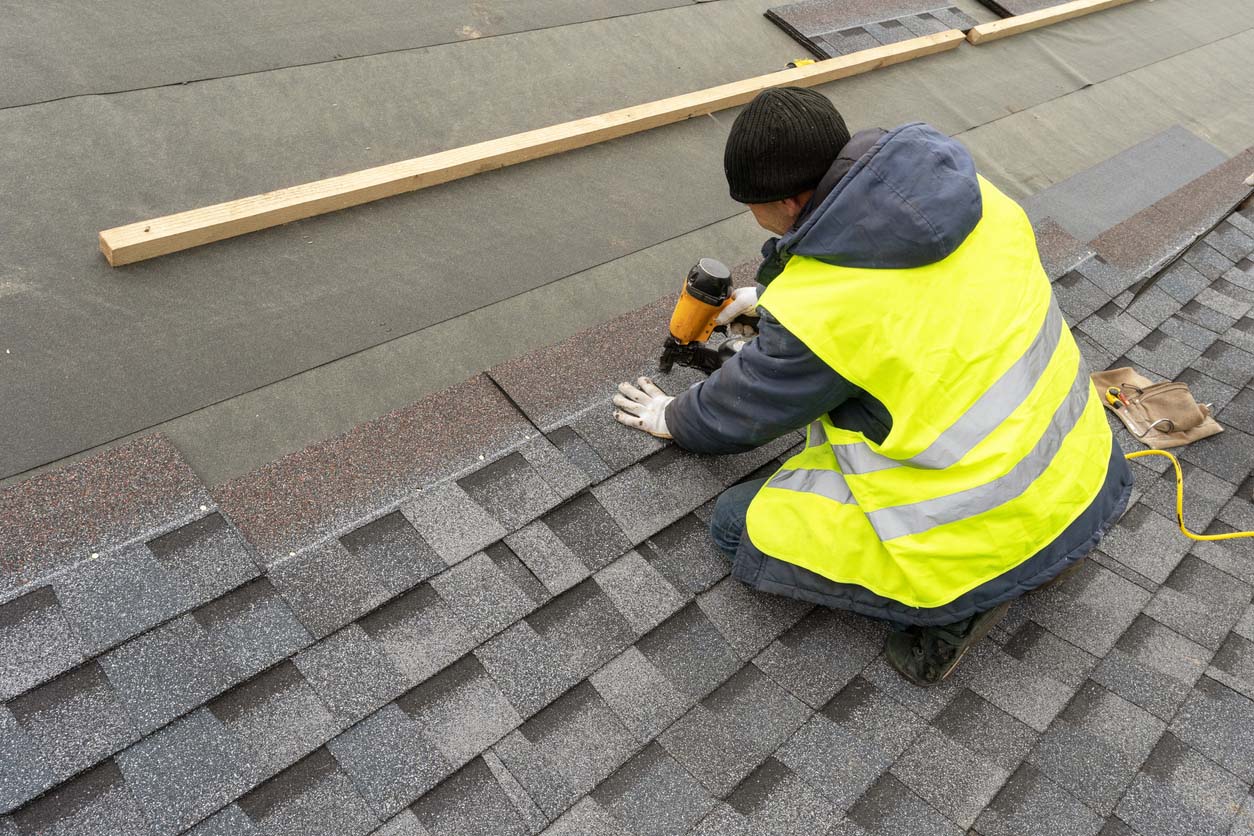
They will work from the scope of work approved by your insurance company to perform the necessary repairs or replacement. They will handle everything from sourcing materials and pulling permits to completing the installation and managing the final cleanup.
Don’t Let Hail Get the Best of Your Home
The threat of hail is a reality for every homeowner in the DFW Metroplex. While you can’t control the weather, you can control how you respond. By conducting a safe inspection, documenting the evidence, and partnering with a trustworthy roofing professional, you can navigate the aftermath of a storm with confidence. A proactive approach not only simplifies the repair process but also ensures your roof continues to be a reliable shield for your home and family.